Guides
Straight answers on selling a house
Long-form guides on the situations that actually stall a sale — written to be useful whether or not you ever sell to us.

Long-form guides on the situations that actually stall a sale — written to be useful whether or not you ever sell to us.
· New
The real cost of not disclosing a known defect when you sell a house: what disclosure law actually requires, what non-disclosure exposes you to, and the worked math comparing disclosing now versus getting caught later.
· New
Selling a house with a mechanic's lien: how the notice and filing deadlines work, the four ways to clear it, and why this lien specifically threatens a retail sale more than most others.
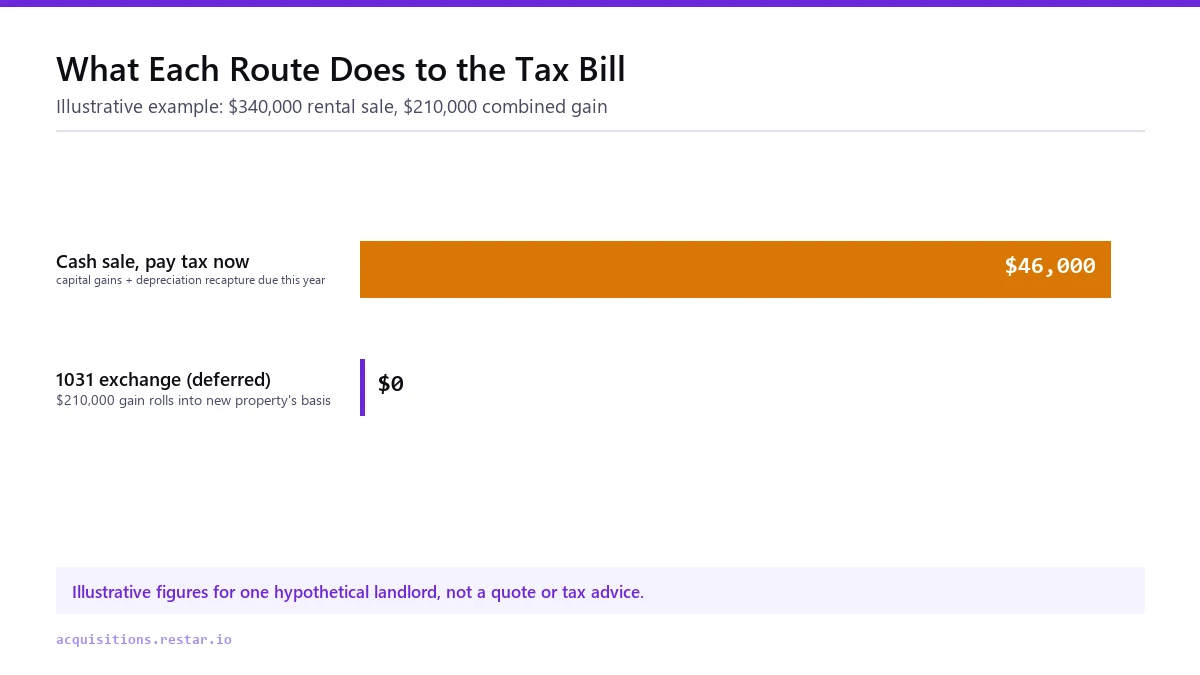
A 1031 exchange defers your capital gains and depreciation recapture tax; a cash sale pays it now. The real mechanics, the real deadlines, and the real tradeoff for a landlord who's done.
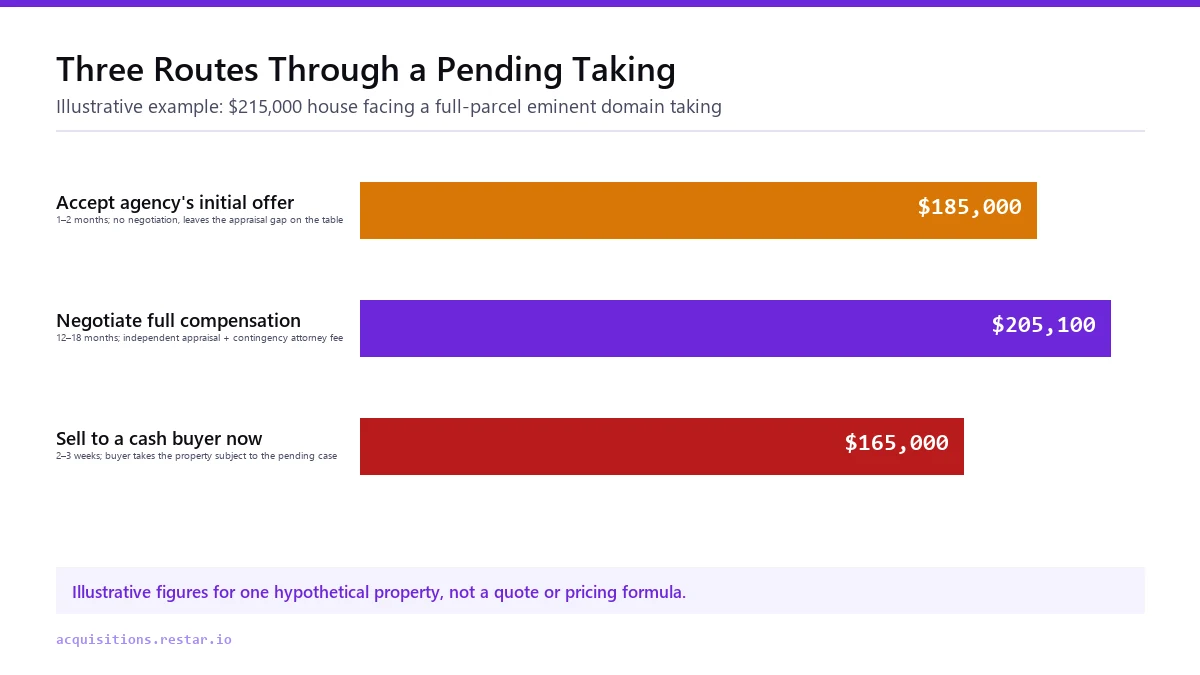
A government agency wants your property under eminent domain. What just compensation actually covers, what the Uniform Relocation Act does and doesn't pay for, and your real options.
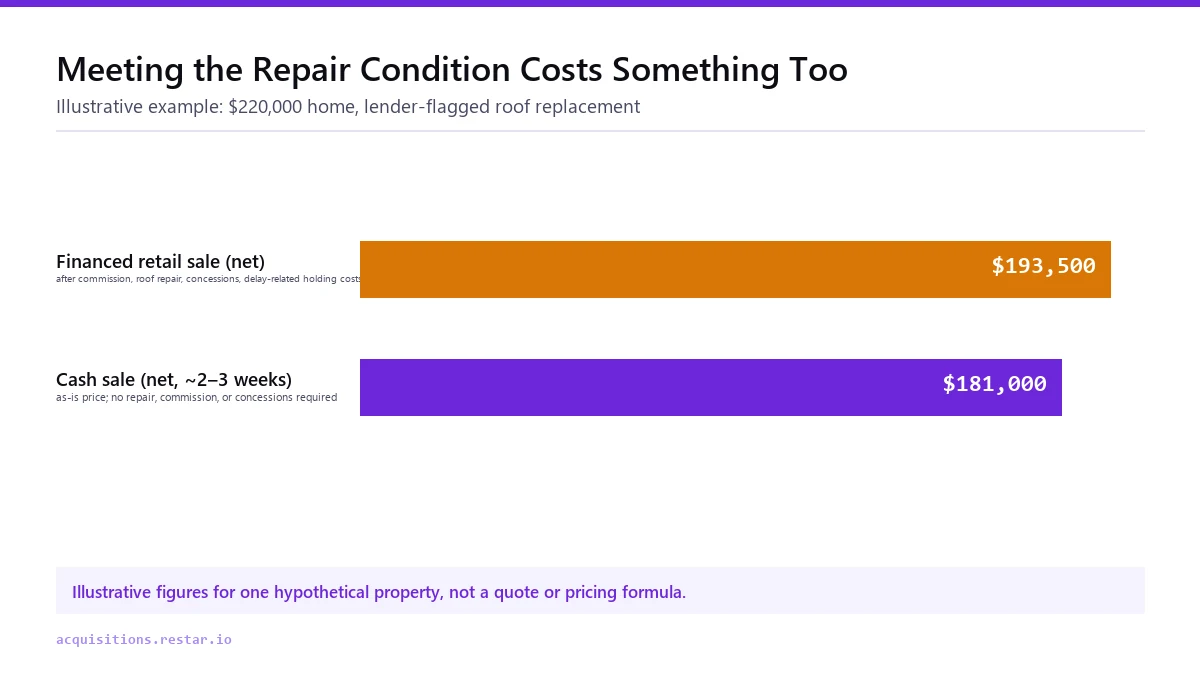
FHA, VA, and conventional appraisers can flag repairs your buyer's lender won't close without. Here's what actually gets flagged, what it costs, and what it does to your timeline.
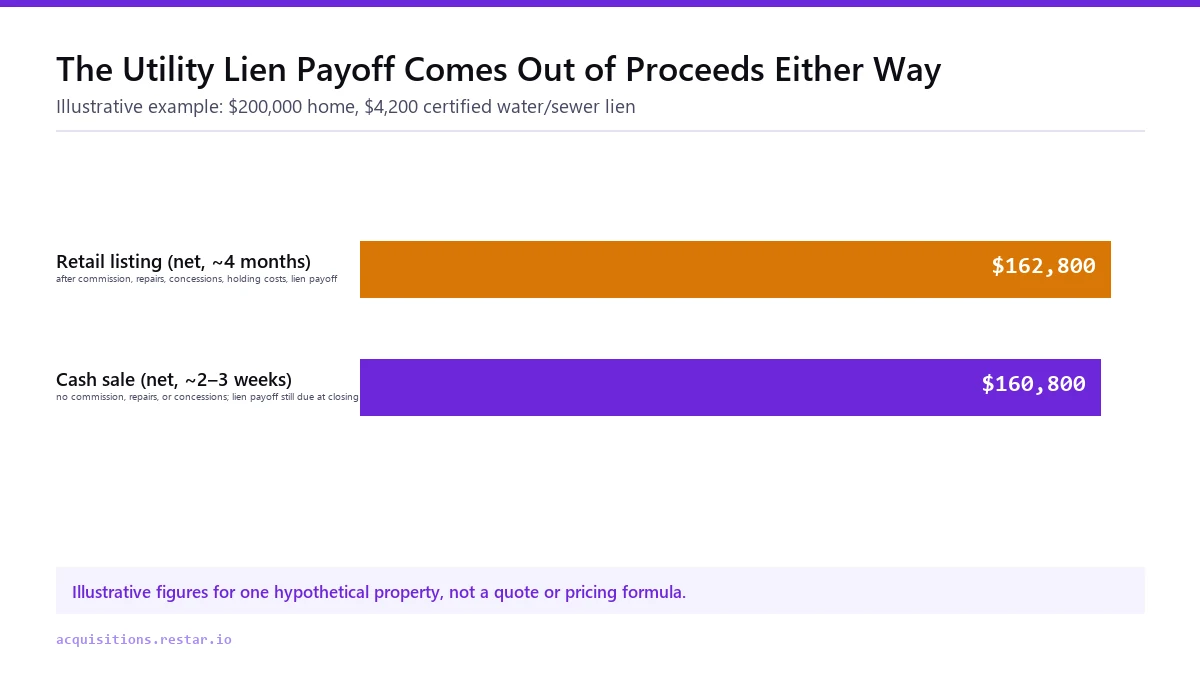
A municipal water or sewer lien attaches automatically for an unpaid utility bill, no lawsuit required. Here's how it works, why it can outrank your mortgage, and your real options.
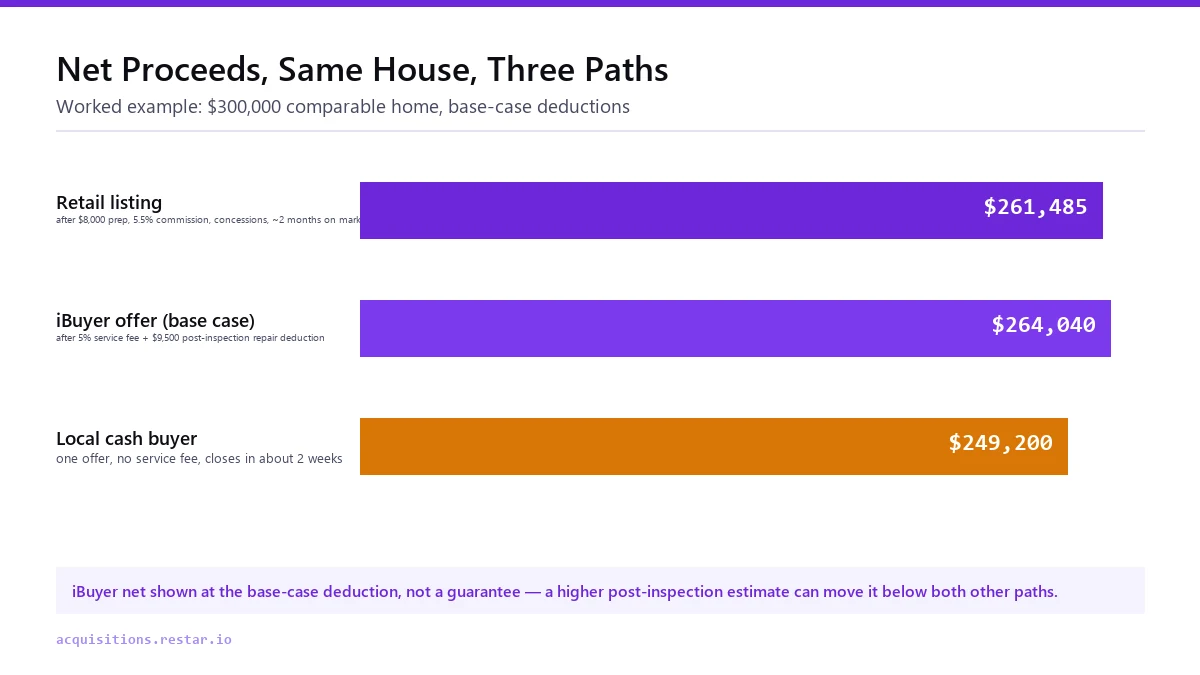
iBuyer vs cash home buyer: how the service fee, the post-inspection repair deduction, and narrow eligibility rules change your real net proceeds.
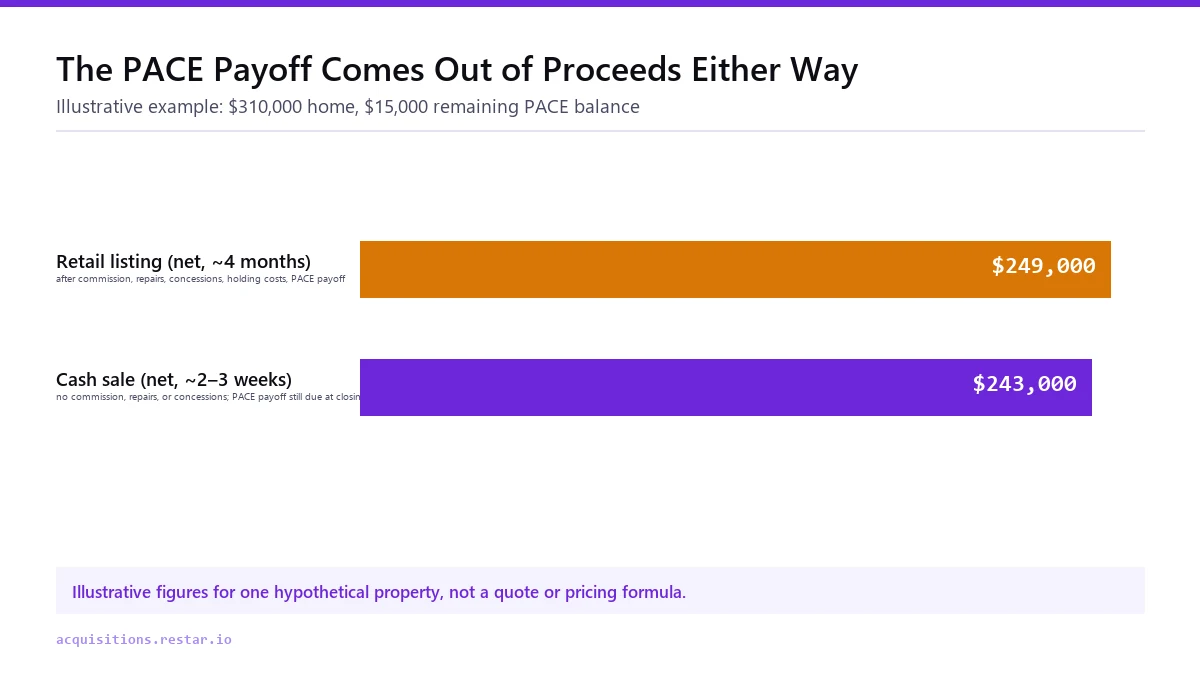
Selling a house with a PACE loan means dealing with a senior property-tax lien, not a normal payoff. Here's how it works, why lenders require it cleared, and your real options.
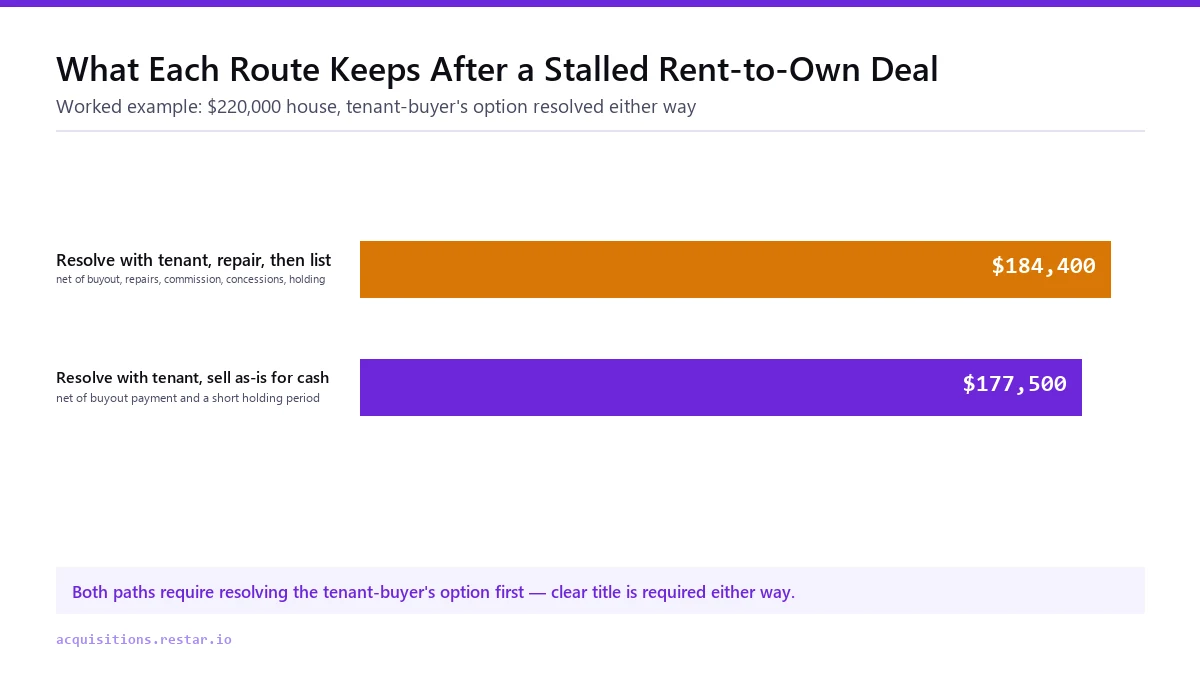
A rent-to-own or lease-option tenant may hold more than a lease — sometimes an equitable interest in the house. How option money, rent credits, and termination actually work, and what it costs to get out.
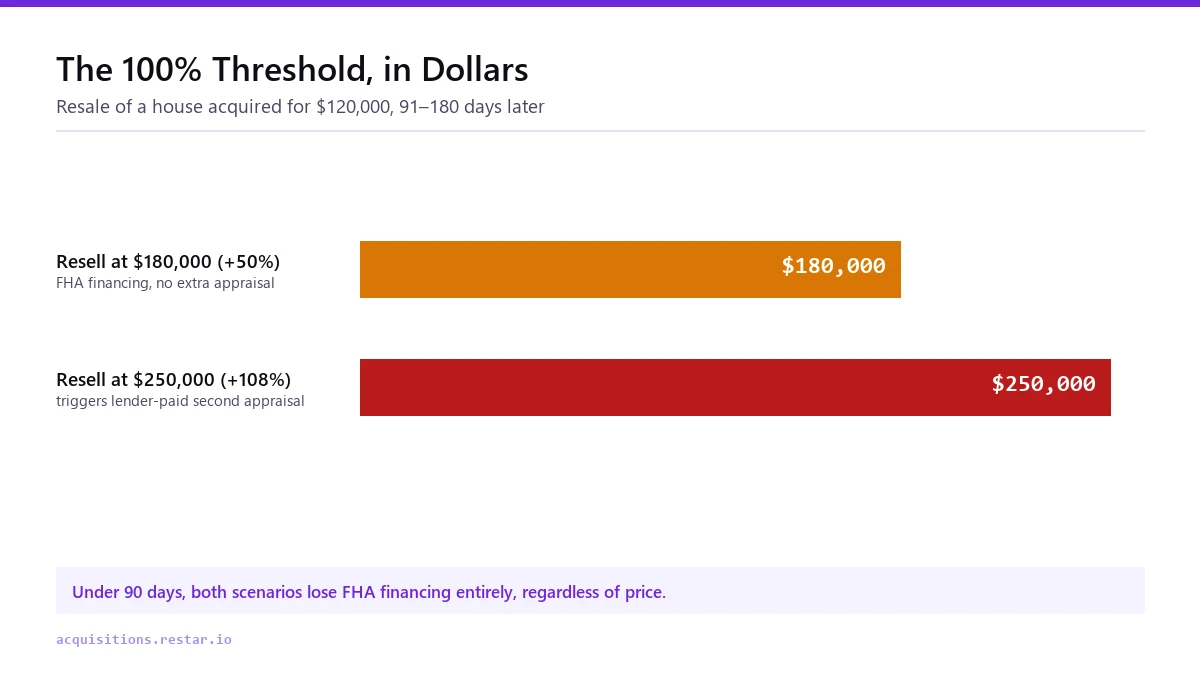
Reselling a house you just acquired? FHA's 90-day and 91-180-day flipping rules can shut out a chunk of your buyer pool entirely. Here's the math.
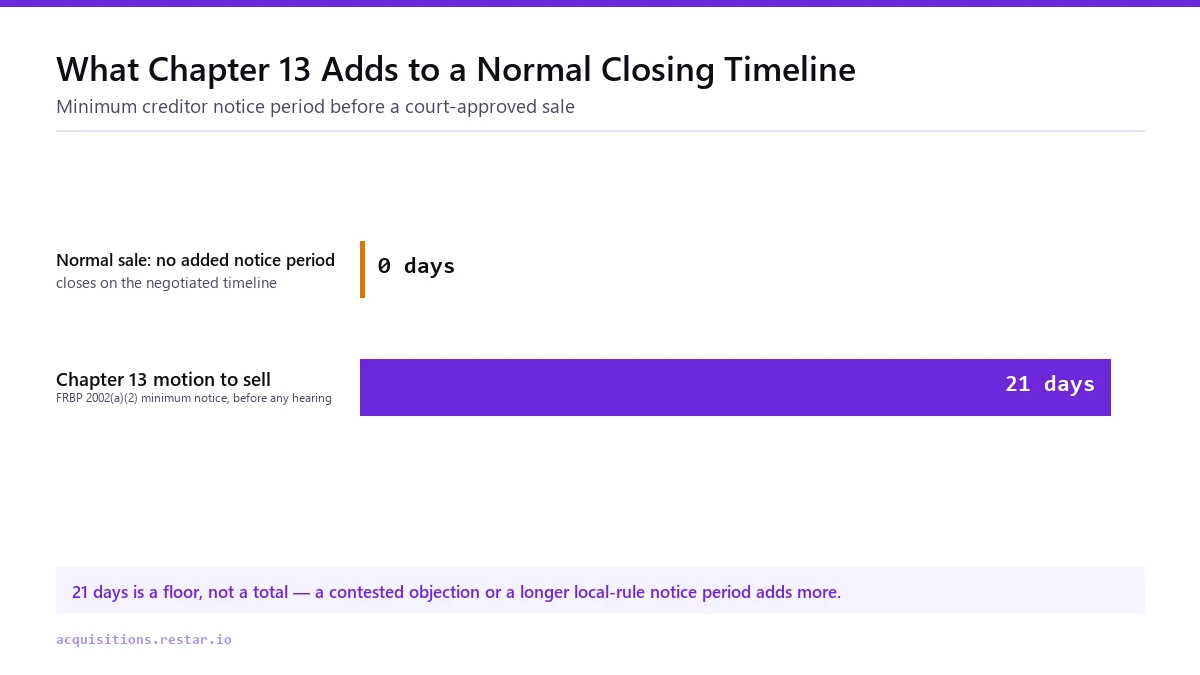
Filed Chapter 13 and need to sell your house? Here's why the trustee and bankruptcy court have to approve the sale first, and what that actually involves.
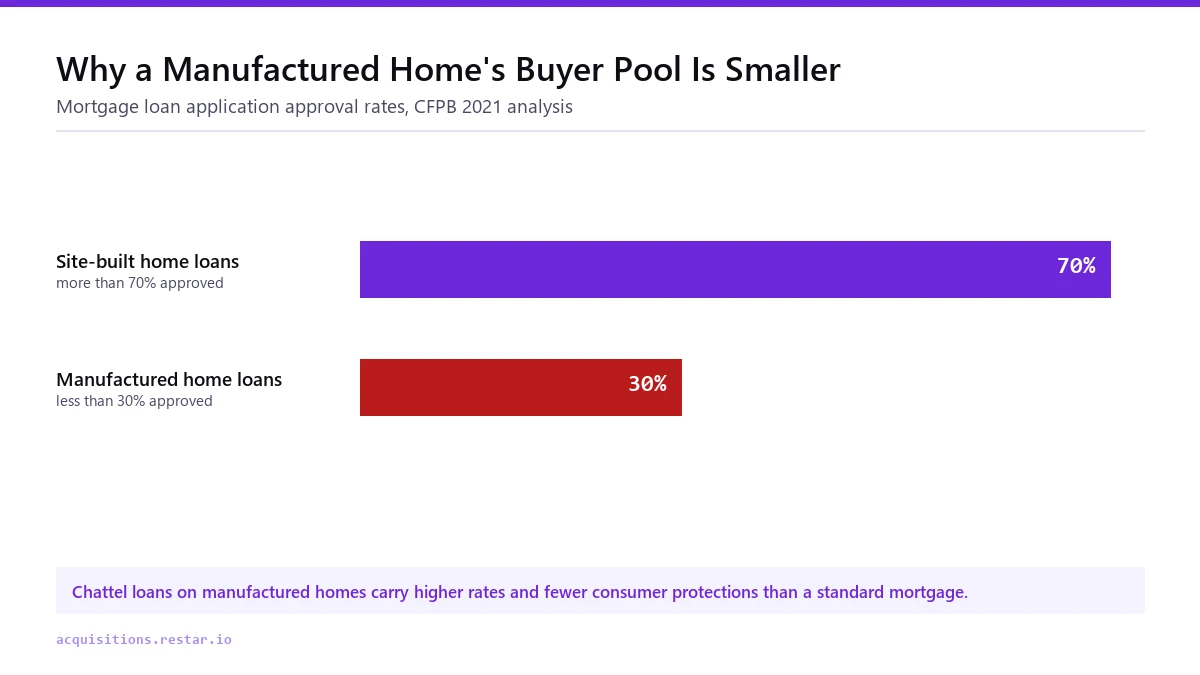
Manufactured and mobile homes don't sell like a site-built house. Here's how the title actually transfers, why financing is different, and what it means for you as a seller.
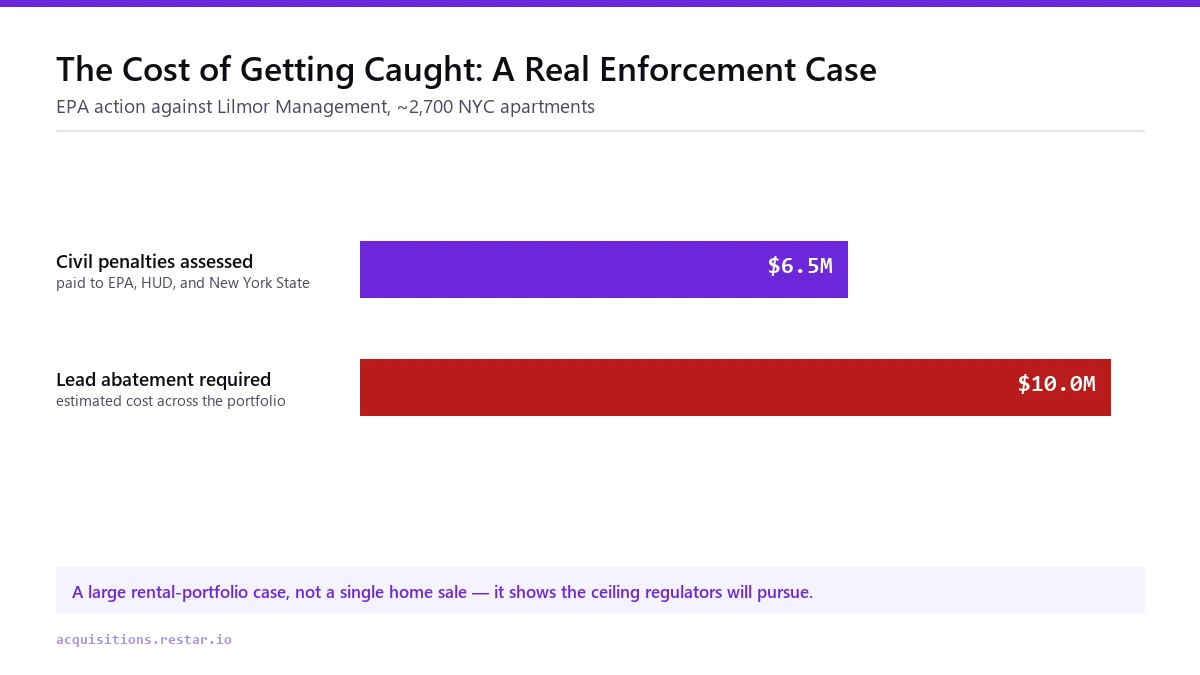
Selling a pre-1978 house? Here's what the lead-based paint disclosure rule requires, who's exempt, and what happens if a seller skips it entirely.
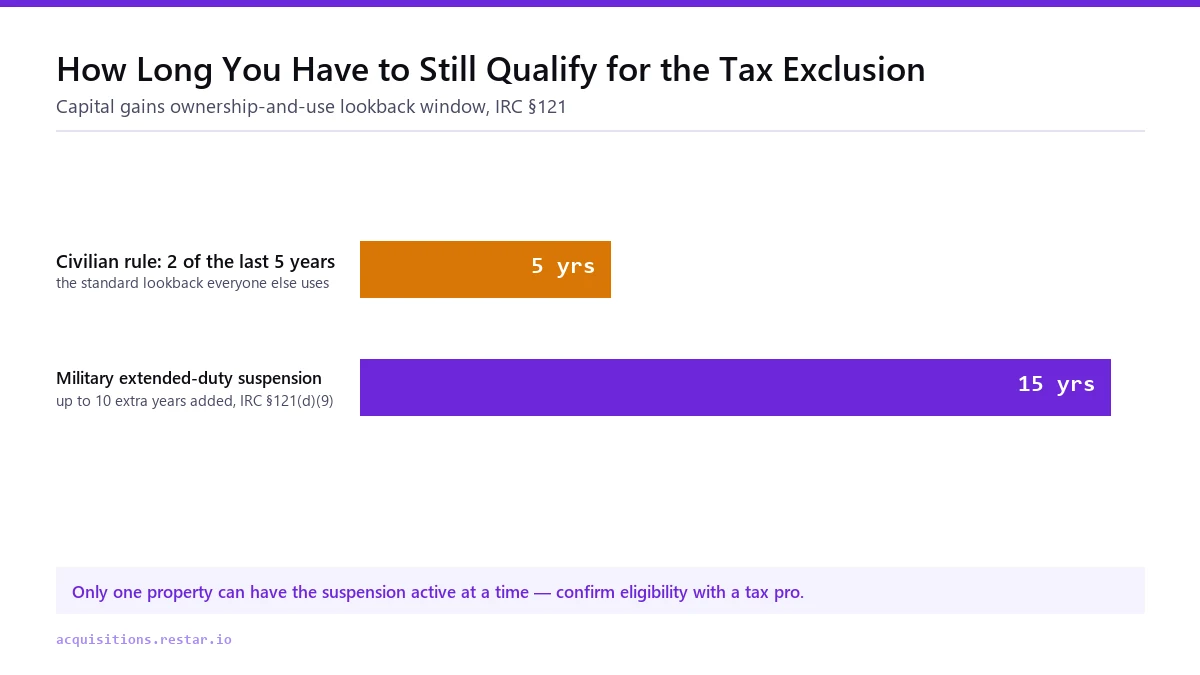
Selling a house on military PCS orders means racing a report date you don't control. Here's exactly what SCRA protects, what it doesn't, and how VA loan assumption and capital gains rules actually work.
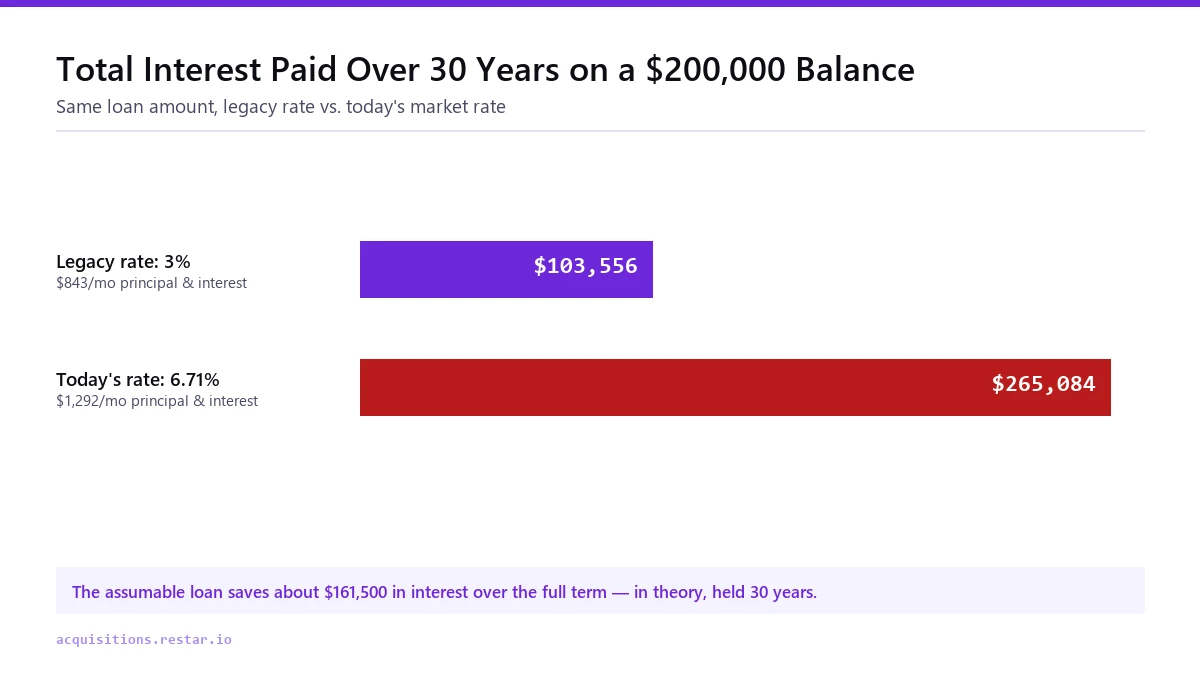
The real math on an assumable FHA or VA mortgage: what a legacy 3% rate is worth against today's 6.71%, why the theoretical value rarely becomes a full sale-price premium, and when it's worth the wait.
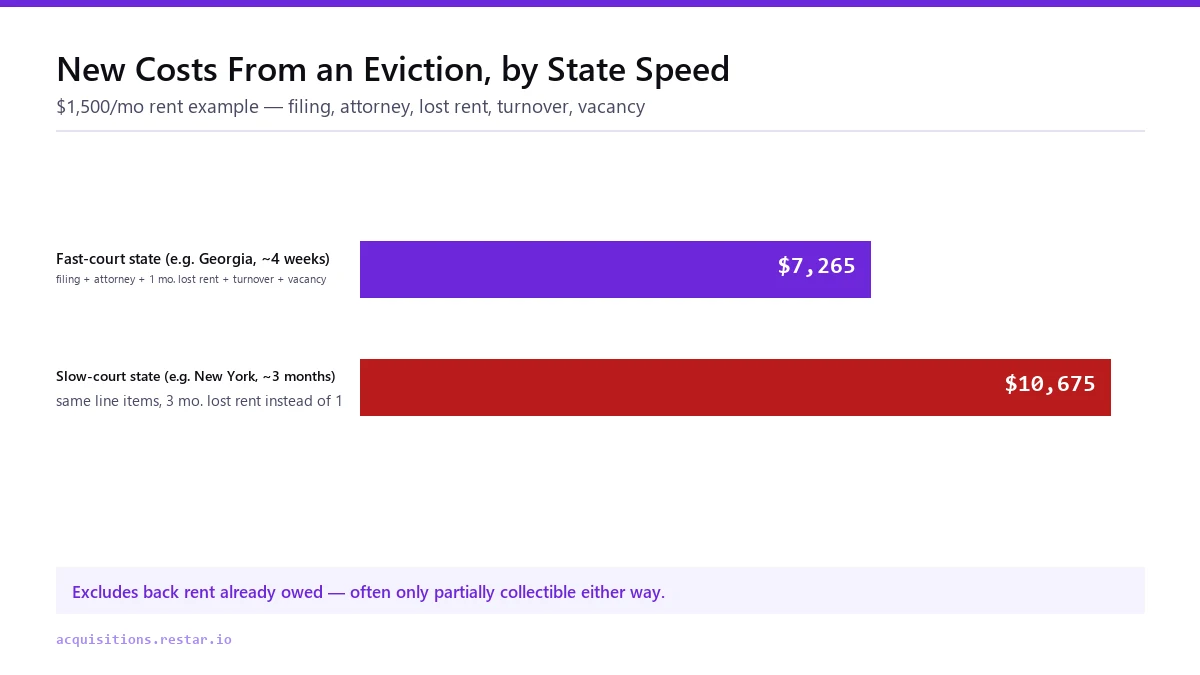
The real arithmetic on evicting a non-paying tenant before you sell vs. selling with the tenant in place — filing fees, lost rent, turnover costs, and realistic timelines by state.
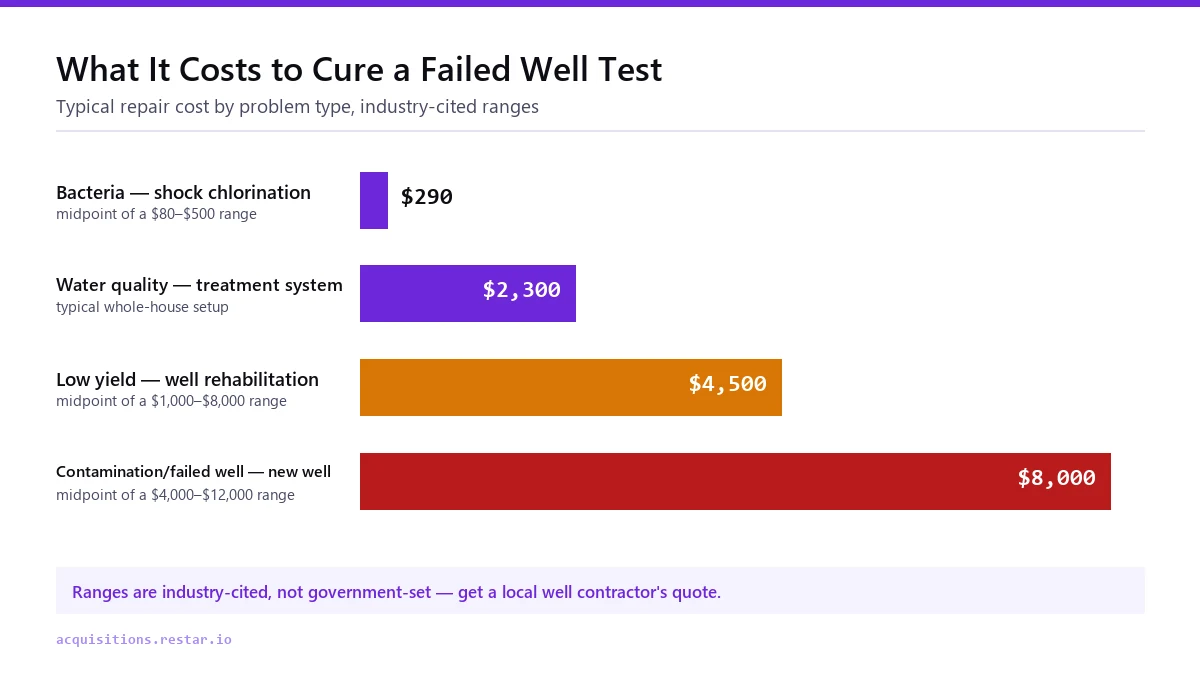
Selling a house with a private well: what a water test actually checks, why FHA/VA/USDA loans can stall on it, what your state requires, and what a failed test costs to fix.
A buyer's mortgage just fell apart mid-contract. Here's what actually happens to your earnest money, your timeline, and your options — relist, backup offer, or a cash sale.
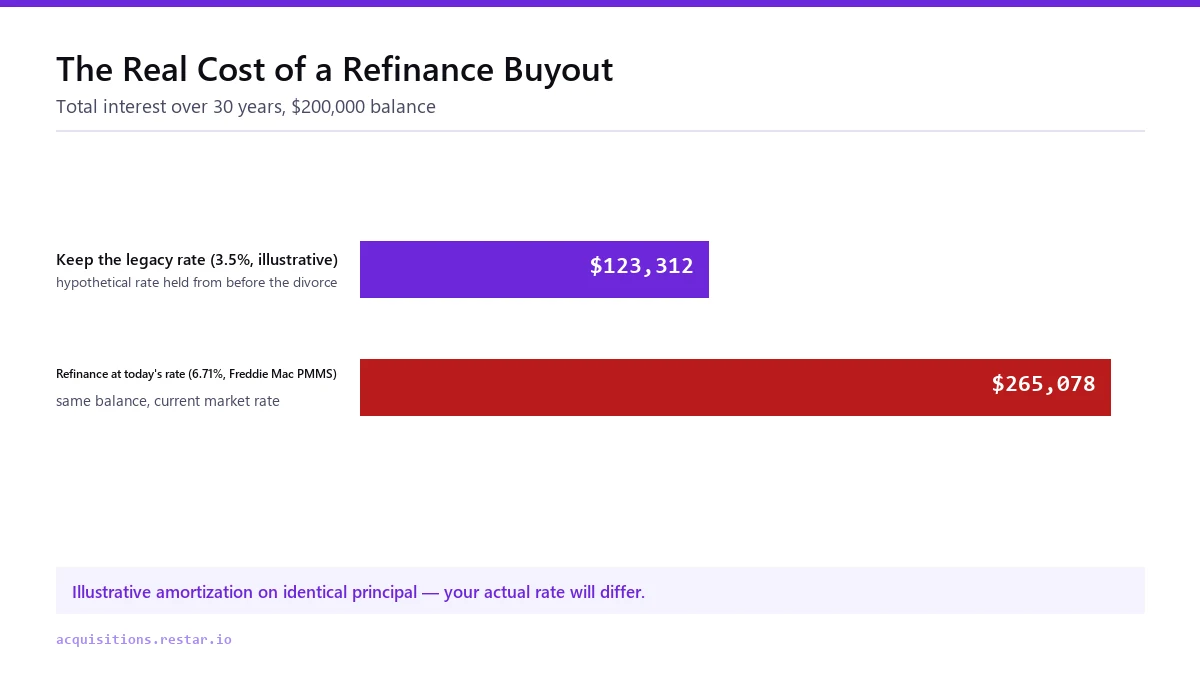
The real math behind a divorce house buyout versus selling — refinance costs, today's mortgage rates, taxes, and what each path actually nets, side by side.
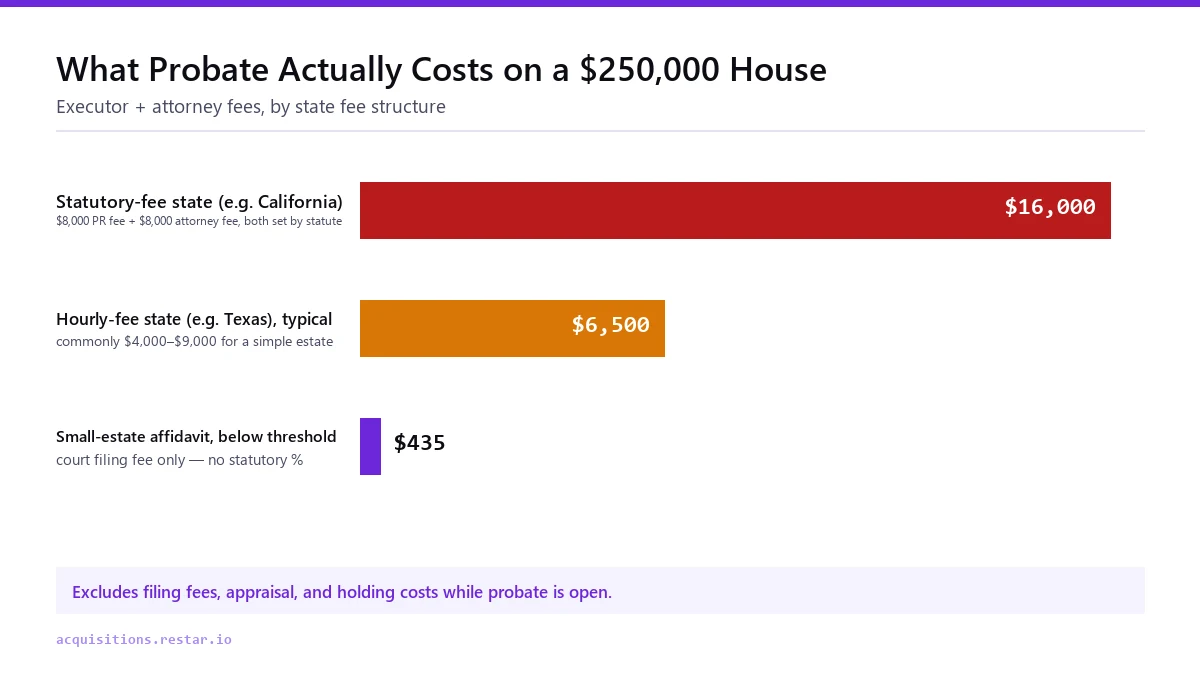
Real numbers on what probate costs before you can sell an inherited house — court fees, executor and attorney compensation, and the holding costs that add up while it drags on.
What actually happens to the title, the mortgage, and your taxes when you sell a house after your spouse dies — and how long it really takes, based on how the deed was held.
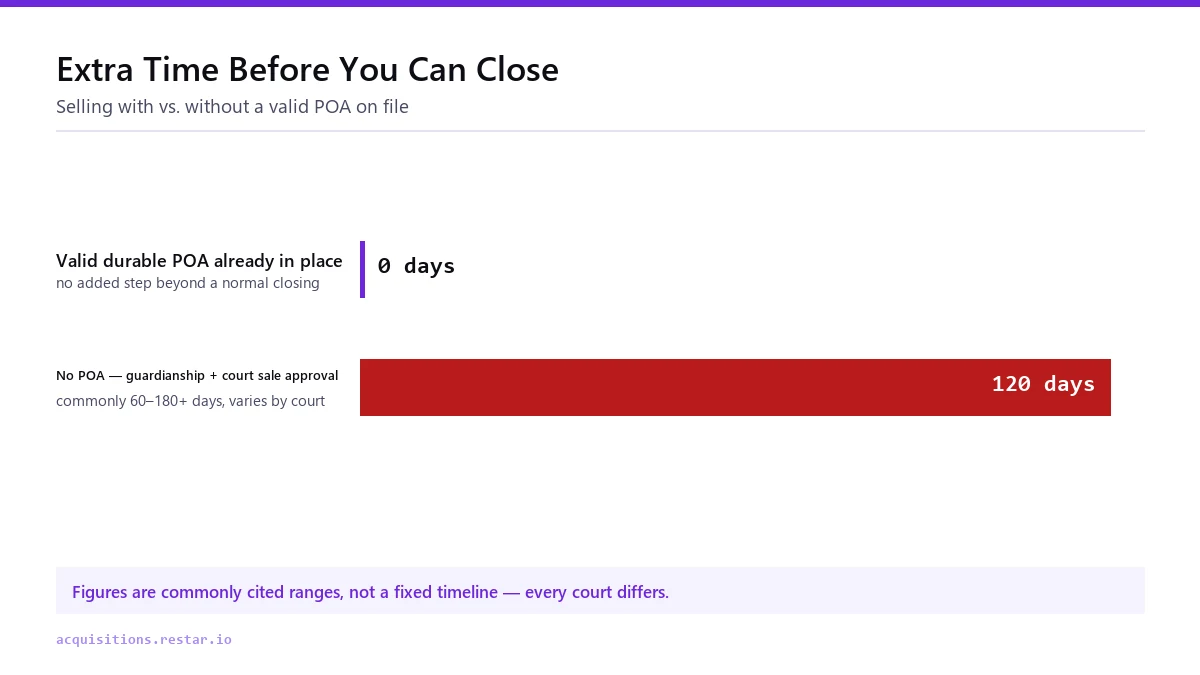
What kind of power of attorney actually lets you sell a parent's house, what happens if there isn't one, and the fiduciary rules you have to follow either way.
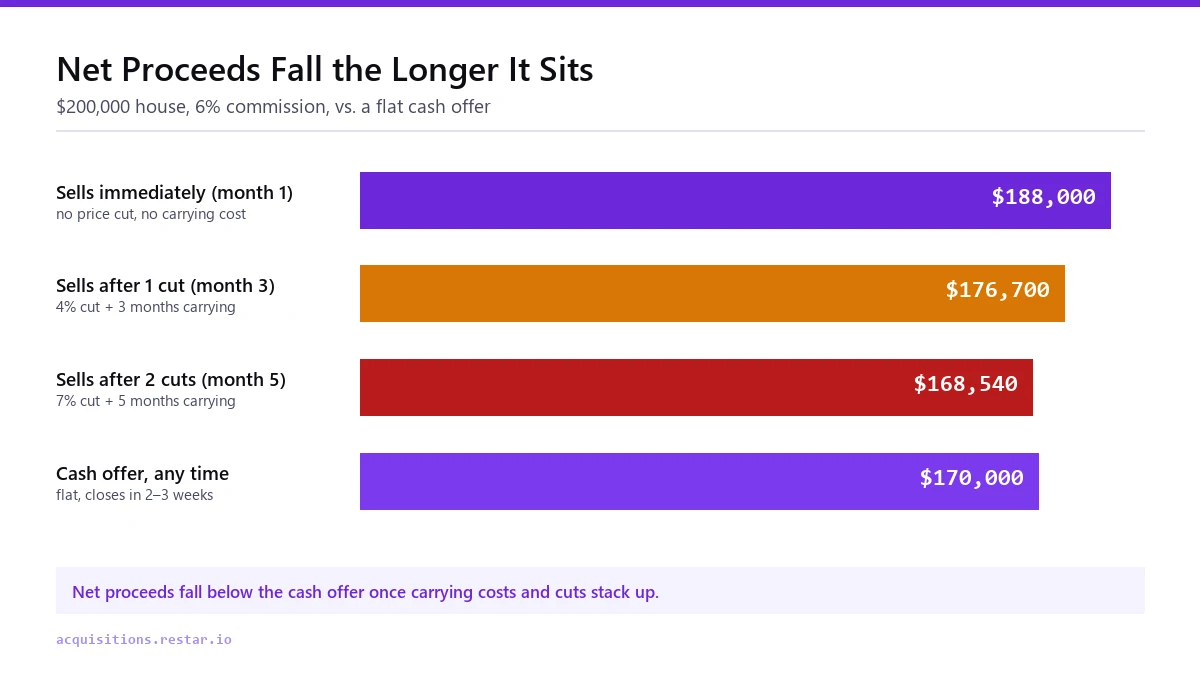
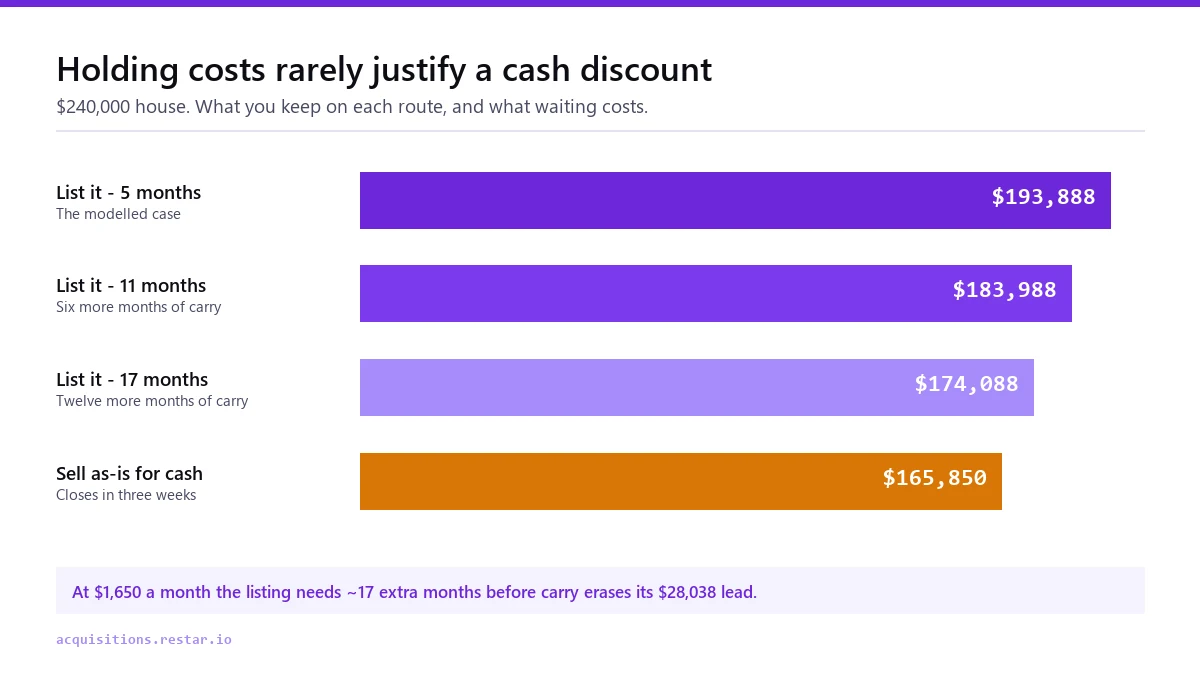
The real cost of every month your house sits on the market: carrying costs, price-cut data, and a worked example showing when waiting stops beating a cash offer.
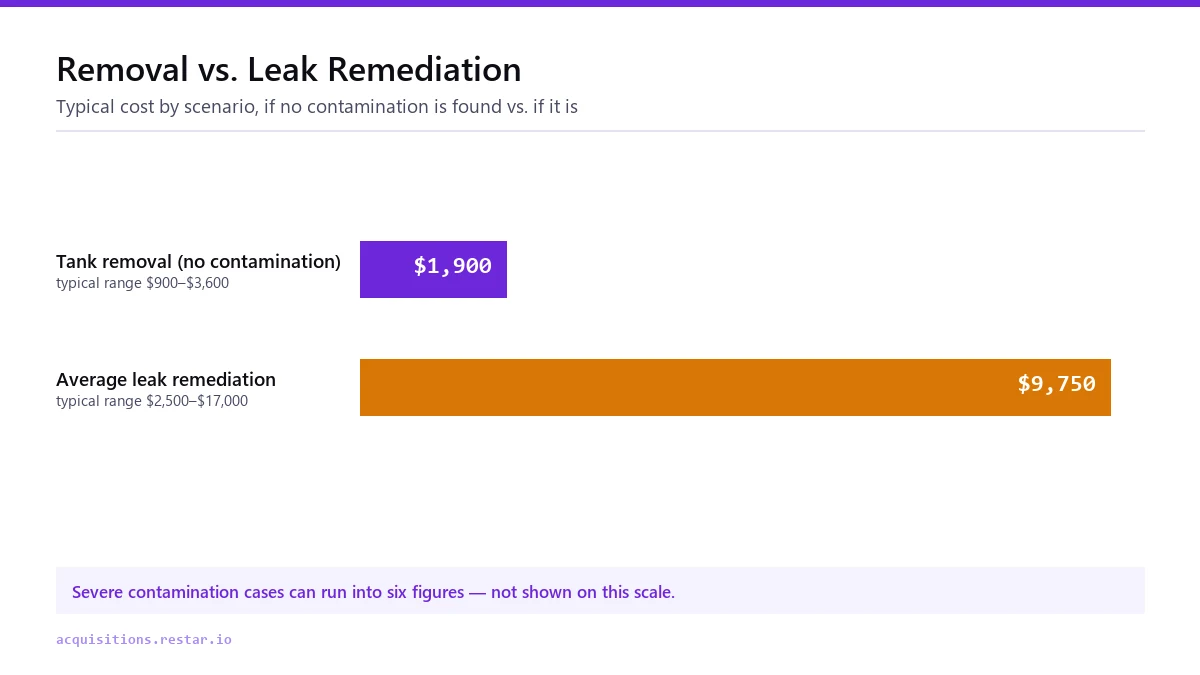
Selling a house with an underground oil tank: what most states actually require, why lenders balk at it even when the law doesn't, real removal and remediation costs, and your options besides digging it up.
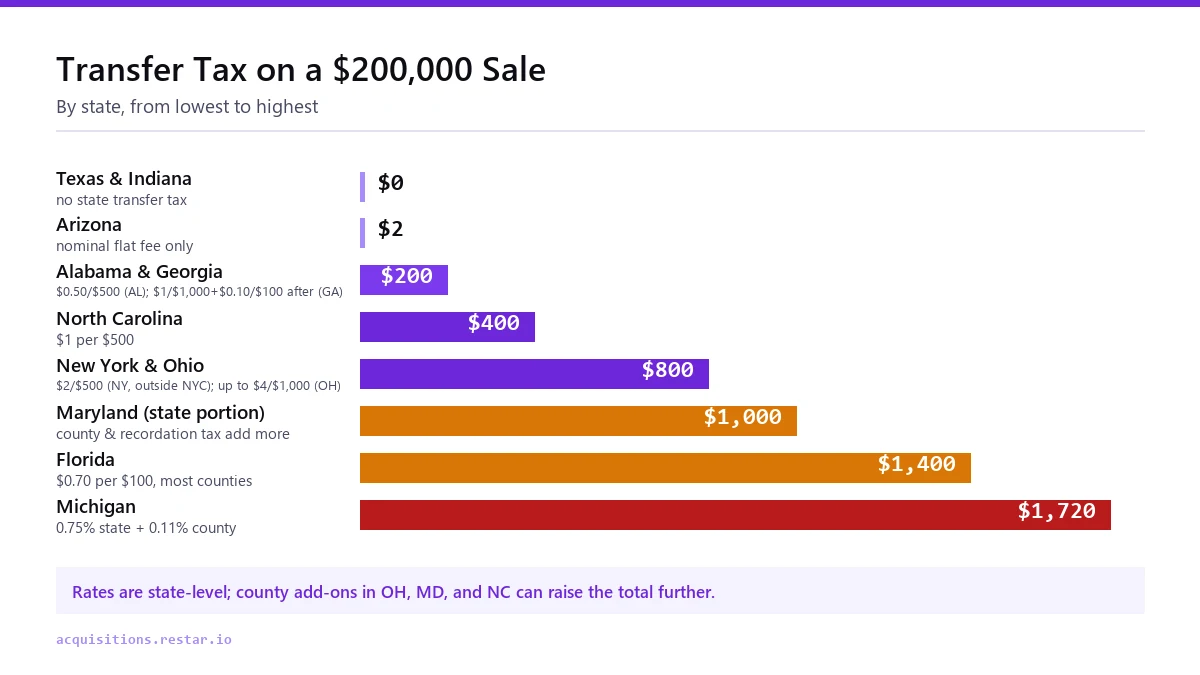
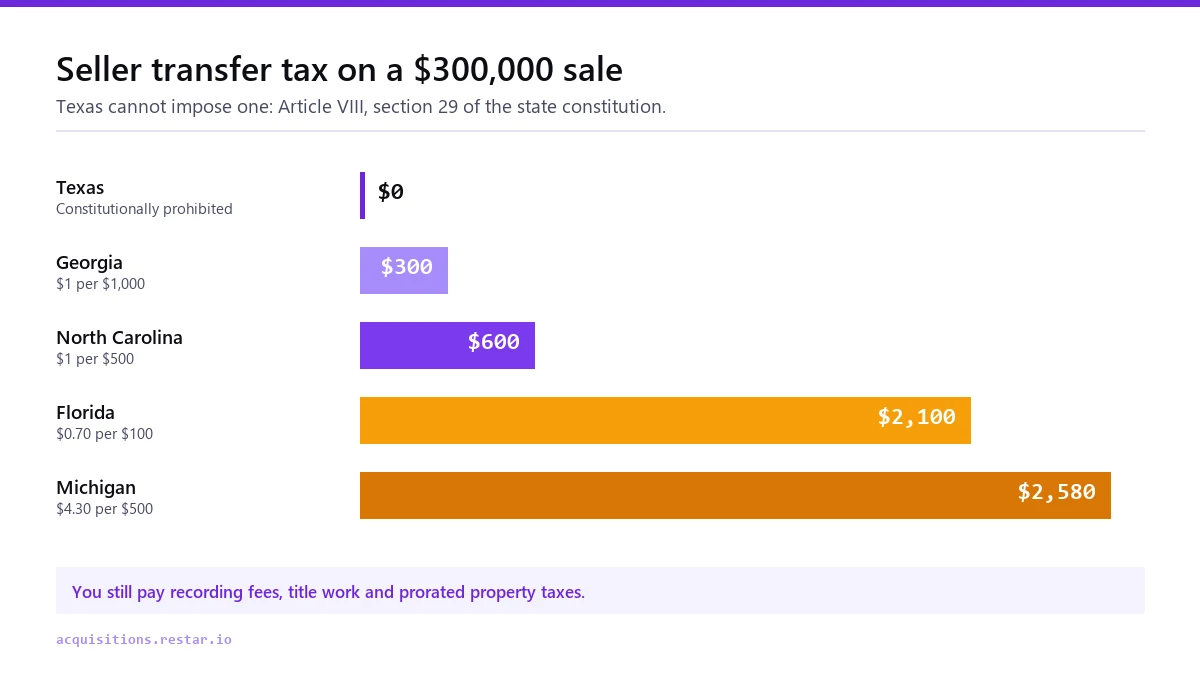
Real estate transfer tax by state, compared with actual dollar figures on a $200,000 sale: from $0 in Texas to well over $1,000 in Maryland, and who typically pays it.
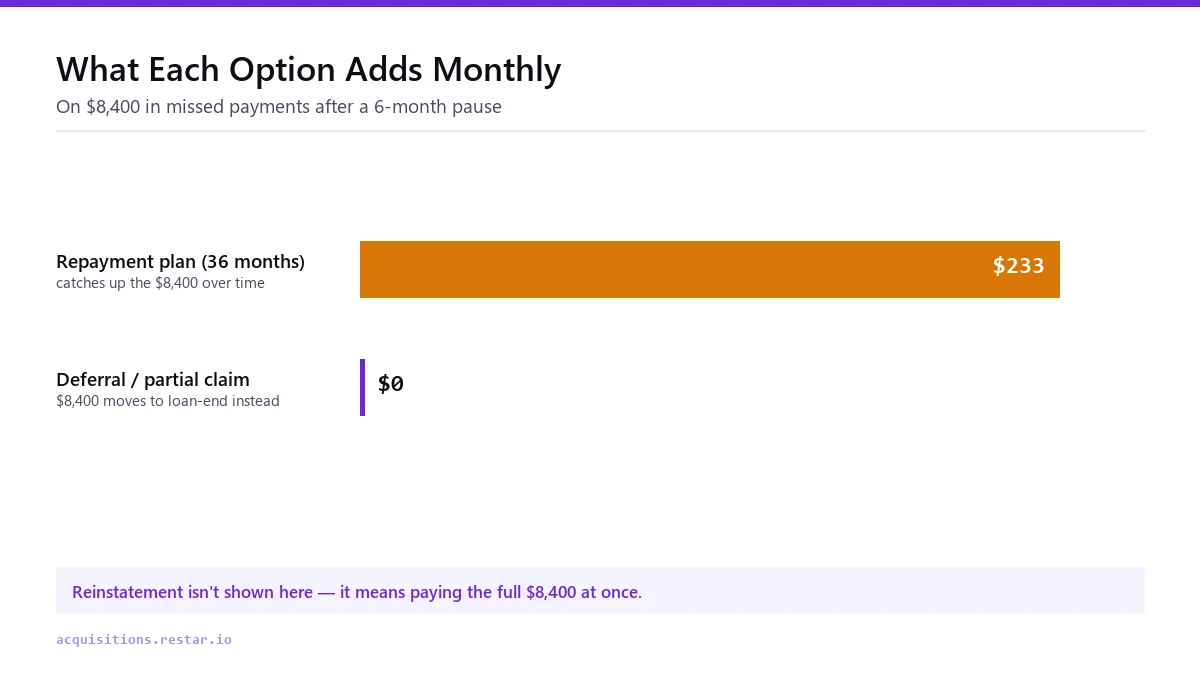
What happens when mortgage forbearance ends: the real options your servicer has to offer (reinstatement, repayment plan, deferral, modification), what happens if none of them work, and where selling fits.
The real cost of a short sale in 2026: the tax bill now that the forgiveness exclusion has expired, deficiency risk, and how long lender approval actually takes.
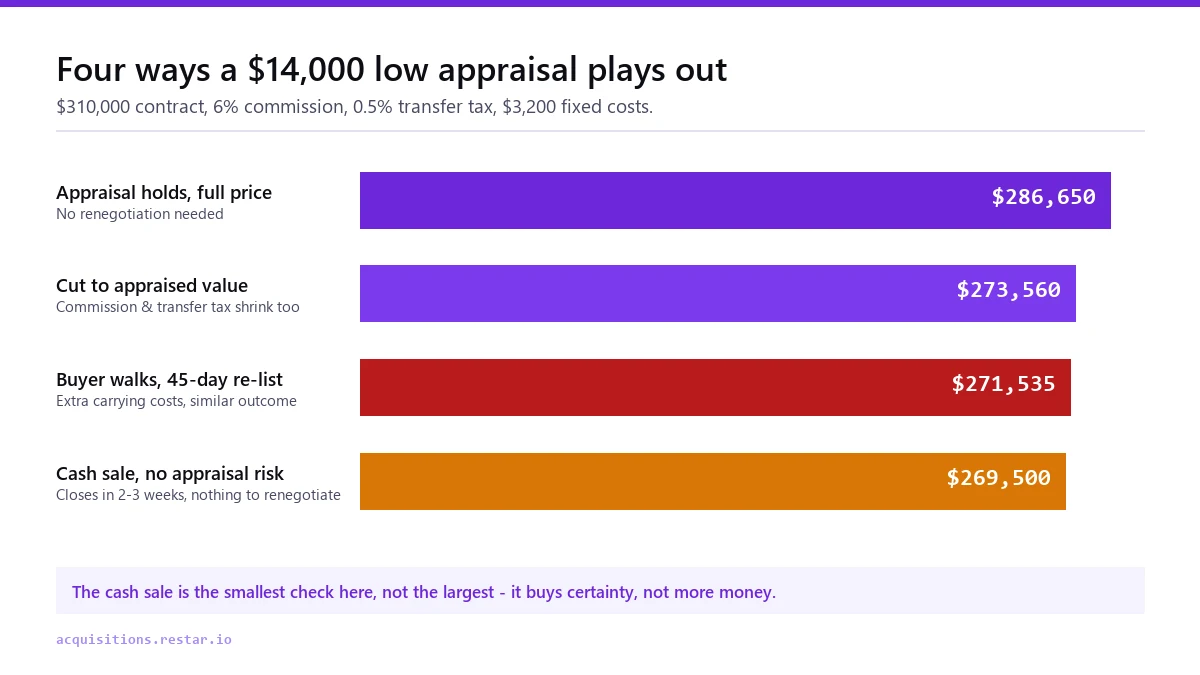
The real cost of an appraisal gap when a buyer's loan comes in short: the arithmetic behind cutting the price, splitting the gap, or losing the buyer and re-listing.
How long you actually have to sell before a foreclosure auction, why it depends on your state's process, and the math on listing vs. a fast cash sale.
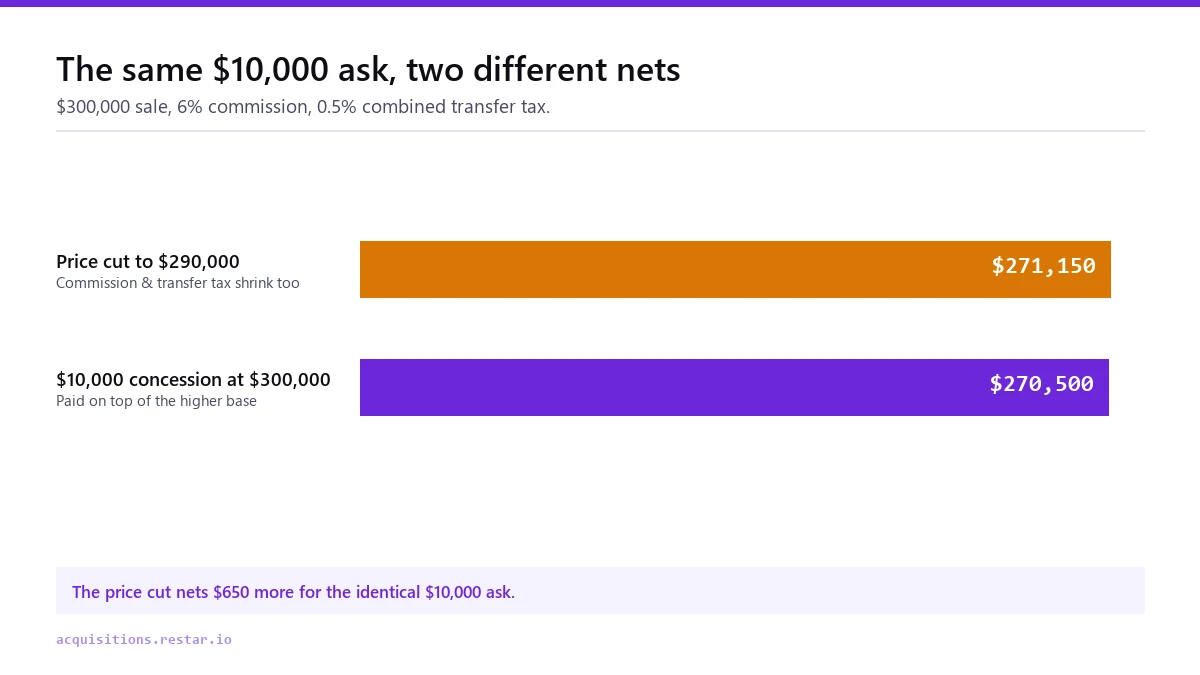
Seller concessions vs price reduction: why the same $10,000 ask leaves you with different money at closing, and the loan-program caps on concessions.
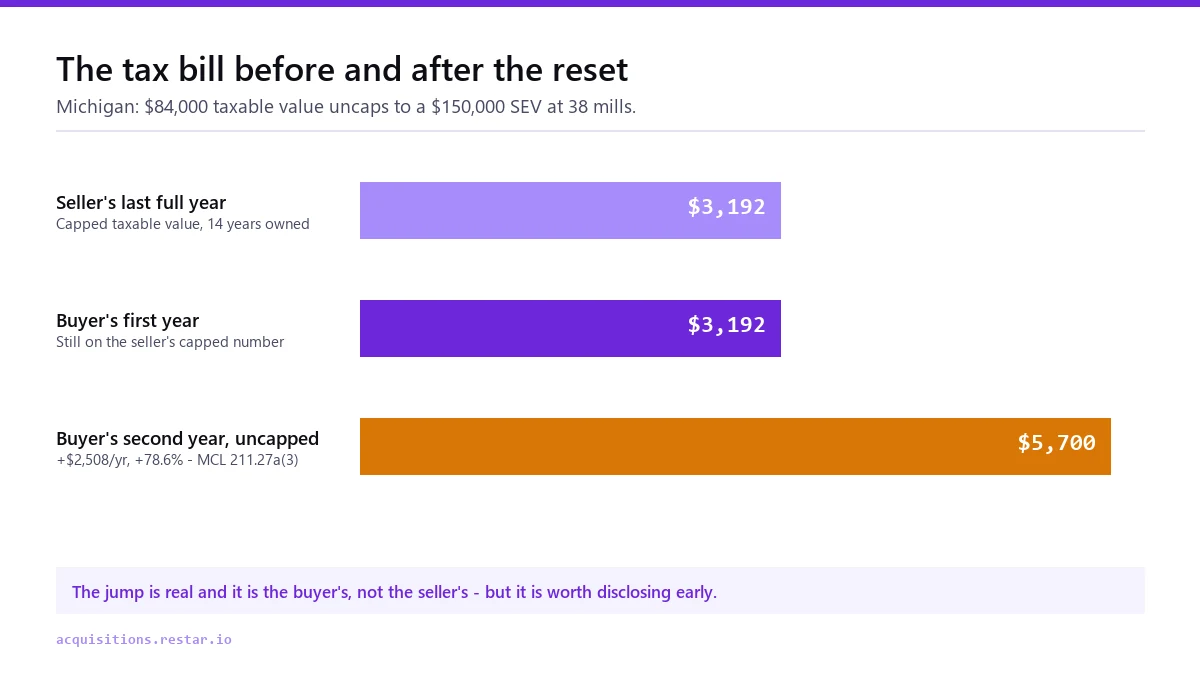
Property tax reassessment when you sell a house: how Michigan's uncapping and Florida's Save Our Homes cap reset the bill the year after closing, in dollars.
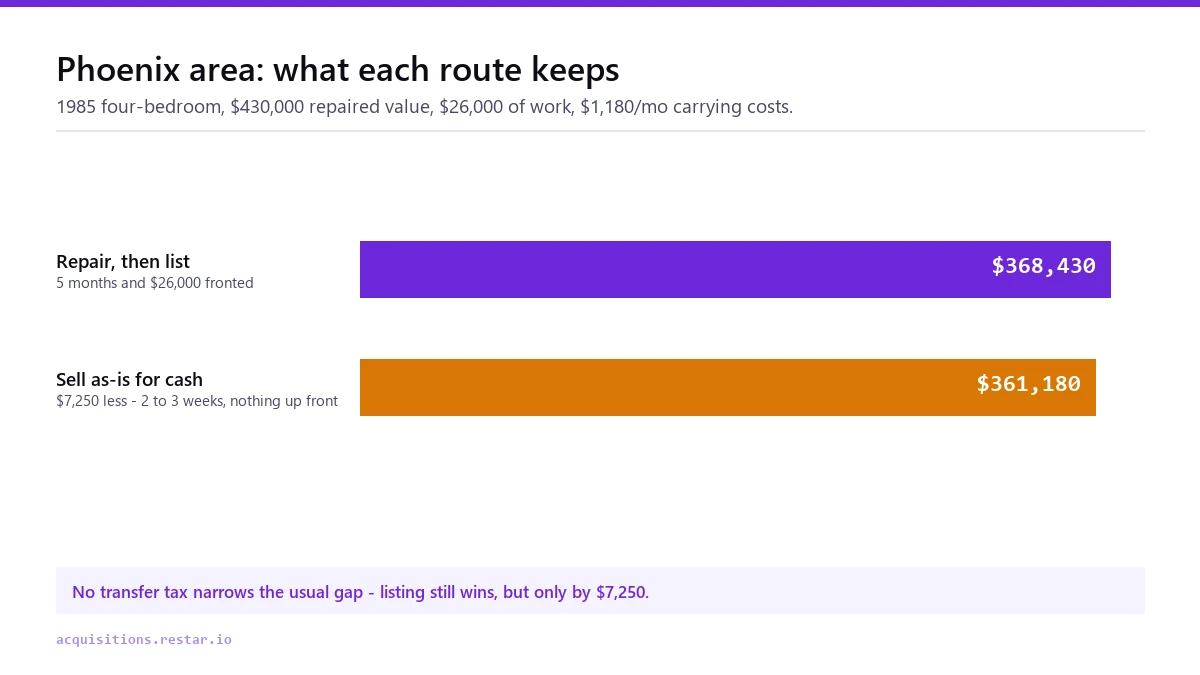
Selling a house in Arizona: trustee sales run fast with no redemption after, most owner-occupants are shielded from a deficiency, and there is no transfer tax.
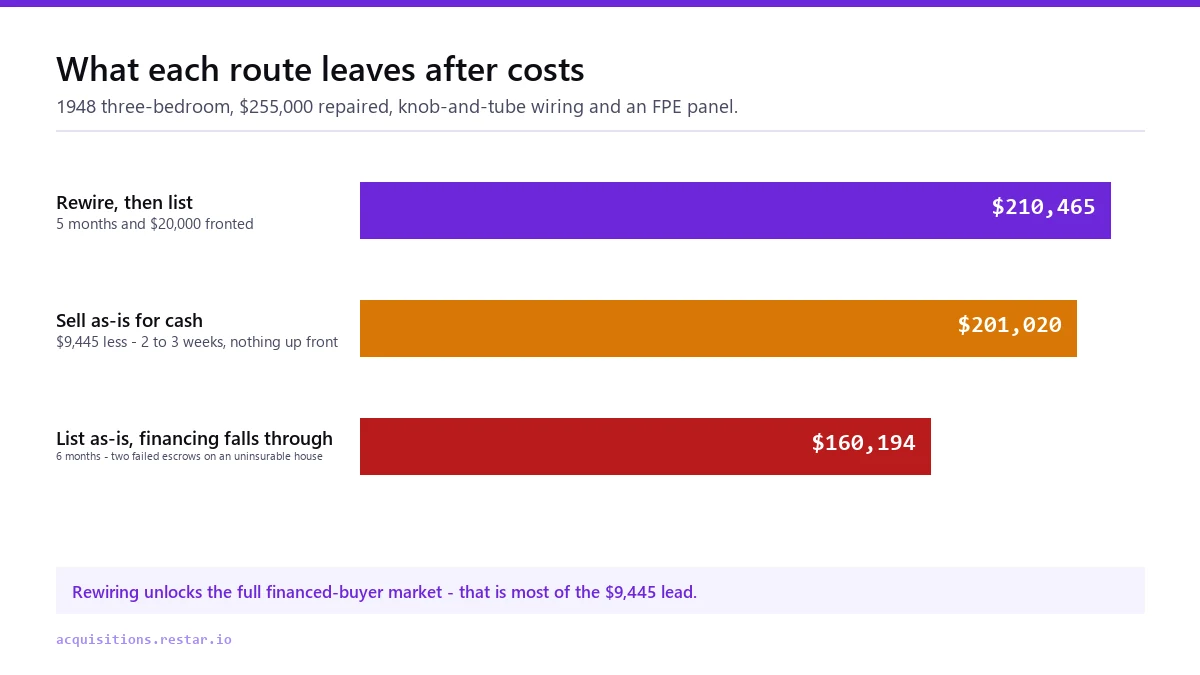
Selling a house with knob and tube wiring or a Federal Pacific panel: why insurers decline it, why that kills a financed sale, and the real cost of fixing it.
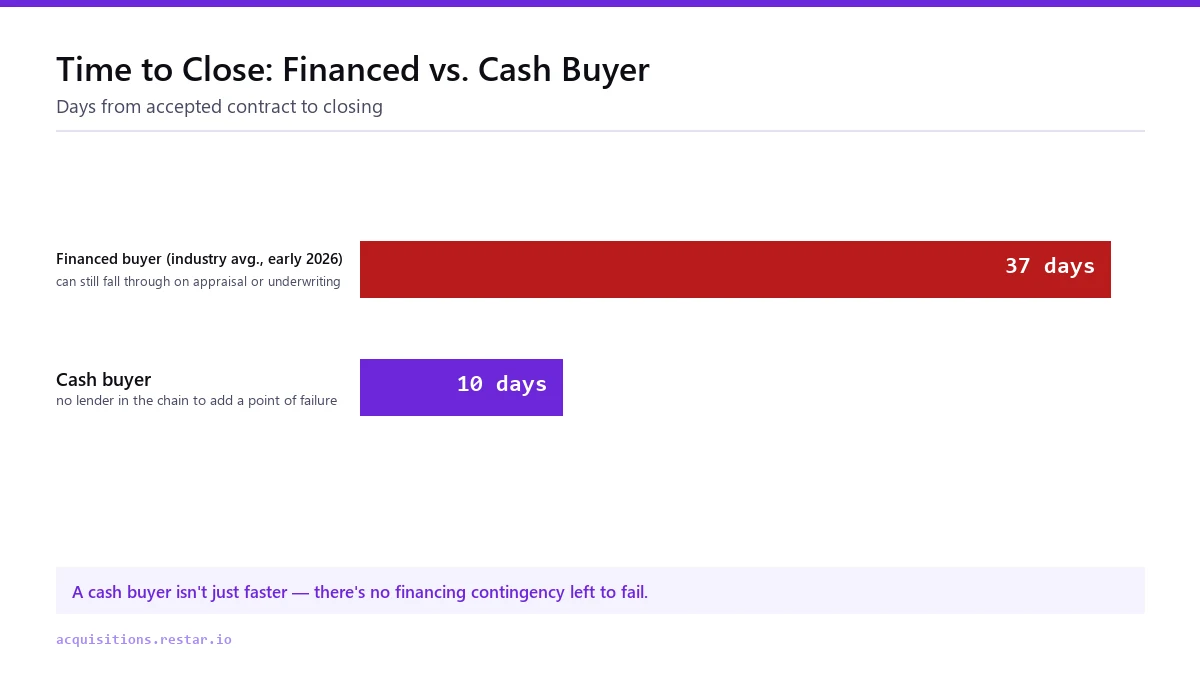
A financed offer's higher price isn't guaranteed. Worked expected-value math on fall-through risk shows when a lower cash offer actually nets more than a higher financed one.
Selling a house with an unmarried co-owner: how title decides your options, the buyout math, and how a partition action forces a sale when you can't agree.
Selling a house with code violations: how the fines become a lien, what gets paid at closing, and the receivership risk in cities like Baltimore and Detroit if a vacant property goes uncorrected.
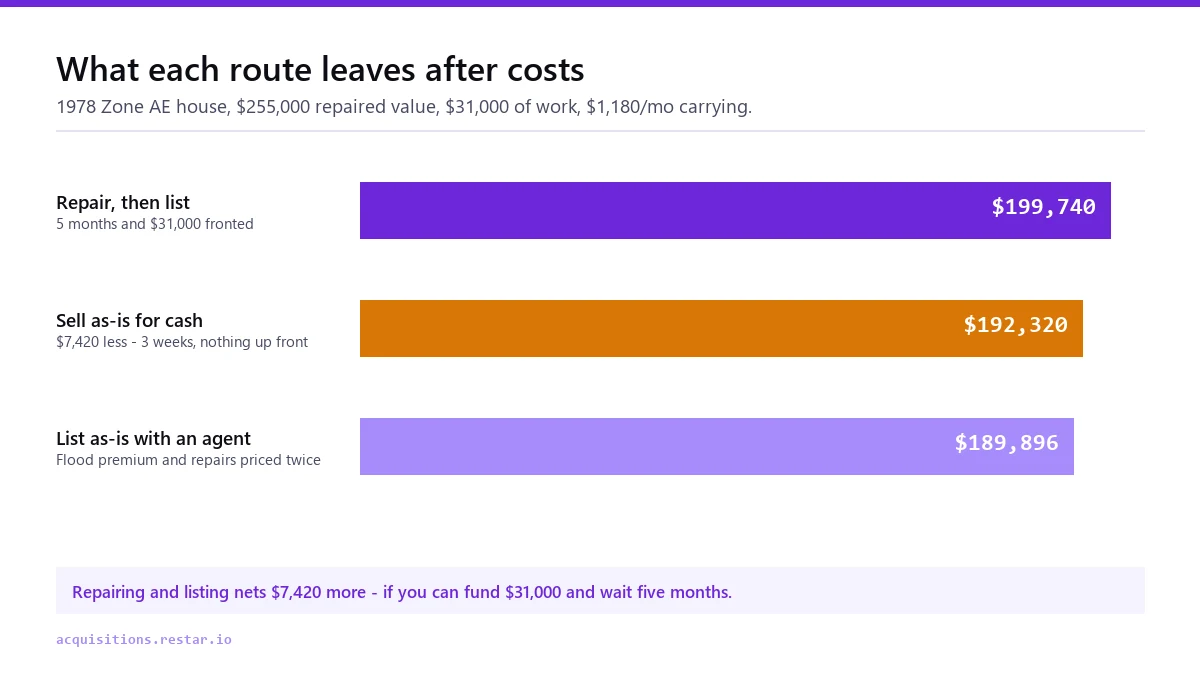
Selling a house in a flood zone: how the mandatory insurance rule shrinks what buyers can bid, why your policy is worth transferring, and the 50 percent rule.
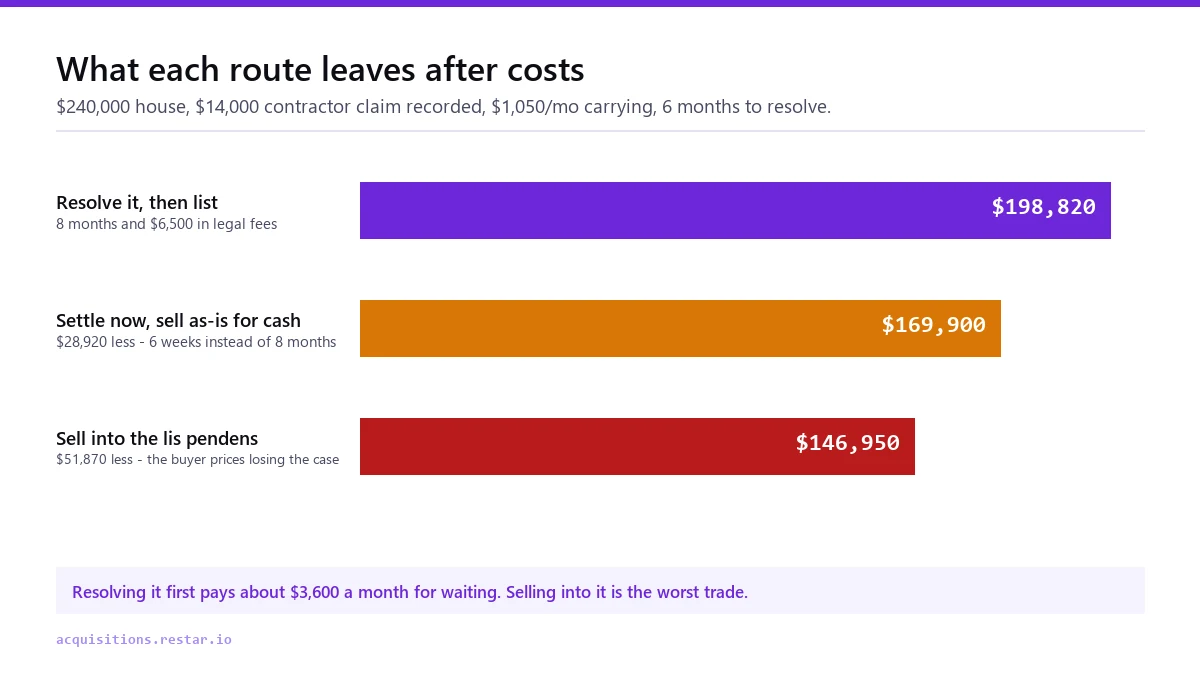
A lis pendens does not stop a sale, it stops the closing. What it is, who files them, the five ways one comes off, and why resolving it first usually nets far more.
When do you get your money after closing: why signing is not funding, what the Fedwire cutoff means for a Friday closing, and the five things that delay it.
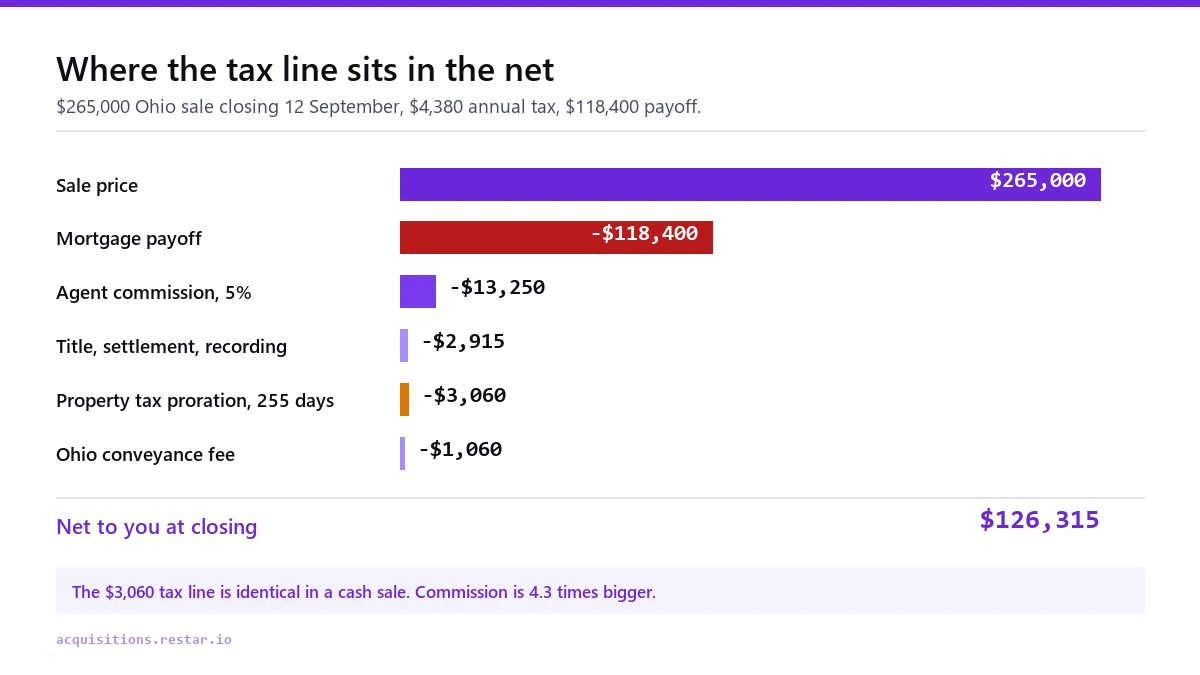
Who pays property taxes when you sell a house: the proration arithmetic line by line, why arrears and advance states behave in opposite directions, and a worked net.
A life estate splits the house between a life tenant and the remaindermen. Who has to sign to sell it, how the proceeds divide, and the tax trap in a lifetime sale.
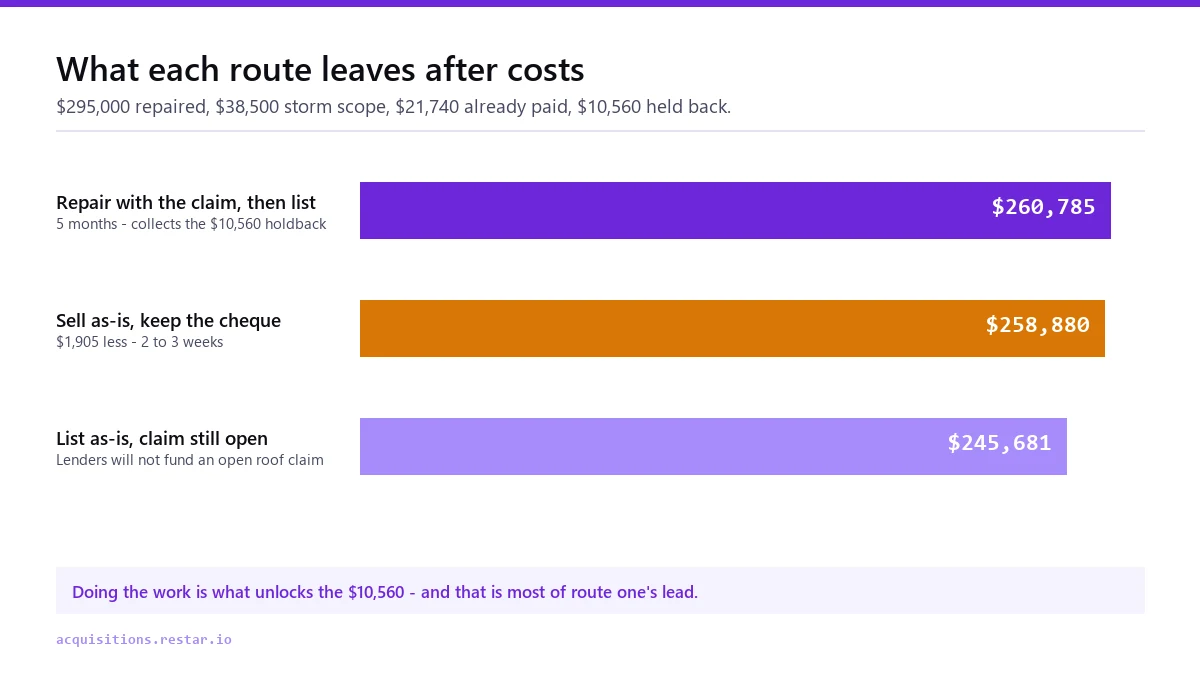
A claim in progress and a house you want to sell. Who keeps the check, what recoverable depreciation is, and what you forfeit by selling without repairing.
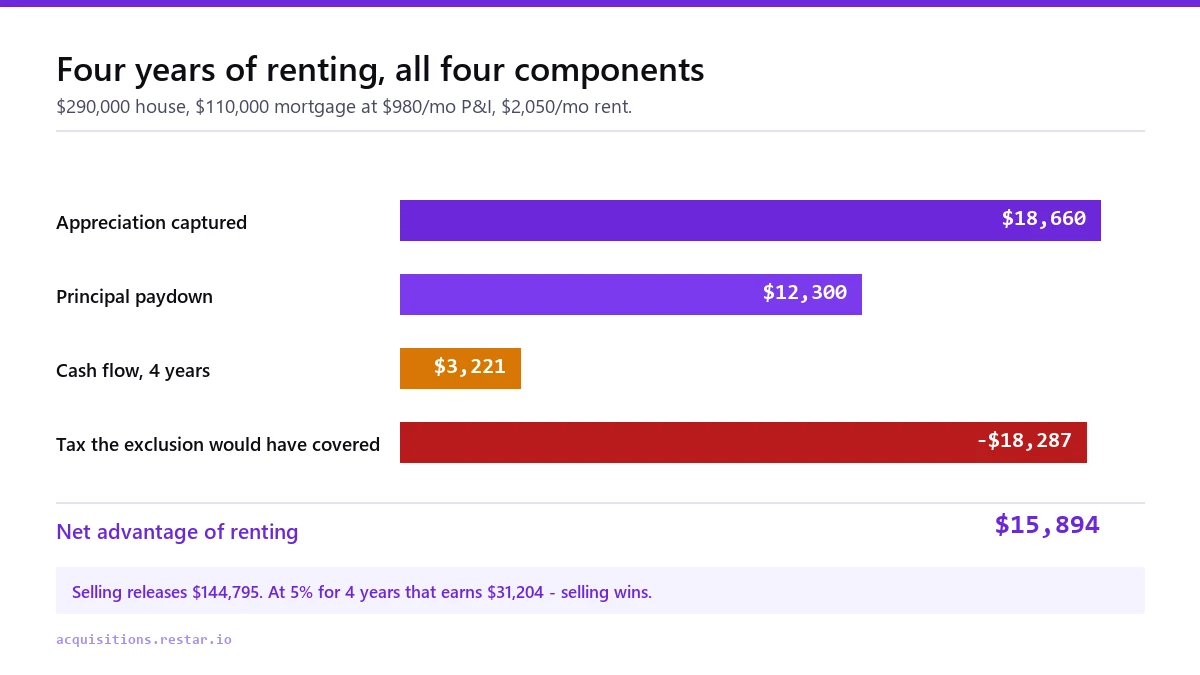
Rent minus mortgage is not cash flow. The real math on renting versus selling, including the capex reserve, the section 121 clock, and the equity sitting idle.
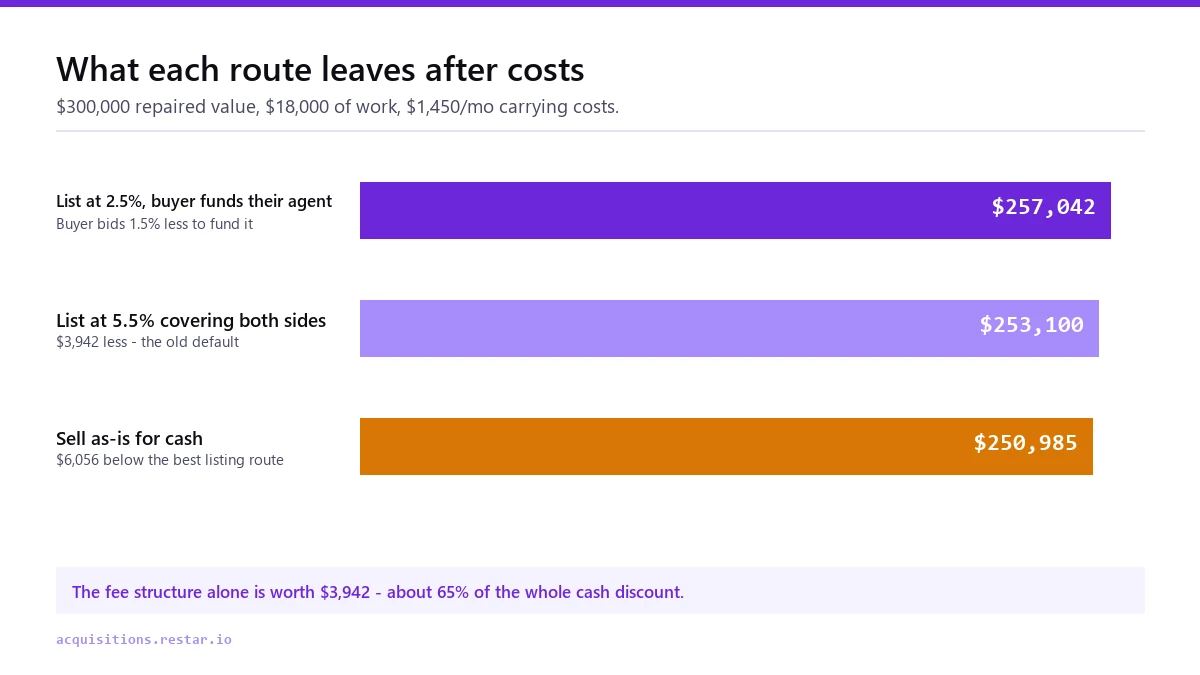
Sellers traditionally paid both agents. The 2024 changes made the buyer side negotiable. What that is worth in dollars, and why the fee never fully leaves you.
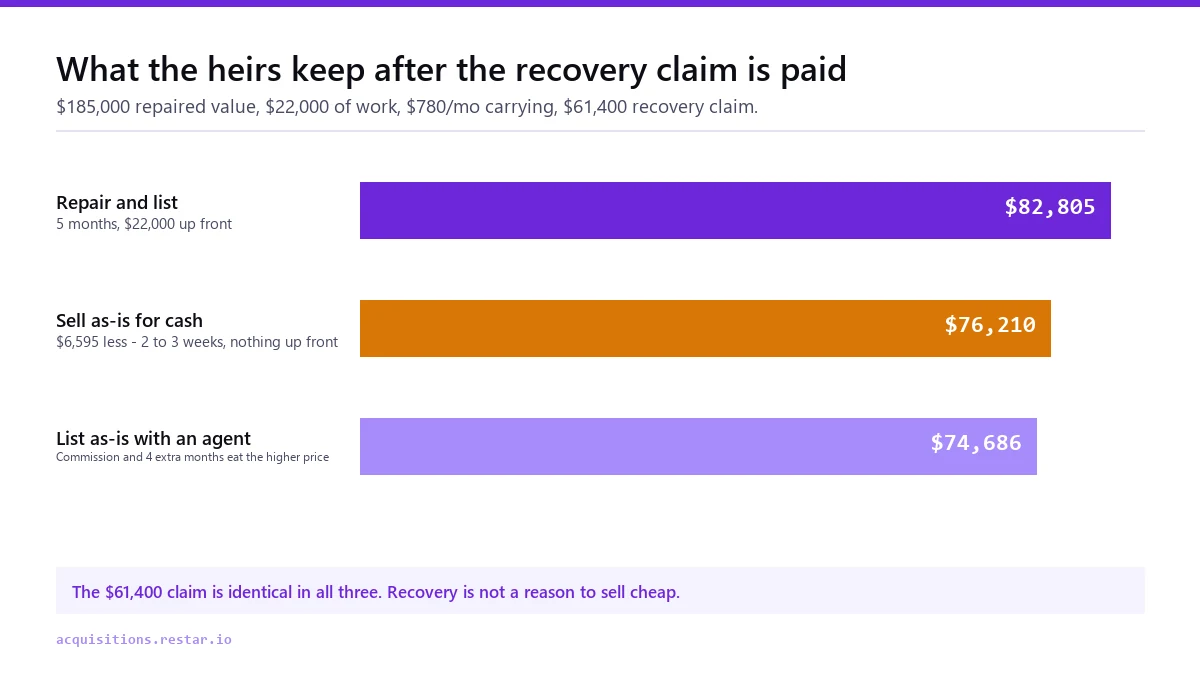
Medicaid estate recovery explained: what the state can claim, who is protected, the hardship waiver, and how the claim gets paid when you sell the house.
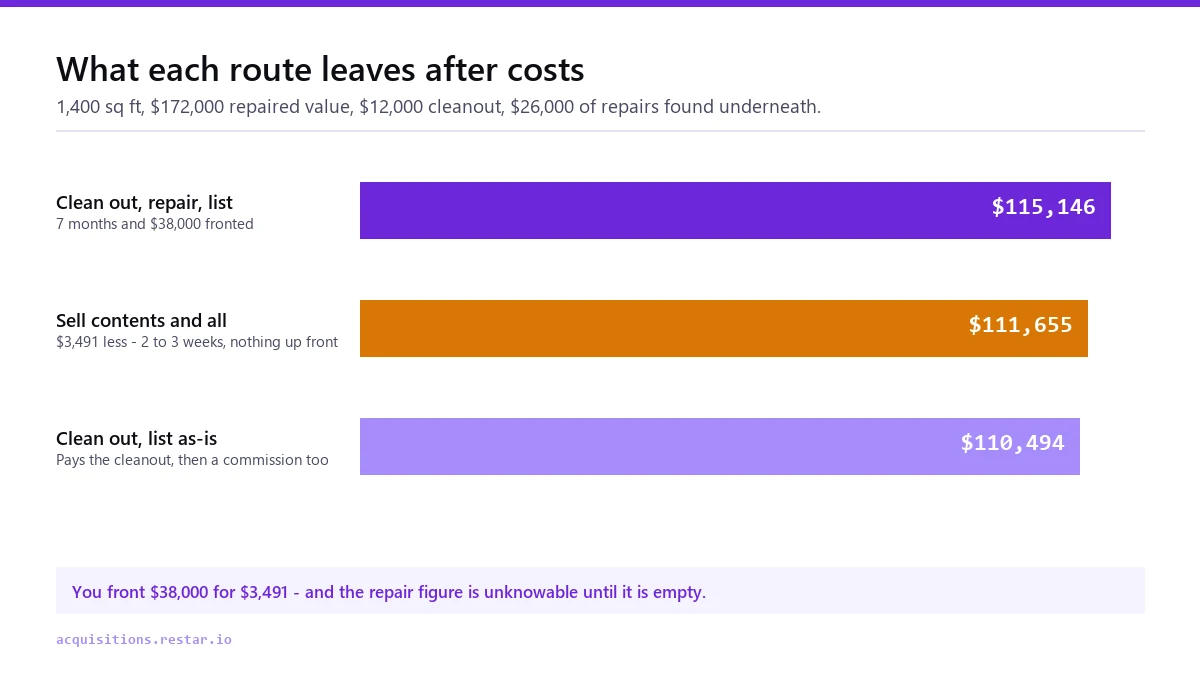
Selling a hoarder house: real cleanout arithmetic, why financed buyers disappear, the safety rules that change the price, and the three routes compared.
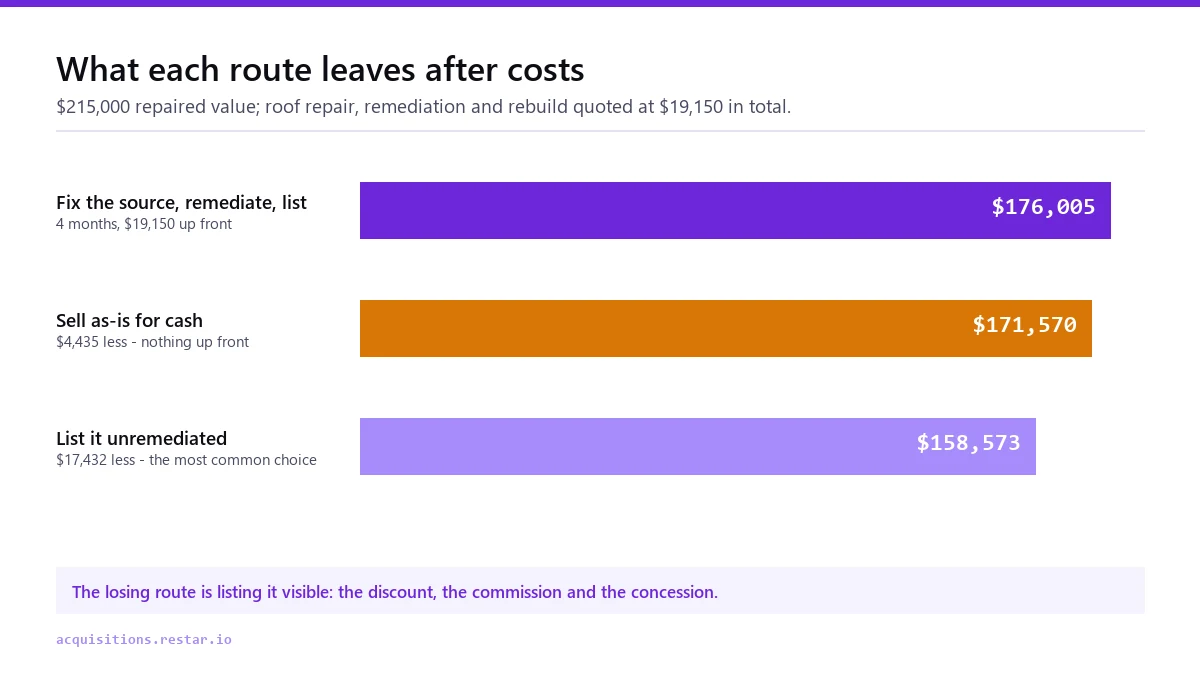
Selling a house with mold: what you must disclose, what remediation really costs, why testing is usually a waste, and the three routes compared with real numbers.
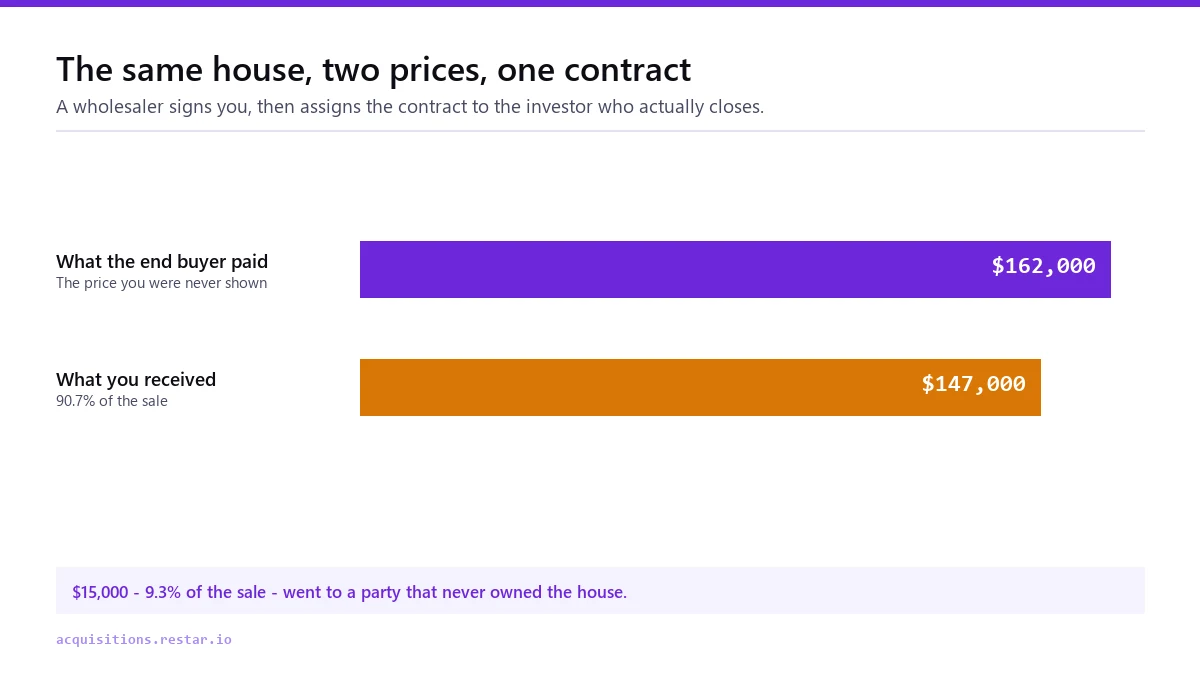
An assignment fee is paid out of the gap between your contract price and what the end buyer pays. How to spot an assignment, price it, and decide if it is worth it.
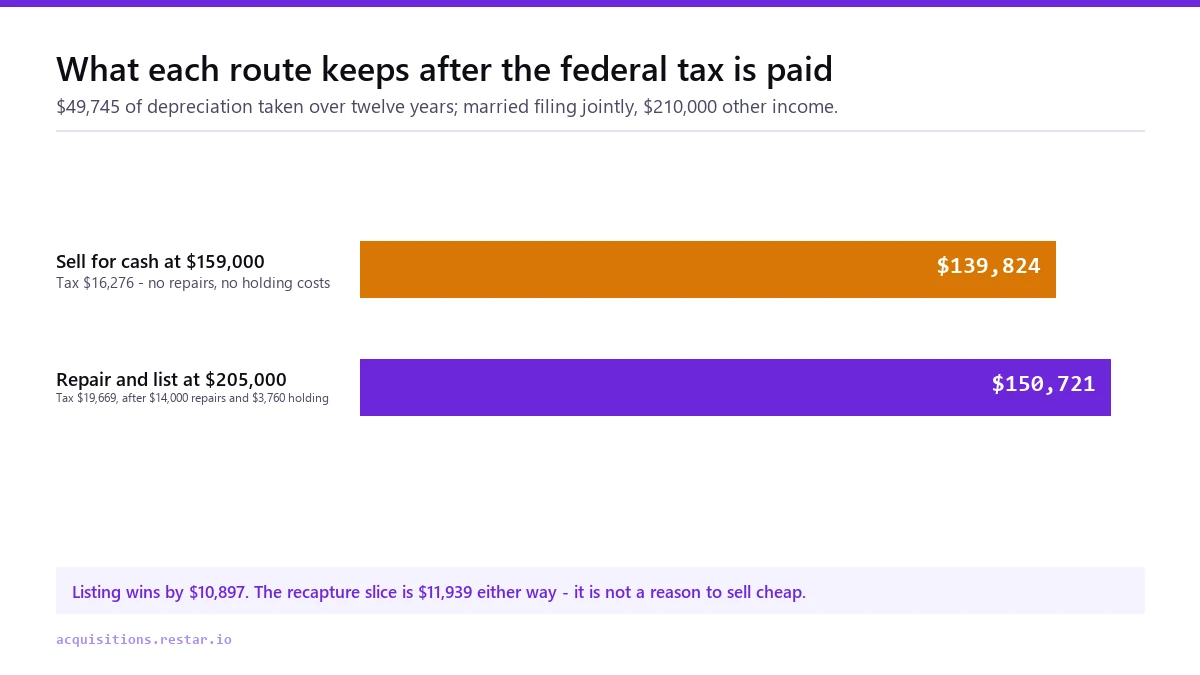
Depreciation recapture when selling a rental, worked to a number: the 25% cap, why you owe it even if you never claimed it, and why it barely moves between routes.
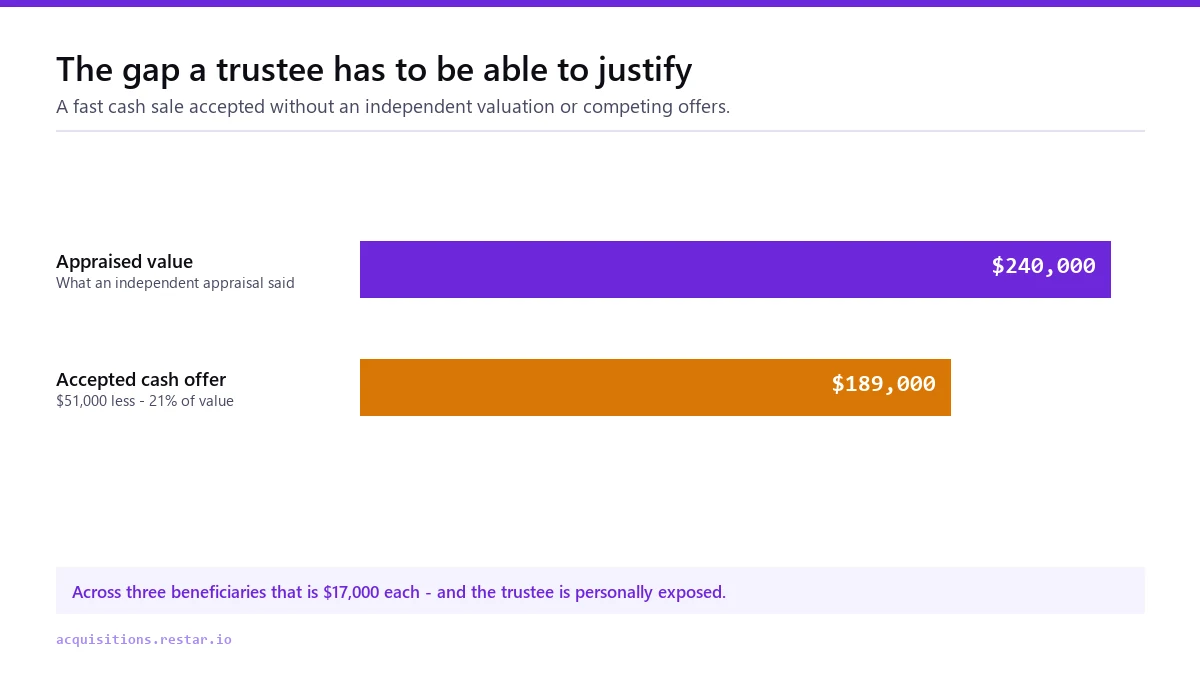
Selling a house held in a trust: the authority you must prove, the fiduciary duty that exposes you personally, and why a fast cash sale needs documenting.
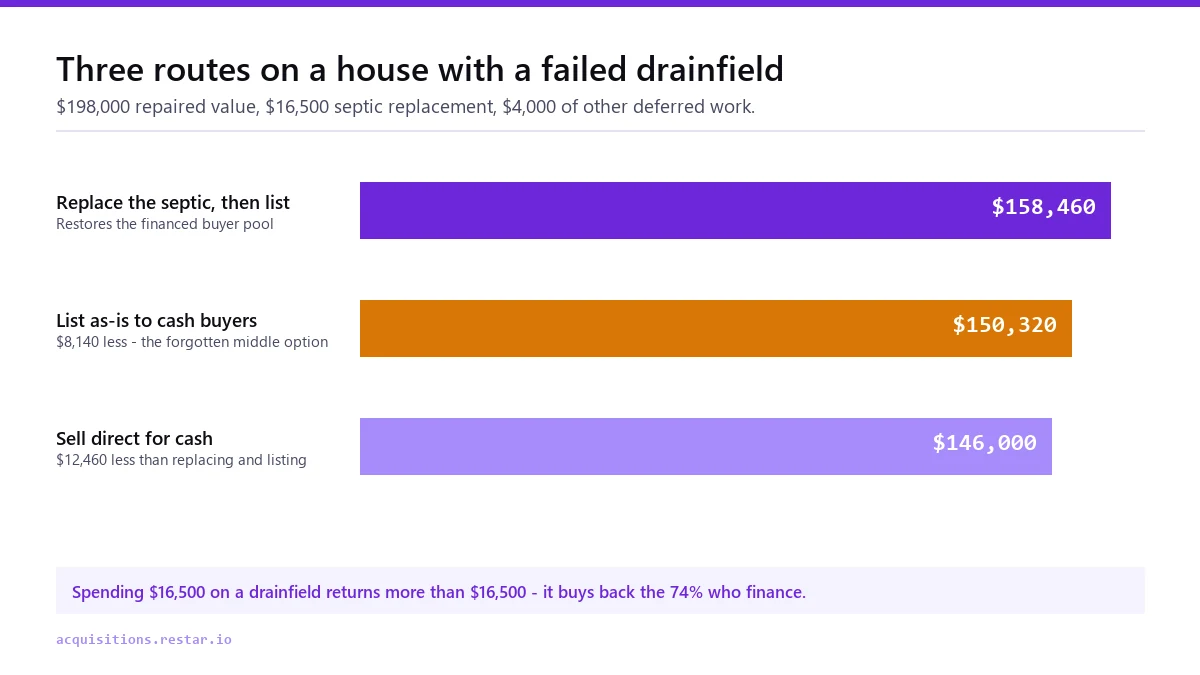
Selling a house with a failed septic system: why lenders block the sale, what replacement really costs, and the three-route math on one house worked to a number.
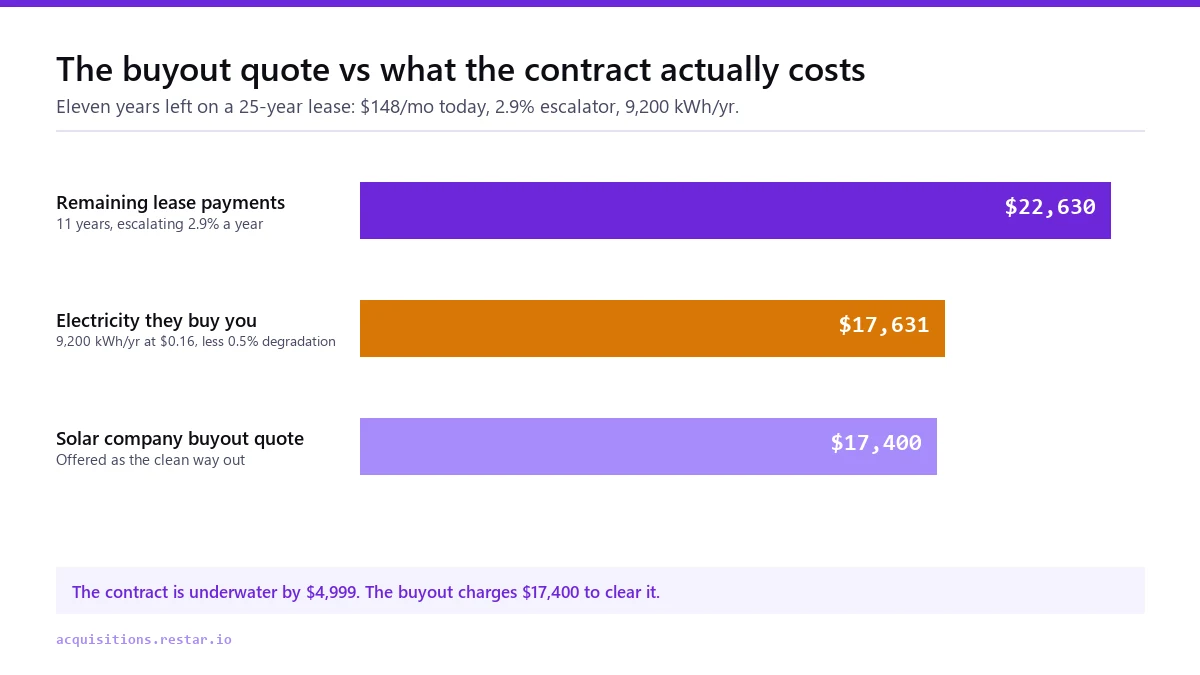
Selling a house with leased solar panels: how the transfer works, why a buyout quote is usually a bad deal, and the arithmetic on the remaining contract.
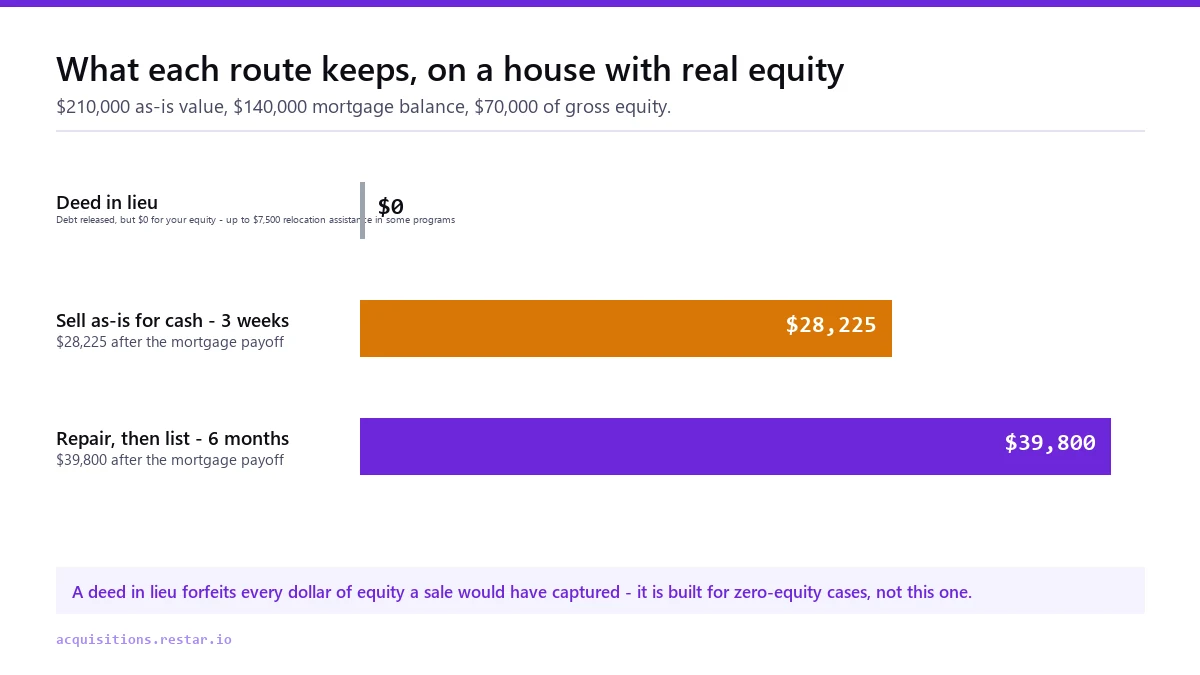
What a deed in lieu of foreclosure does, why it usually pays you nothing even with equity in the house, and the tax and credit consequences most explanations skip.
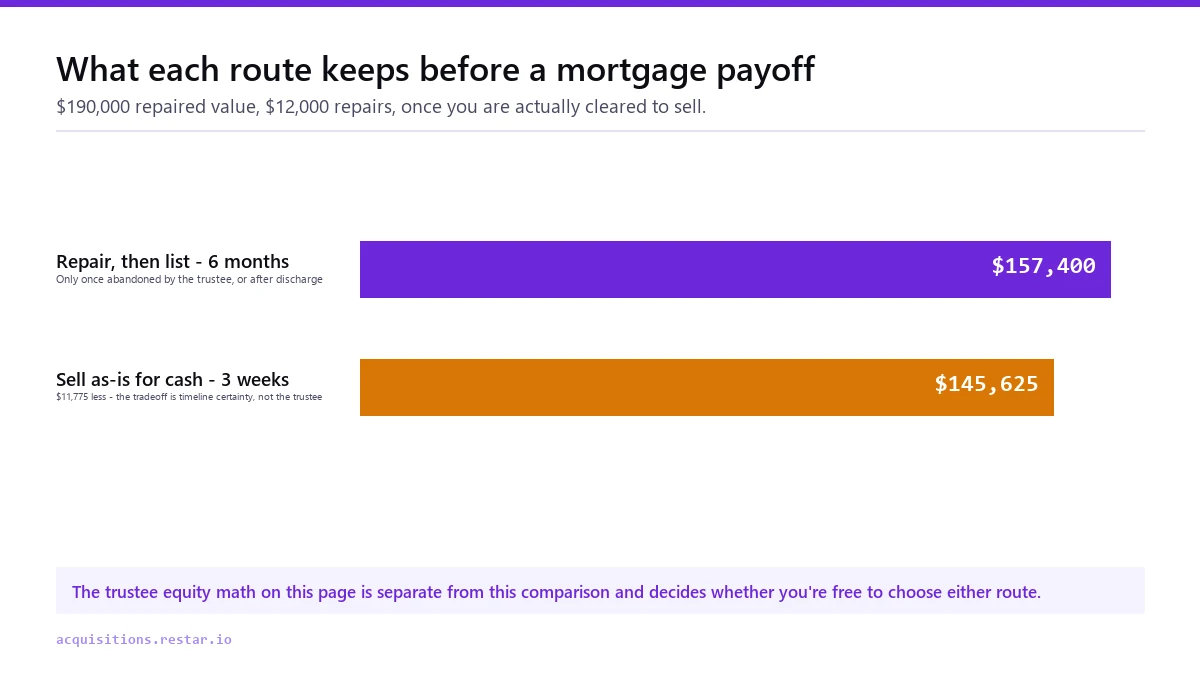
Whether selling a house during bankruptcy is allowed, what the trustee and automatic stay control, and what the numbers look like once you're cleared to sell.
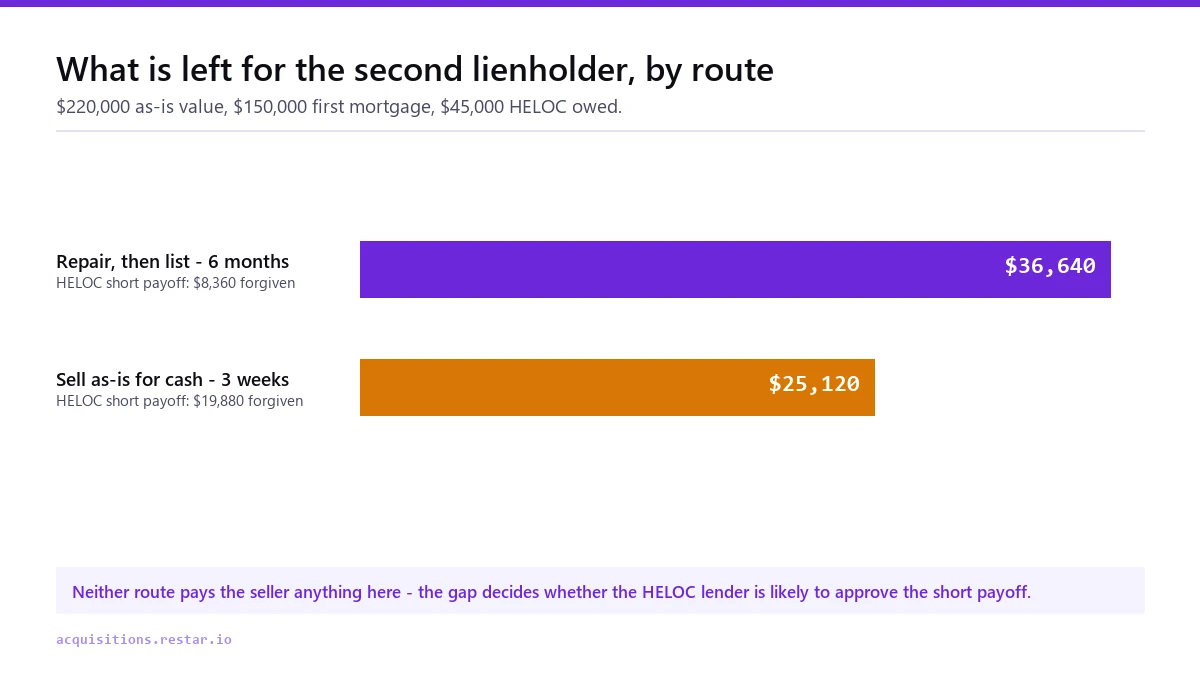
How sale proceeds actually split between a first and second mortgage or HELOC, why the second lienholder has to say yes, and the math that decides whether it does.
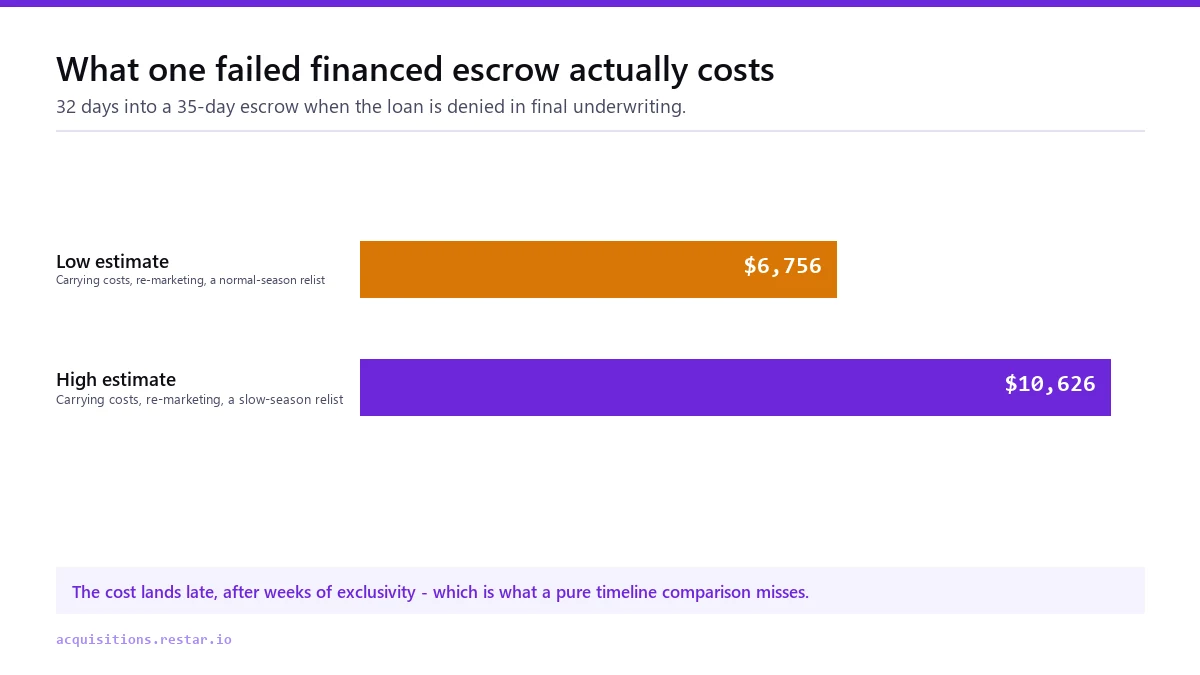
How fast can you really close on a house: the itemized timeline behind a financed sale, why deals fall through late, and what a collapsed closing actually costs you.
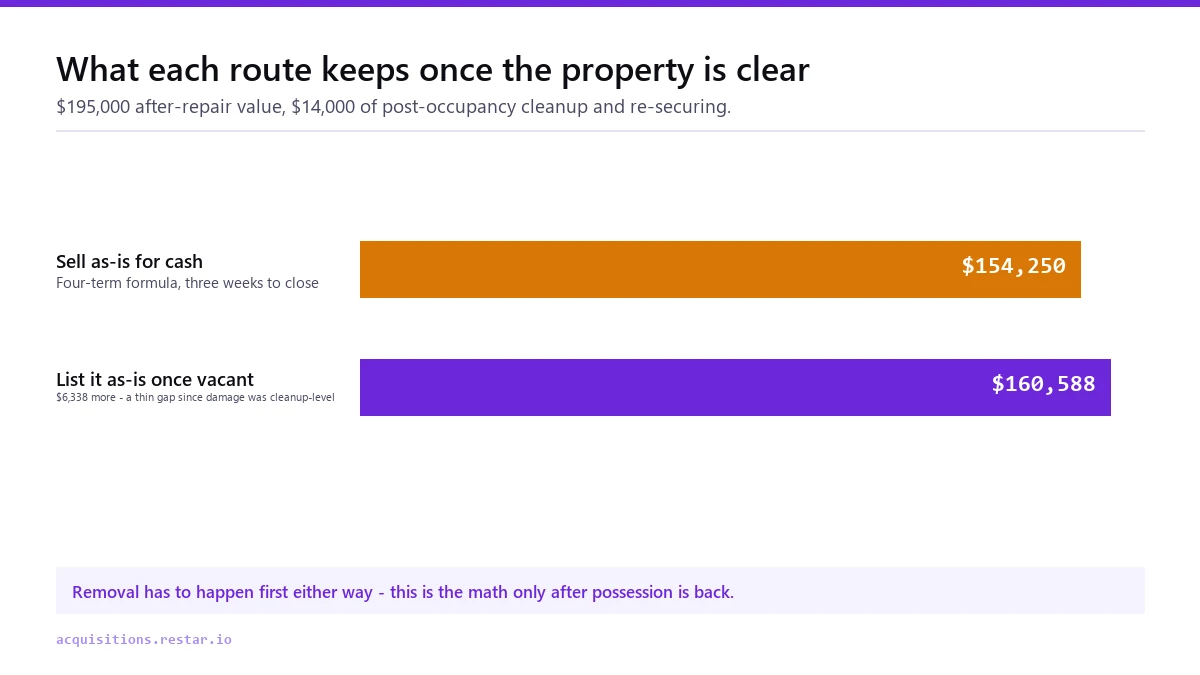
Selling a house with squatters is legal once they're removed. The real removal process by state, and why adverse possession almost never applies.
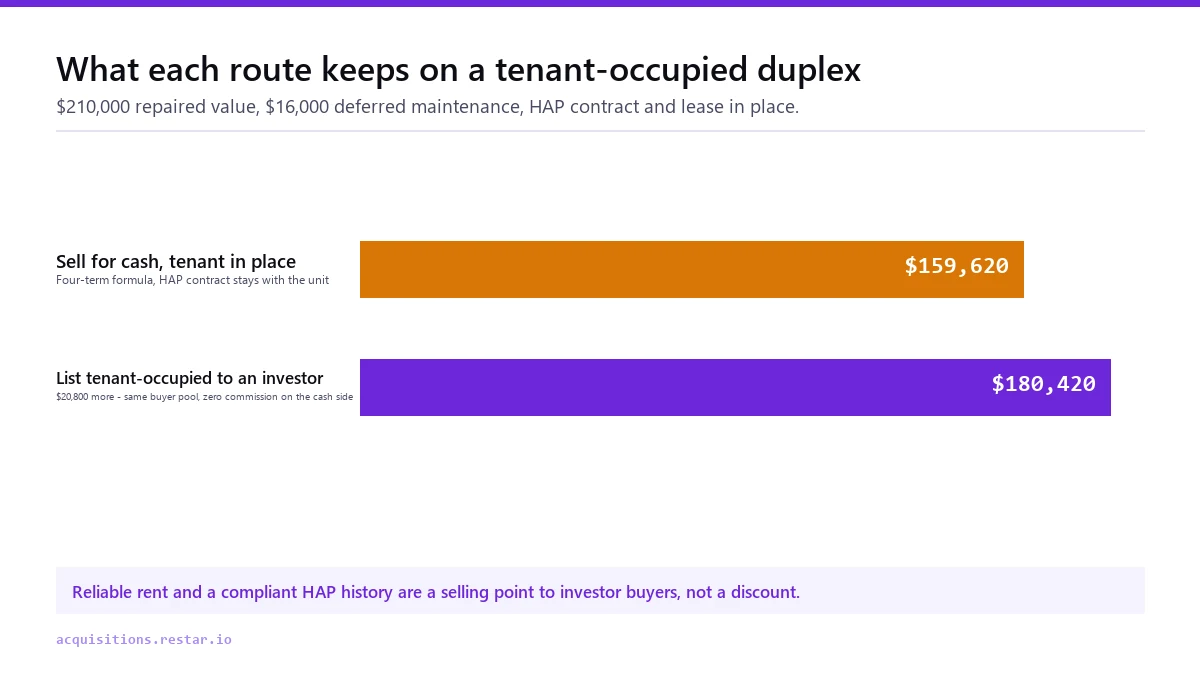
Selling a rental property with a Section 8 tenant: what happens to the HAP contract, whether the new owner has to take it over, and the real timeline to close.
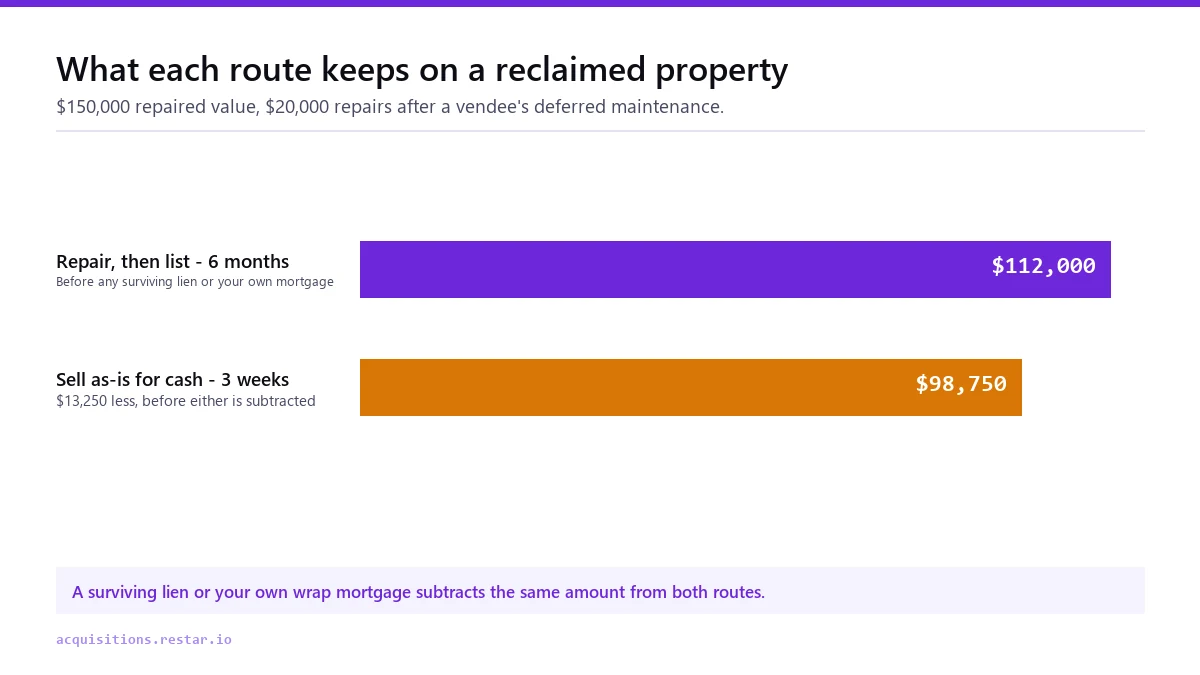
How land contract forfeiture works in Michigan, Ohio and Indiana, what a vendor actually gets back, and the honest math on selling the house afterward.
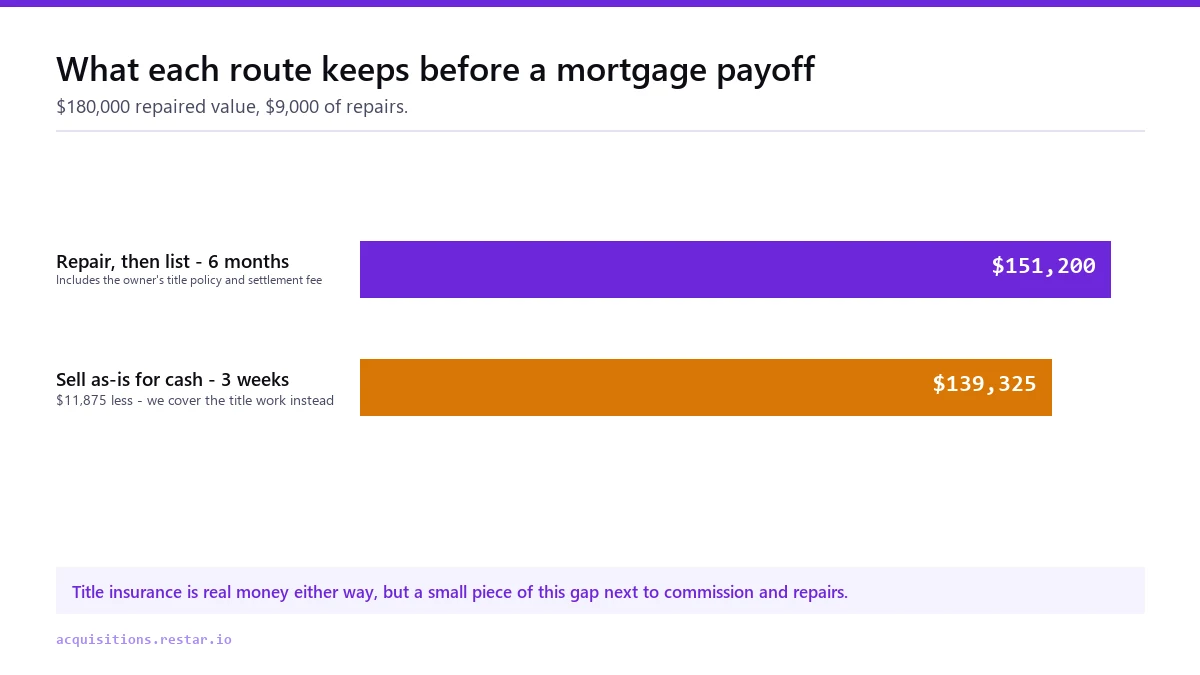
What title insurance costs, why owner's and lender's policies are priced differently, and the one thing a closing protection letter does not cover.
What actually has to happen before you can sell a house you inherited — probate, title, multiple heirs, taxes and the realistic timeline for each route.
Stepped-up basis explained with worked numbers — what you are likely to owe when you sell an inherited house, and the records to keep.
No mortgage does not mean no costs. The bills that keep running, the insurance gap most heirs miss, and how to decide whether to keep, rent or sell.
What actually applies when you sell a house in Ohio — the disclosure form, dower rights, conveyance fees, judicial foreclosure timelines, and what 'as-is' really means.
What actually happens at each stage of a foreclosure, which options stay open, and how to work out whether selling leaves you with money — with the arithmetic shown.
What transfers to the buyer when you sell a tenanted rental — the lease, the deposit, the obligations — plus depreciation recapture and the four routes compared with real numbers.
What applies when you sell a house in Michigan — foreclosure by advertisement, the post-sale redemption period, the 0.86% seller-paid transfer tax and the disclosure statement.
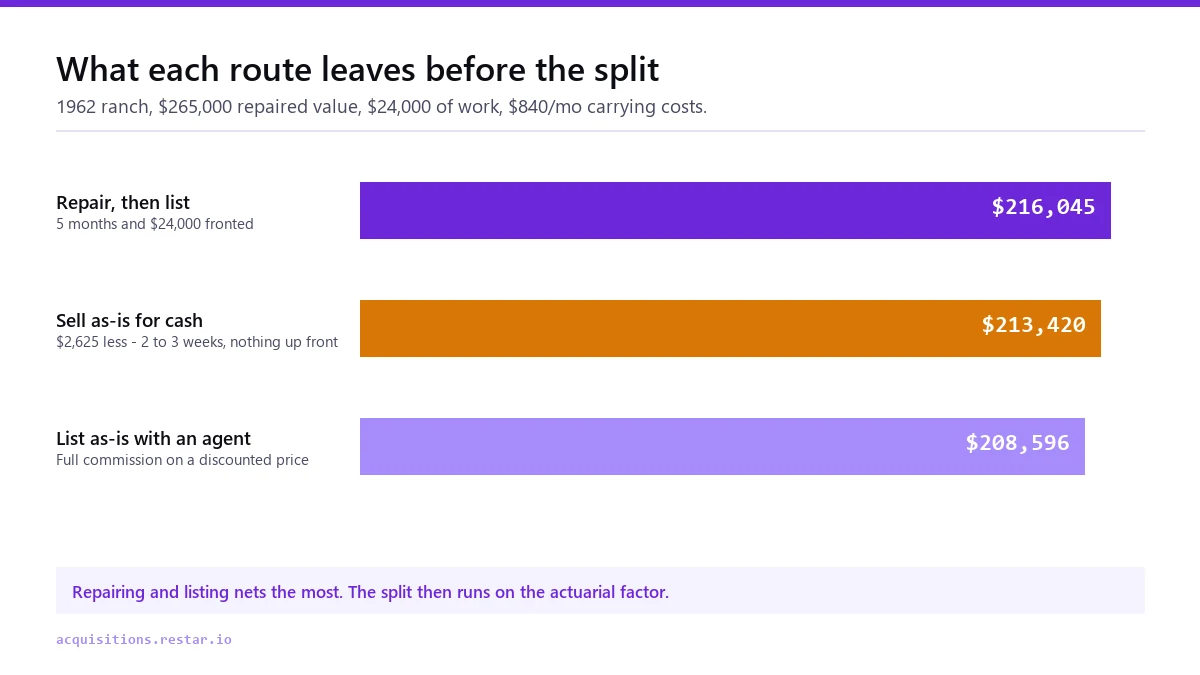
Two houses worked all the way through: what a cash offer and a listing each actually net you after commission, repairs, holding costs and concessions.
Selling a house during divorce: who must sign, how equity splits, the buyout math, and the tax timing that costs the most. Worked numbers on every route.
Selling a house with delinquent property taxes - how the lien is paid at closing, your real deadline by state, and what a tax foreclosure actually costs.
Selling a house in North Carolina: the clerk hearing, the 10-day upset bid, attorney closings, the 0.2% excise tax, and real medians across five markets.
Selling a house in Georgia: security deeds, first-Tuesday foreclosure sales, the 30-day confirmation rule, the 0.1% transfer tax and four markets' real numbers.
How cash home buyers calculate offers: the four-term formula worked to a number, the 70% rule's flaws, and what you would net on each route compared.
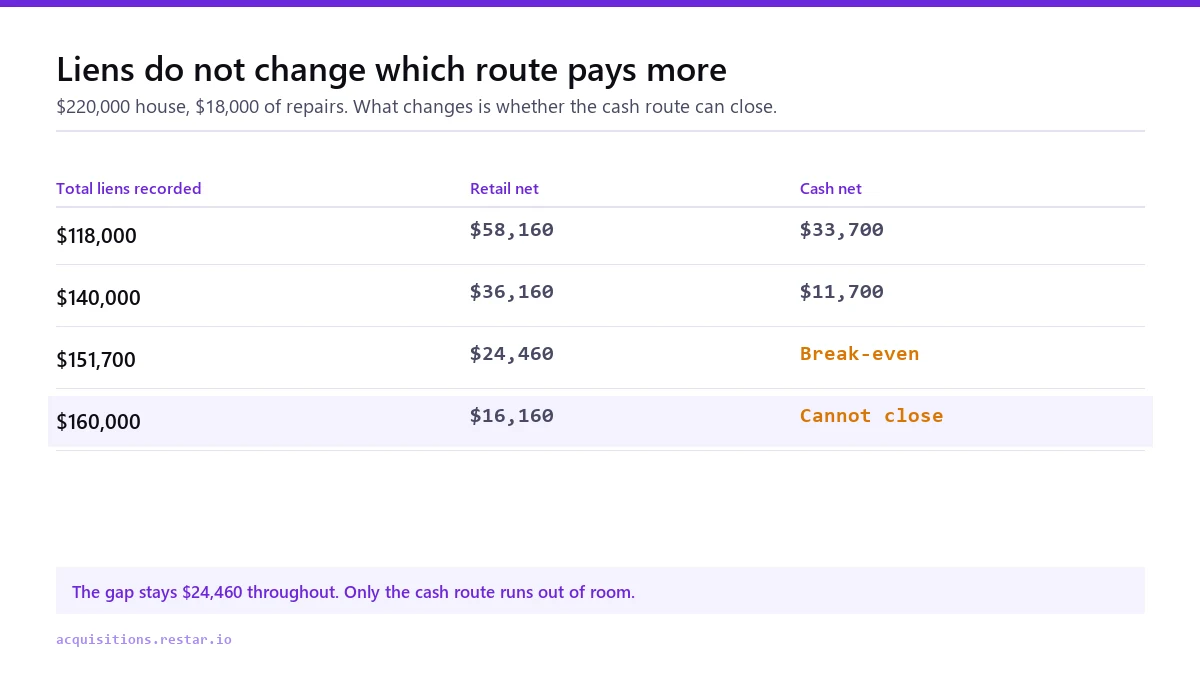
Selling a house with a lien on it: how liens are paid at closing, the priority order, the IRS discharge deadline, and the worked math on what you actually keep.
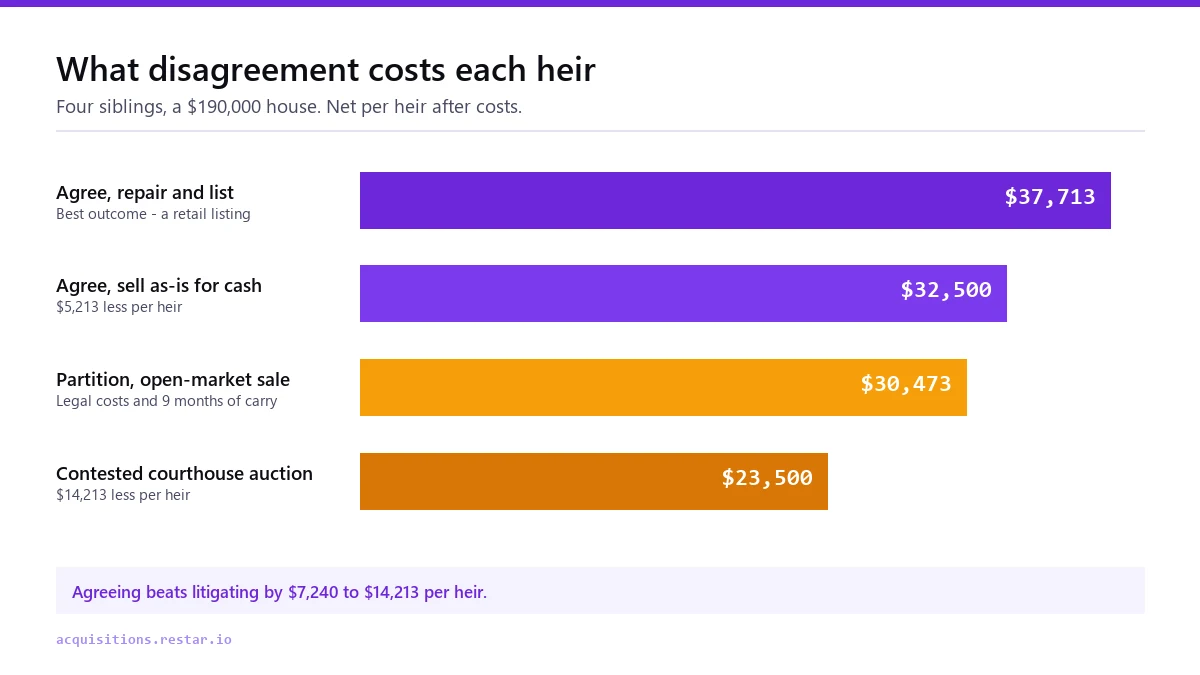
When heirs cannot agree to sell an inherited house: what one co-owner can force, how partition and the heirs property acts work, and the per-heir cost of fighting.
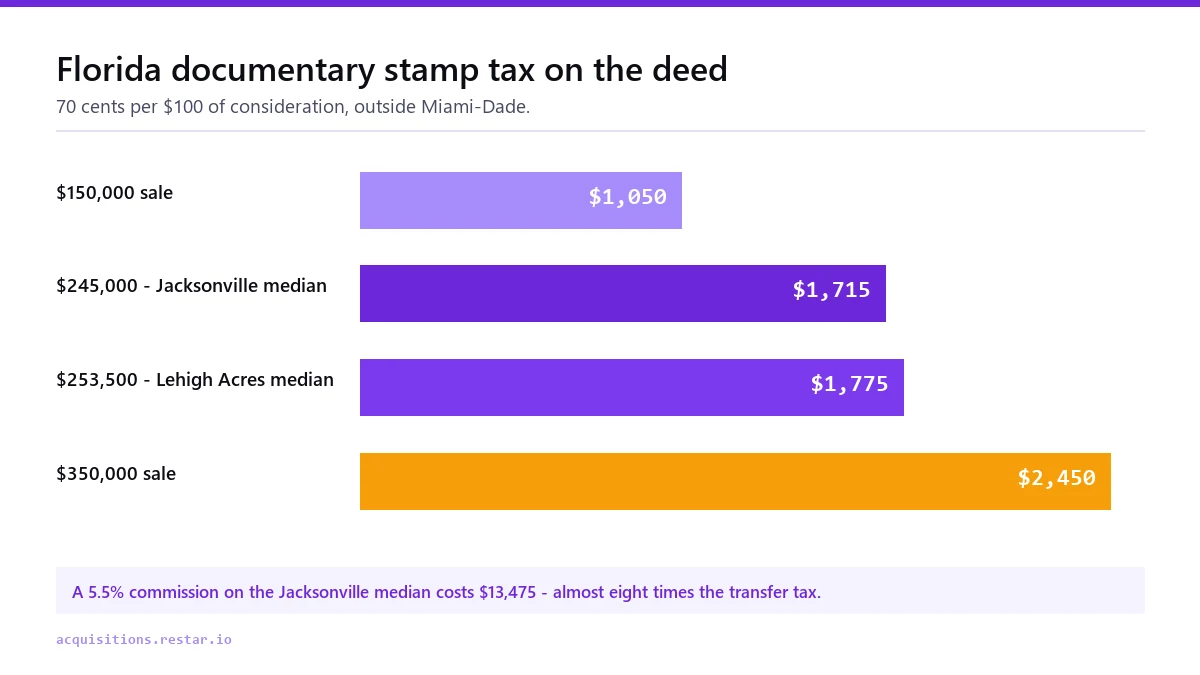
Selling a house in Florida: judicial foreclosure with no redemption after sale, the new flood disclosure law, doc stamps, condo reports and three markets' numbers.
Selling a house in Texas: the 20-day cure and 21-day notice before a first-Tuesday sale, the constitutional transfer-tax ban, tax-lien transfers and two markets.
The holding costs of a vacant house, itemised monthly and daily, the insurance vacancy clause that voids claims, and the break-even math against a cash sale.
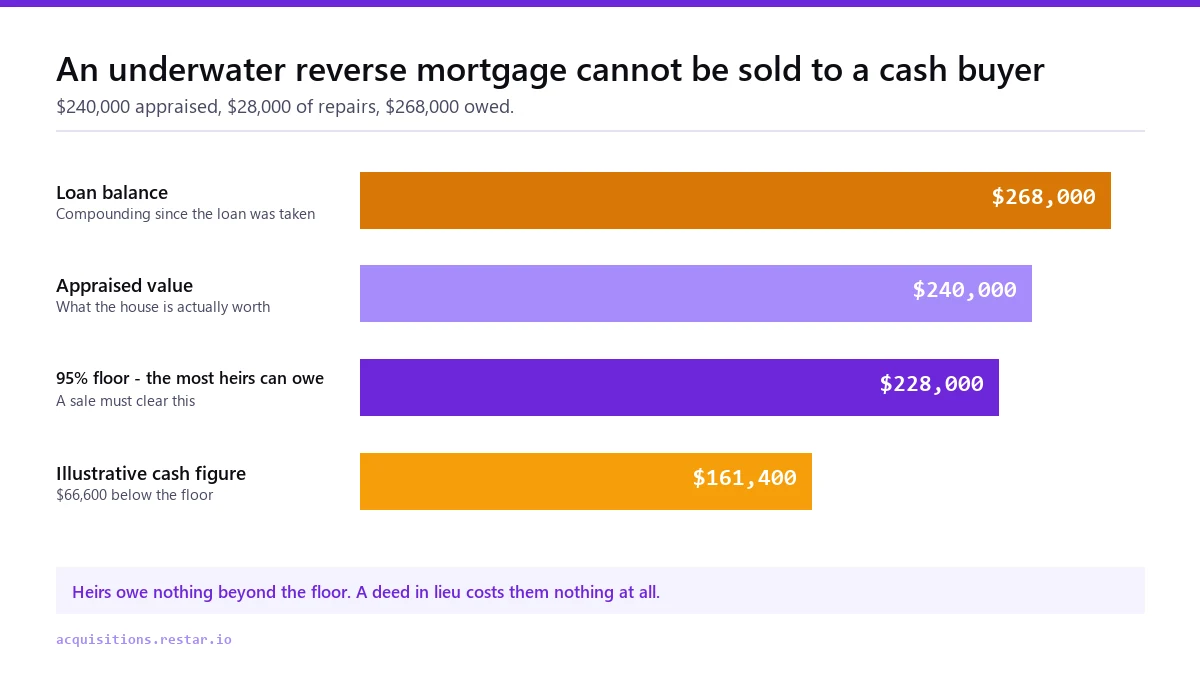
Selling a house with a reverse mortgage: the due-and-payable clock, the 95% of appraised value rule that caps what heirs owe, and worked math on every route.
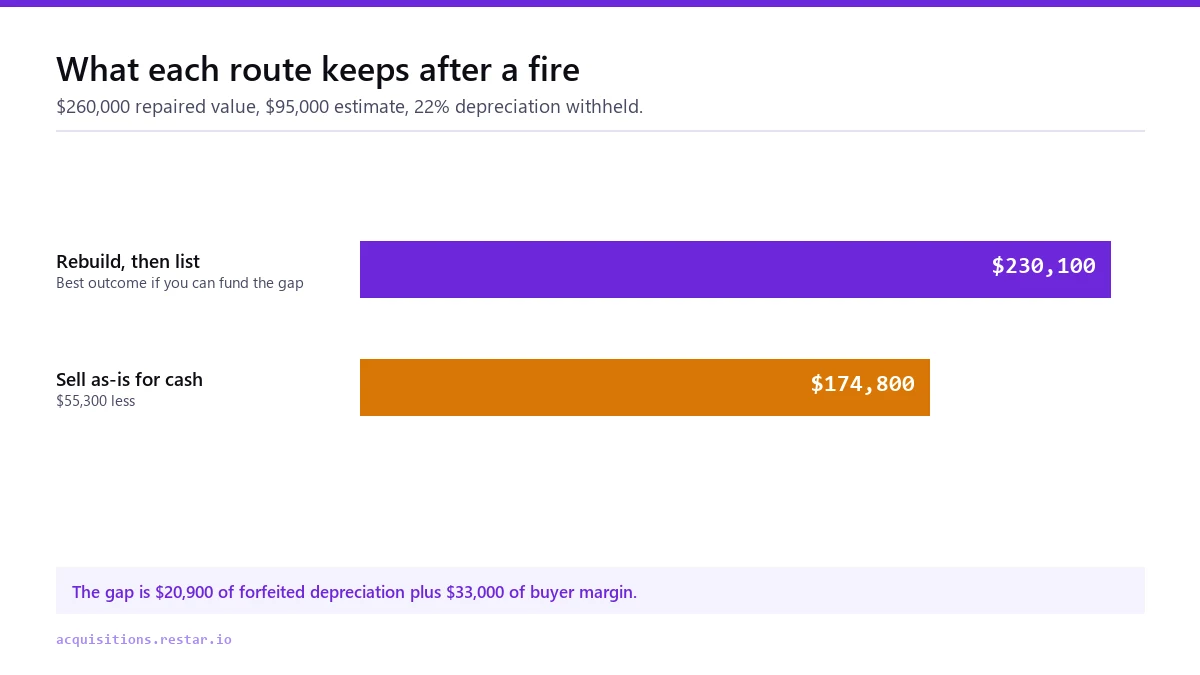
Selling a house with fire damage: how the claim is actually paid, the recoverable depreciation you forfeit by not rebuilding, and the math on both routes.
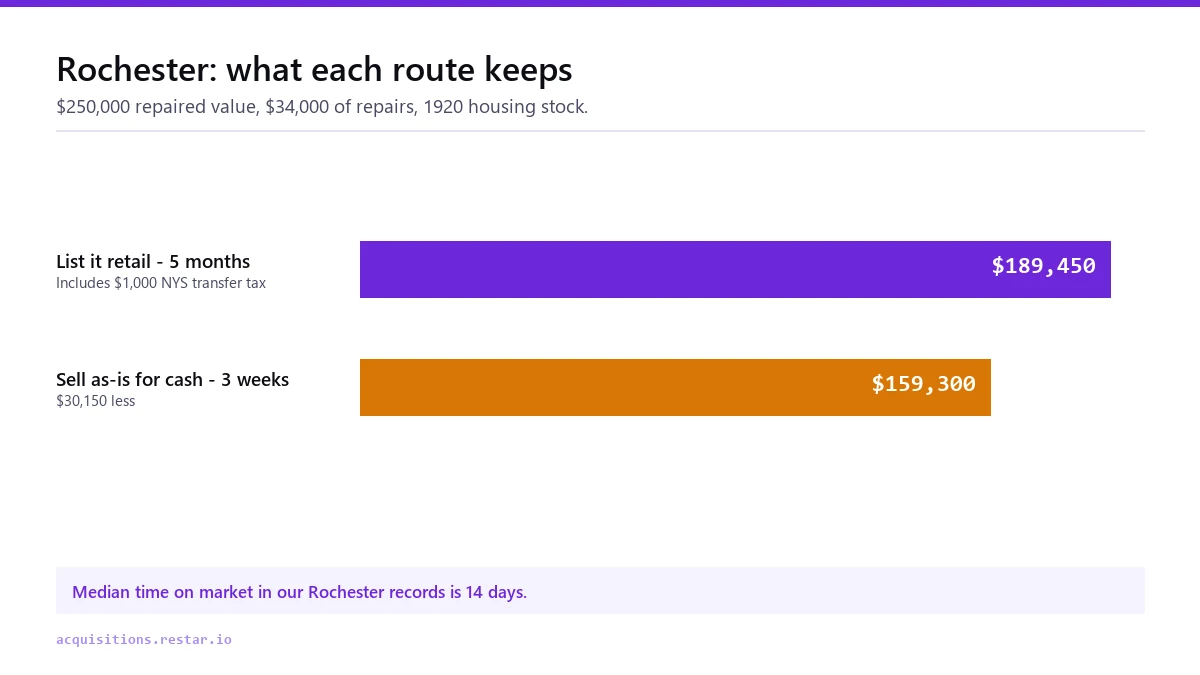
Selling a house in New York: the attorney closing, the disclosure rule that changed in March 2024, how slow NY foreclosure is, and Rochester's 2026 lead deadline.
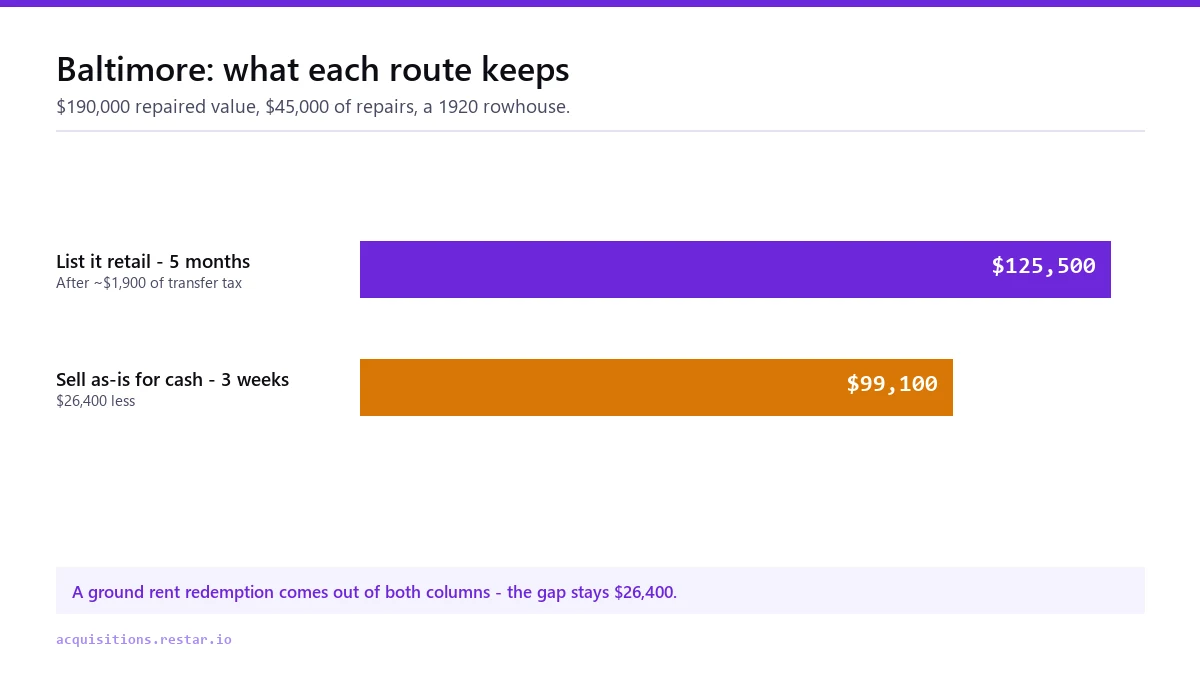
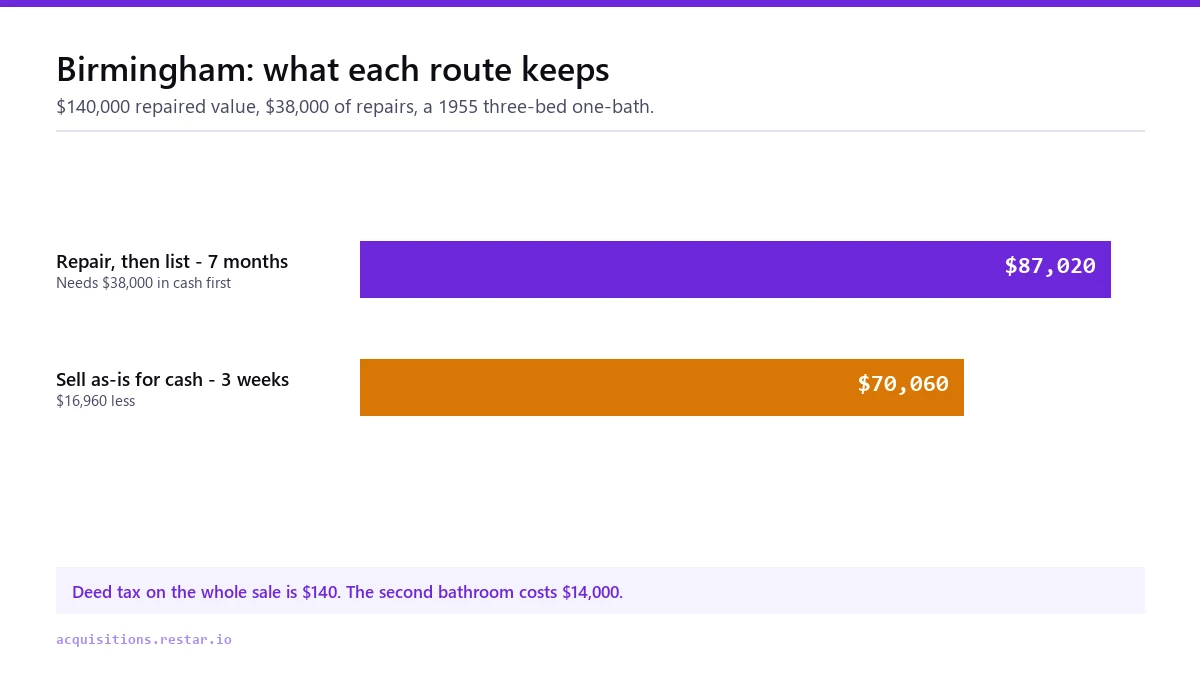
Selling a house in Maryland: how Baltimore ground rent is redeemed and priced, the tax sale thresholds and redemption interest, and worked net-proceeds math.
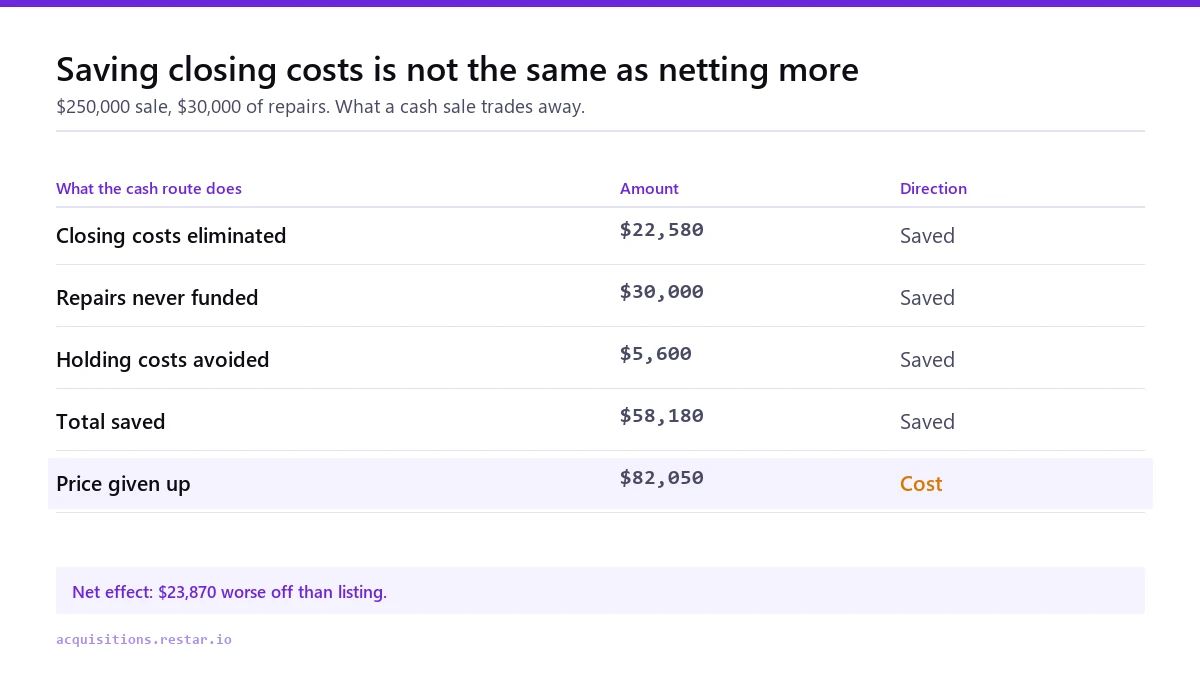
Seller closing costs itemised line by line on a $250,000 sale, what transfer taxes cost across ten states, and why a no-closing-cost cash sale can net you less.
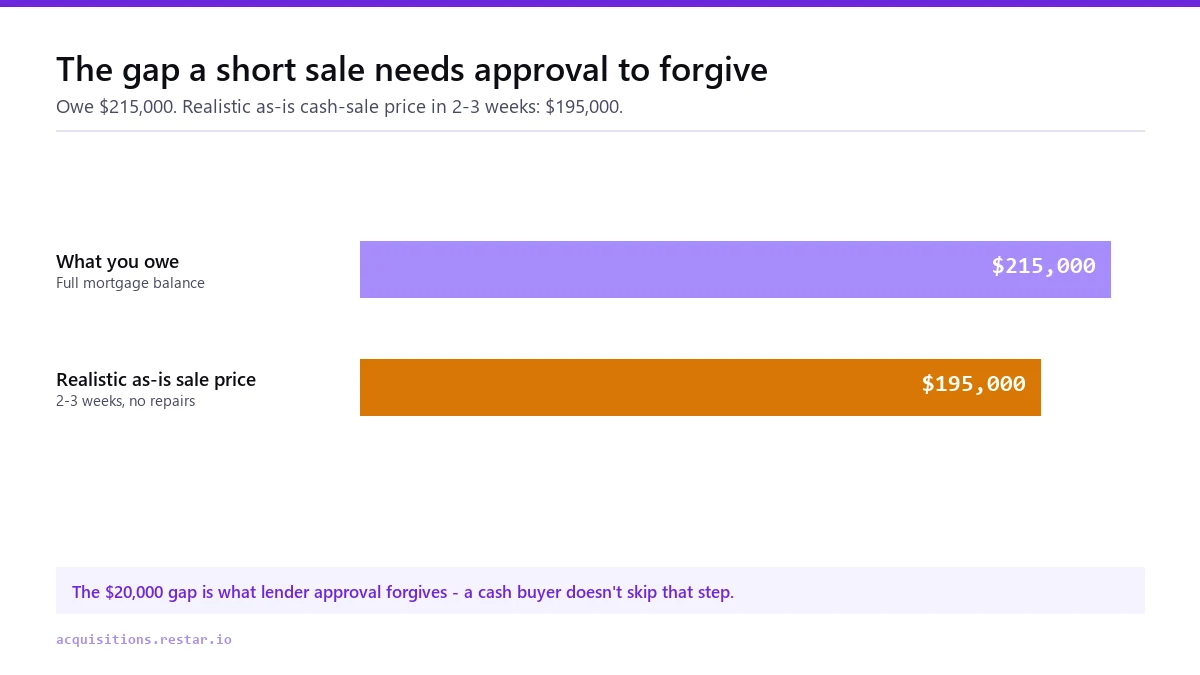
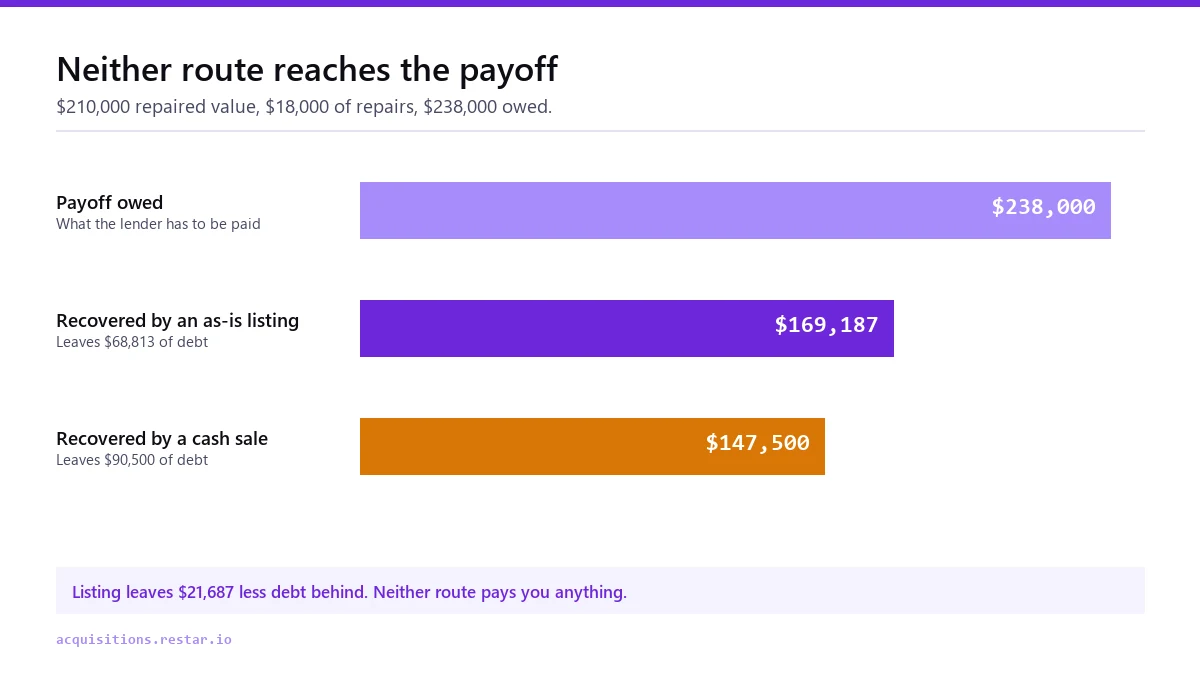
Selling a house worth less than you owe: why a cash buyer usually cannot help, how a short sale is actually approved, and the tax rule that changed in 2026.
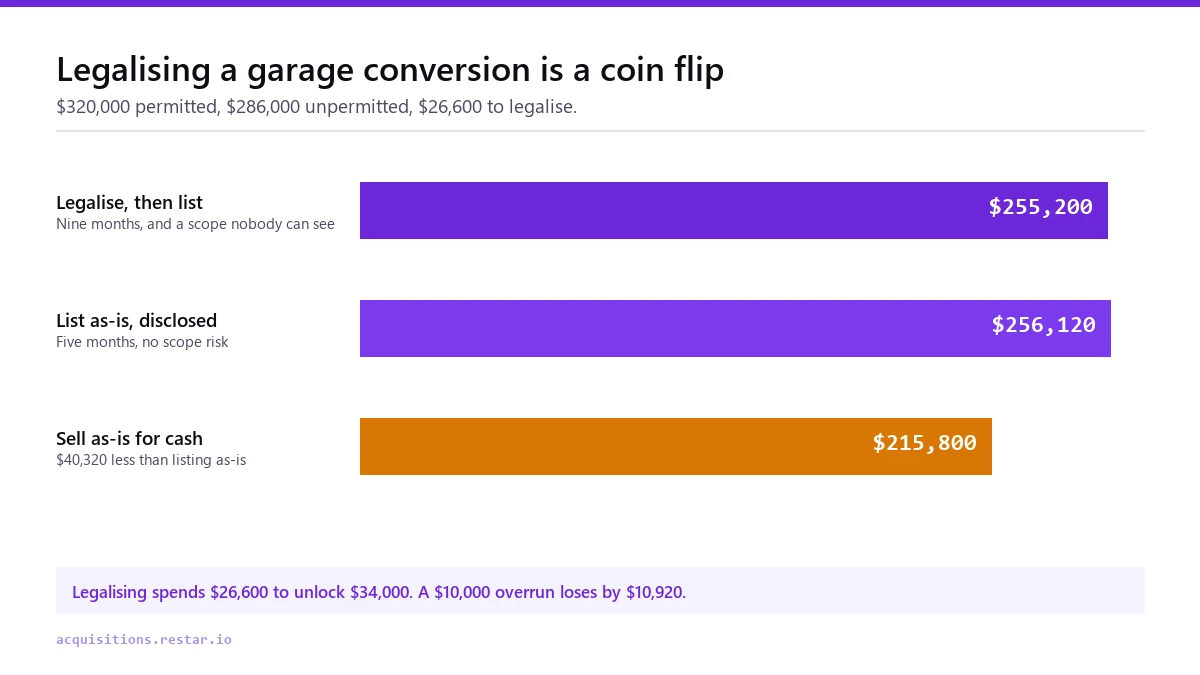
Selling a house with unpermitted work is legal almost everywhere. What it costs is square footage, financing options and insurance — with the math on legalising it.
Selling a house in Alabama: the state has no seller disclosure form, redemption runs after the foreclosure sale, and out-of-state sellers get 3% withheld at closing.
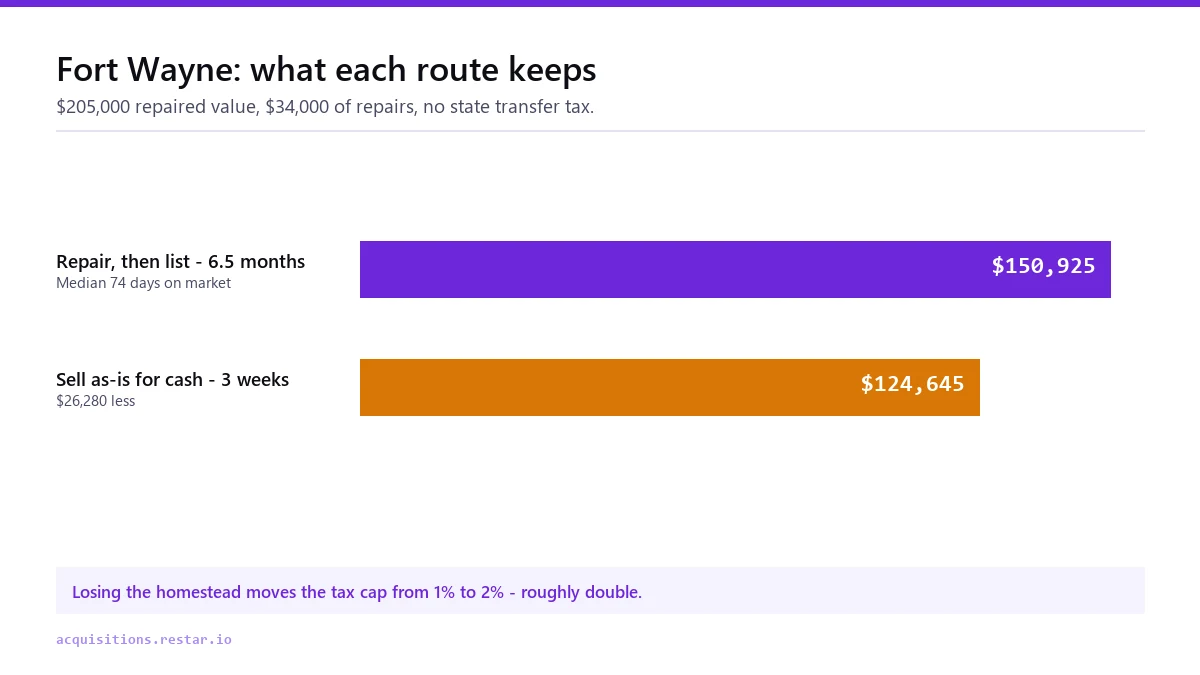
Selling a house in Indiana: the two disclosure forms people confuse, why redemption ends at the sheriff's sale, and how losing the homestead doubles the tax cap.
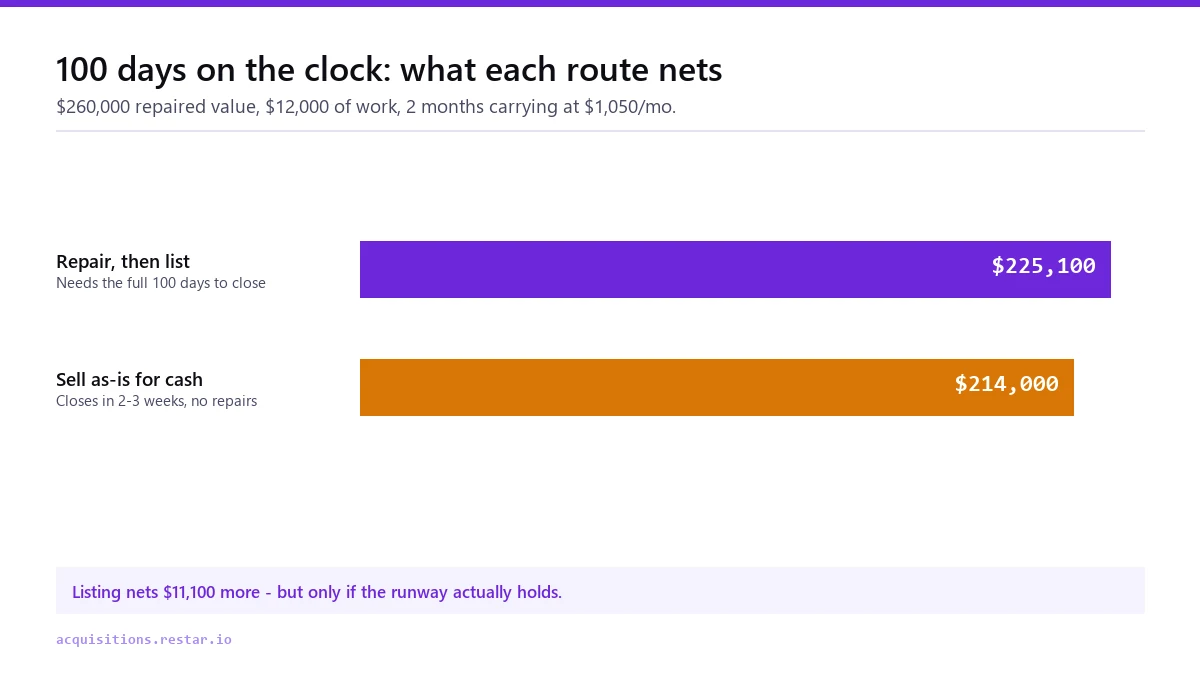
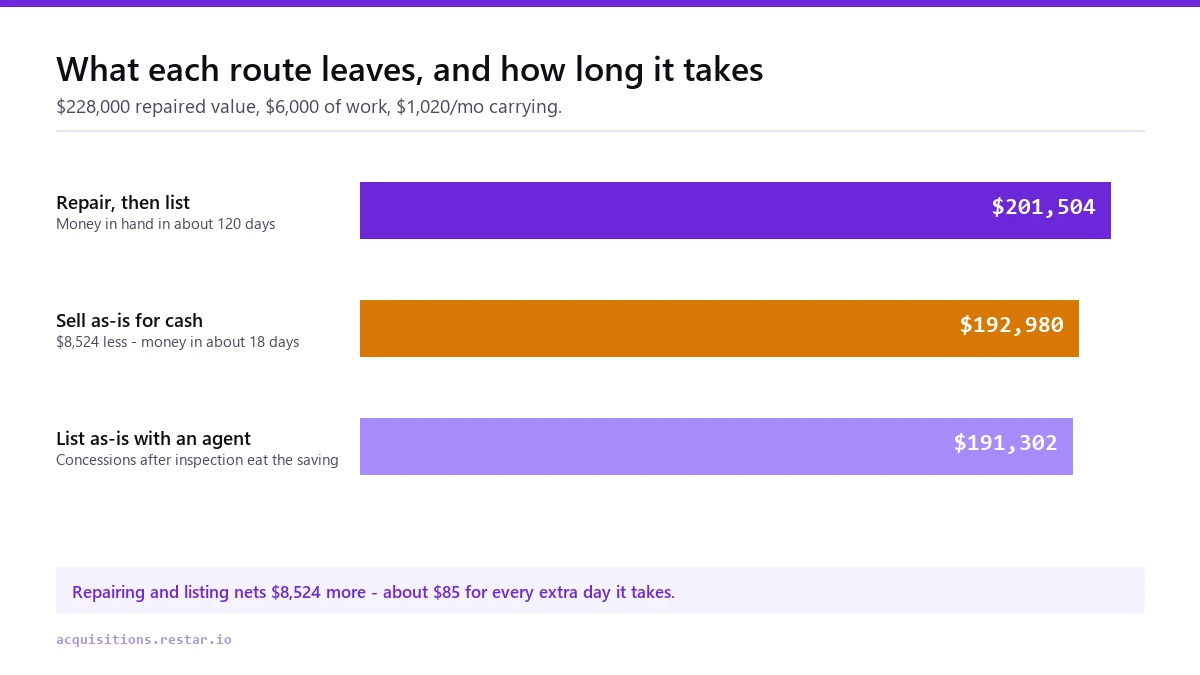
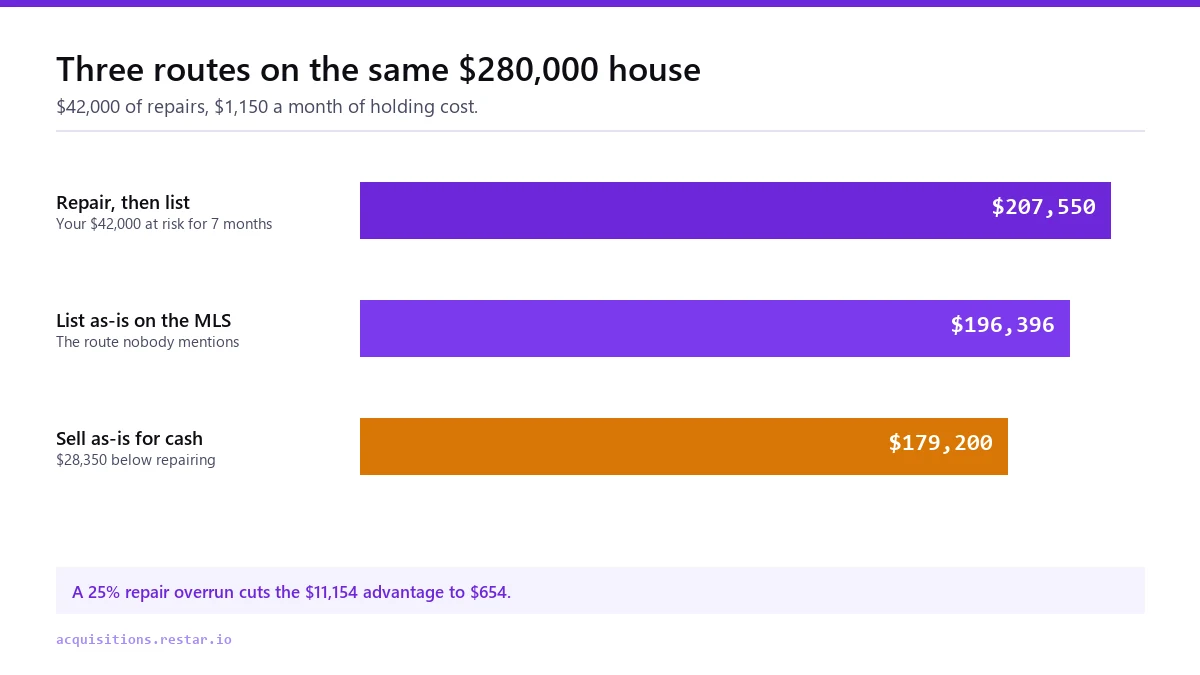
Should I repair before selling? The arithmetic on repairing then listing, listing as-is on the open market, and selling for cash — and where each one actually wins.
What earnest money actually is, realistic dollar amounts at every price point, where it sits during the deal, and exactly when you get it back versus when it is forfeited.
The real timeline from one missed payment to foreclosure eligibility — what your servicer is legally required to do, what hits your credit, and every option still open before day 120.
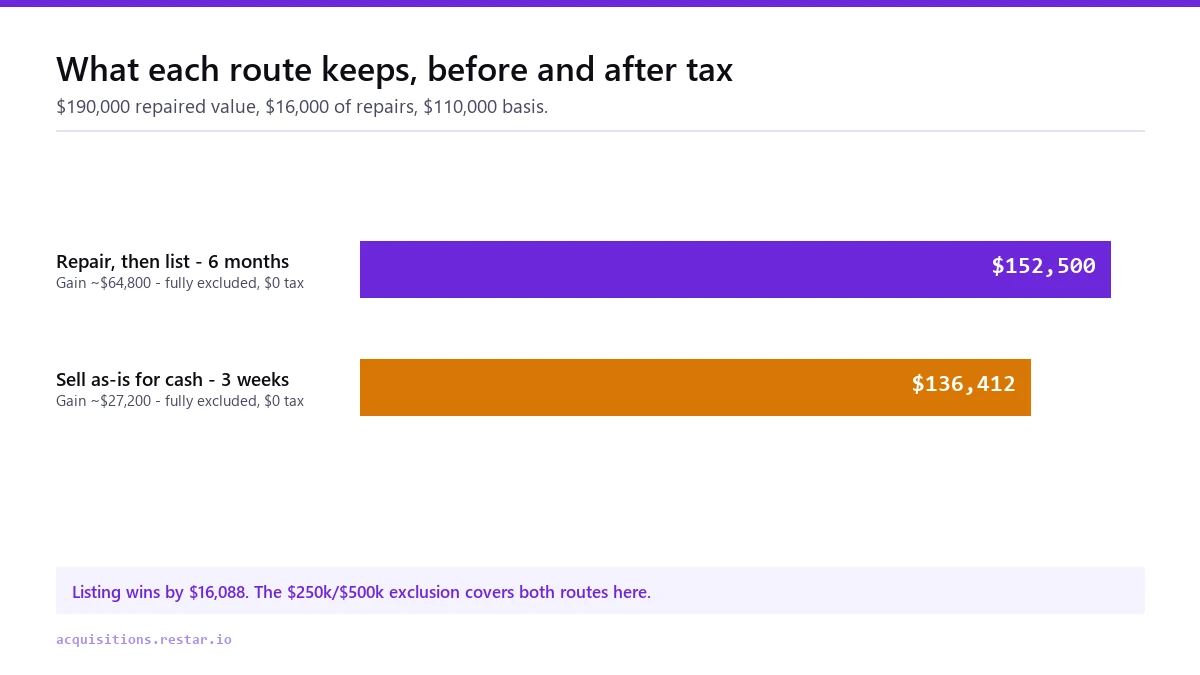
Capital gains tax when you sell your house: how gain is calculated, the $250,000/$500,000 exclusion, and the partial exclusion if you sell early.
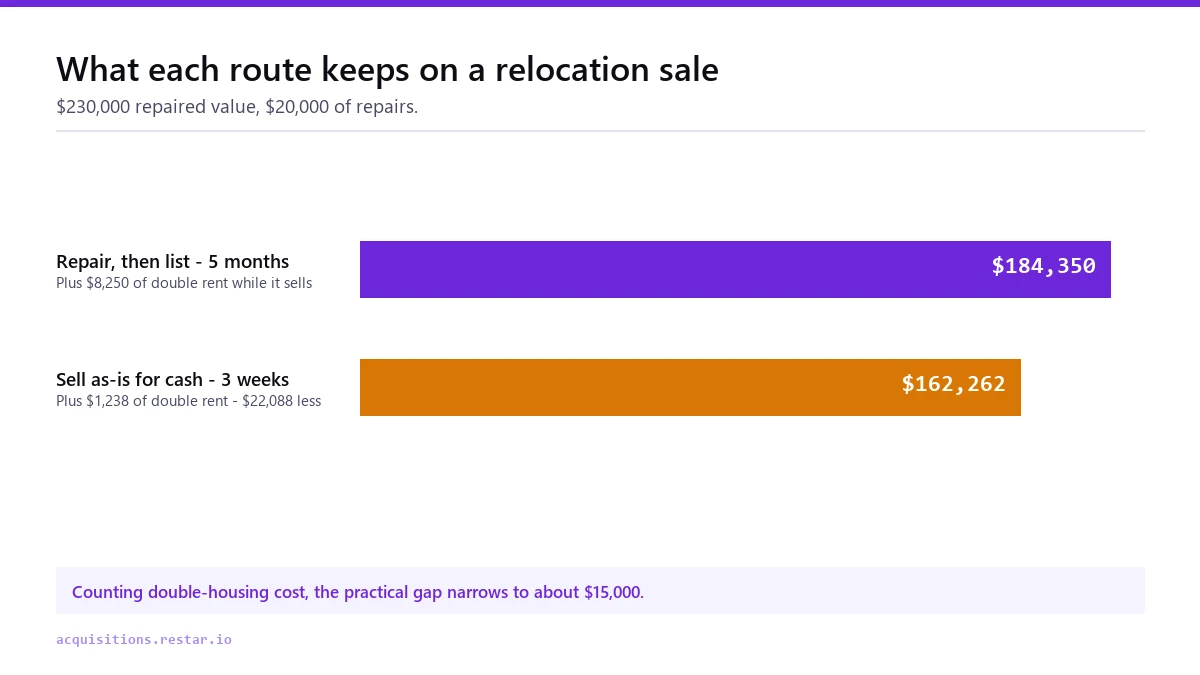
Selling a house for a job relocation: the partial capital-gains exclusion if you move early, the real cost of two homes at once, and selling from a distance.
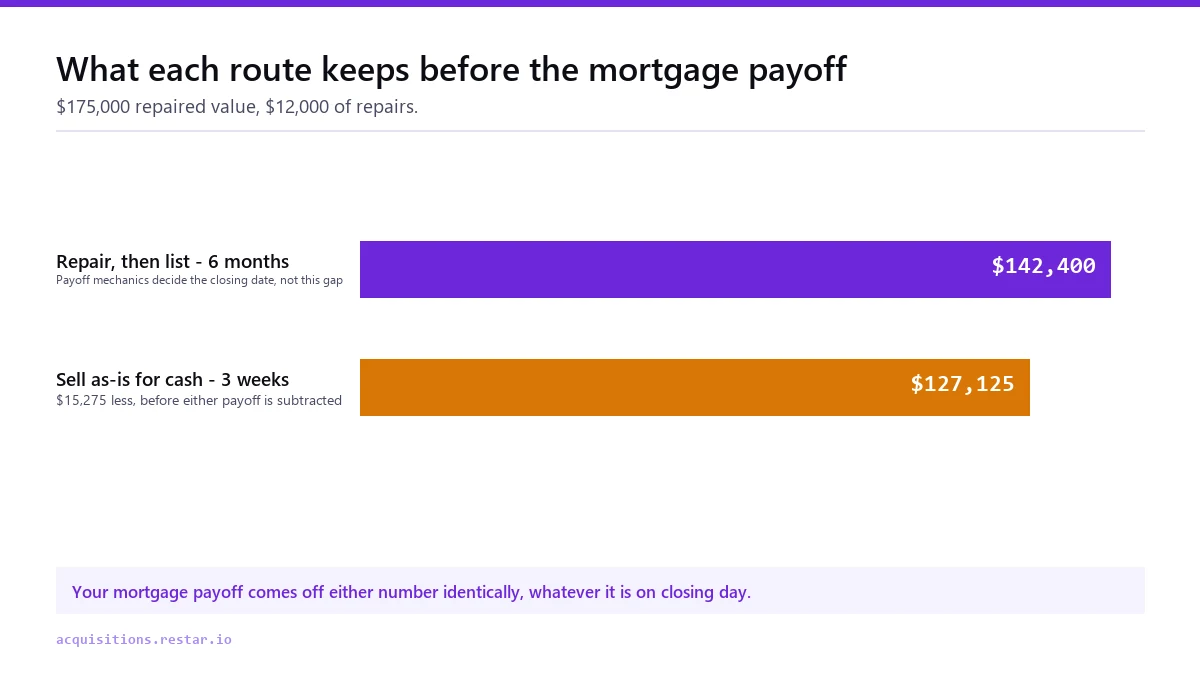
How a mortgage payoff statement is calculated, why it expires, what happens to your escrow, and the real arithmetic behind per diem interest at closing.
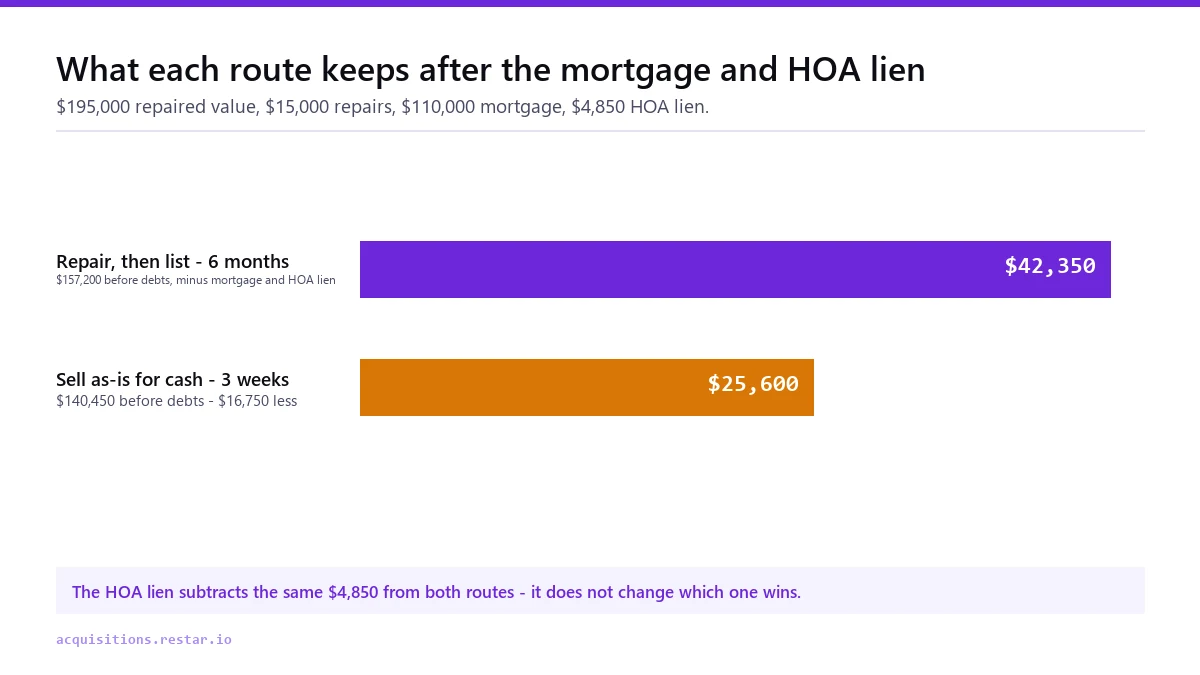
How an HOA assessment lien works, why fines and dues are not the same debt, and what the estoppel certificate and payoff actually cost when you sell.
We publish sale prices, ZIP-level breakdowns and HUD rent data for every market we buy in. Find yours →
Reading up is the right first move. If you also want to know what the house is actually worth to a cash buyer, send the address — written offer in 24 hours, no obligation, and we will tell you if listing beats us.
No obligation, no fees, no repairs. We respond the same day.
Takes about two minutes. Or call (313) 710-6129 — we answer.
Restar Acquisitions is the acquisitions arm of Restar — a housing-market analytics platform tracking 180+ metrics across every U.S. market, with composite scores and 12-month price forecasts. The numbers on this page come from the same work.