A full roof replacement typically runs $5,900 to $13,400 for a standard asphalt-shingle roof, averaging around $9,600 nationally, with cost driven mainly by roof size, pitch, number of layers being torn off, and material — metal, tile, and slate cost two to four times more per square foot than asphalt. Before you spend that money, run the actual comparison: replacing the roof yourself, giving a buyer a price credit instead, or selling as-is for cash, because which one nets you more depends on your buyer pool, not just the repair bill.

Step 1 of 5
Tell us the roof's age and condition. We'll give you a straight answer on how it affects our number, no replacement required.
You’ll talk to Trevor McAmis, Owner & Acquisitions Lead
(313) 710-6129
Takes about two minutes. Or call (313) 710-6129 — we answer.
Educational only. This explains how these situations generally work. It is not legal, tax or financial advice, and the rules differ by state — talk to an attorney or CPA about your own situation before you act on any of it.
Based on current national cost data, a typical roof replacement runs $4 to $11 per square foot installed, averaging close to $7 (HomeAdvisor: Cost to Install a Roof). By material: asphalt shingles run $3 to $7 per square foot, wood shakes $6 to $13, metal $7 to $13, tile $10 to $20, slate or stone $15 to $30, and solar shingles $21 to $25.
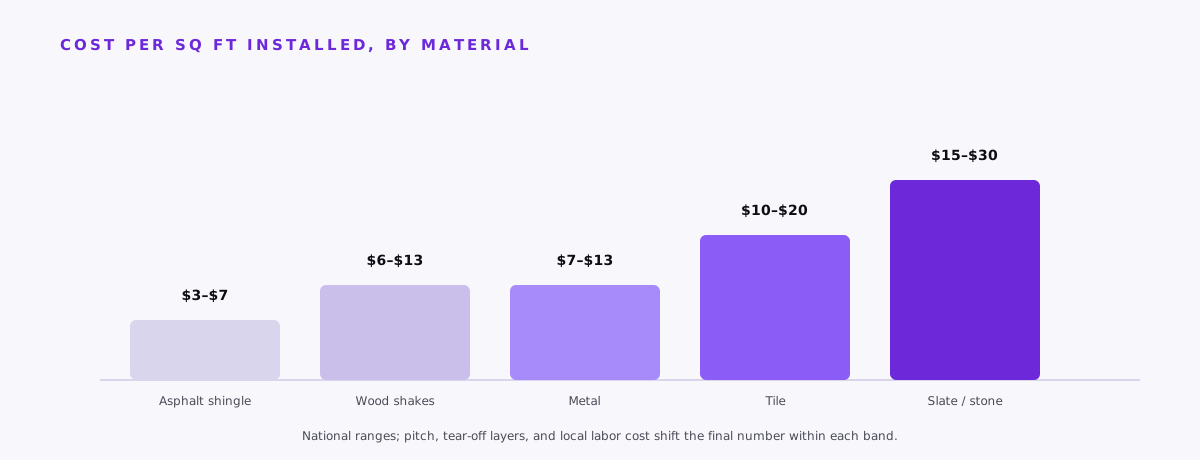
The spread within each material comes from the same few drivers every time: roof size (measured in “squares,” 100 square feet each), pitch (a steep roof adds $1,000–$3,000 for the extra labor and safety equipment), tear-off and disposal of the old roof ($1,500–$4,500, more if there are multiple layers underneath), labor (15%–25% of the total job), and permit fees ($100–$1,400 depending on your municipality). A two-story house adds roughly 15% to labor costs over a single story, with no change in actual roof area, just harder access.
Roof lifespan varies enormously by material and is driven more by climate, ventilation, and installation quality than by a fixed number of years — asphalt shingle roofs are commonly the shortest-lived major roofing material, while metal, tile, and slate roofs are built and marketed to last multiple decades longer. If a roof is approaching the end of its expected service life for its material, that's the real question a buyer, an appraiser, and an insurer are all going to ask, not just how old it is.
If you've read that FHA loans require two to three years of remaining roof life, that's close for FHA specifically but isn't how every lender works. HUD's FHA handbook does require an appraiser to flag a roof with materially limited remaining useful life and condition the appraisal on a professional inspection or repair before the loan can close.
Conventional loans backed by Fannie Mae work differently — there's no fixed numeric roof-age rule in Fannie Mae's Selling Guide. Instead, the appraiser assigns the whole property a condition rating from C1 (new) to C6 (needs significant repair), and a roof near the end of its life is one of several factors that can push a property into a lower rating the appraiser and underwriter have to account for (Fannie Mae Selling Guide B4-1.3-06: Property Condition). The practical result is similar either way — an old, visibly failing roof makes a financed sale harder to close cleanly — but the mechanism differs by loan type, which matters if you're trying to guess whether a specific buyer's financing will actually go through.
Florida sellers already deal with this more directly than most: state law lets insurers require a paid inspection once a roof hits 15 years old, and an insurer can't refuse or cancel a policy solely for roof age if that inspection shows at least 5 years of remaining life (Florida Statute 627.7011). Our 4-point inspection guide covers that insurance mechanic in detail — this page is about the replacement arithmetic itself, not that underwriting trigger.
Here's where most advice stops short: it tells you the roof costs $9,600 to replace and leaves you to guess whether that's worth doing. Run the comparison on an actual house.
Worked example: a $260,000 house (fully repaired retail value) needs a full asphalt shingle roof replacement — 28 squares, moderate pitch, one layer to tear off. Contractor quote: $10,200. Replacing the roof first then listing nets roughly $229,000 after commission and closing costs. A price credit while listing as-is nets roughly $229,816, assuming the buyer's lender accepts a credit in place of a completed repair. A cash sale, reflecting the roof's condition, nets roughly $218,000 to $228,000.
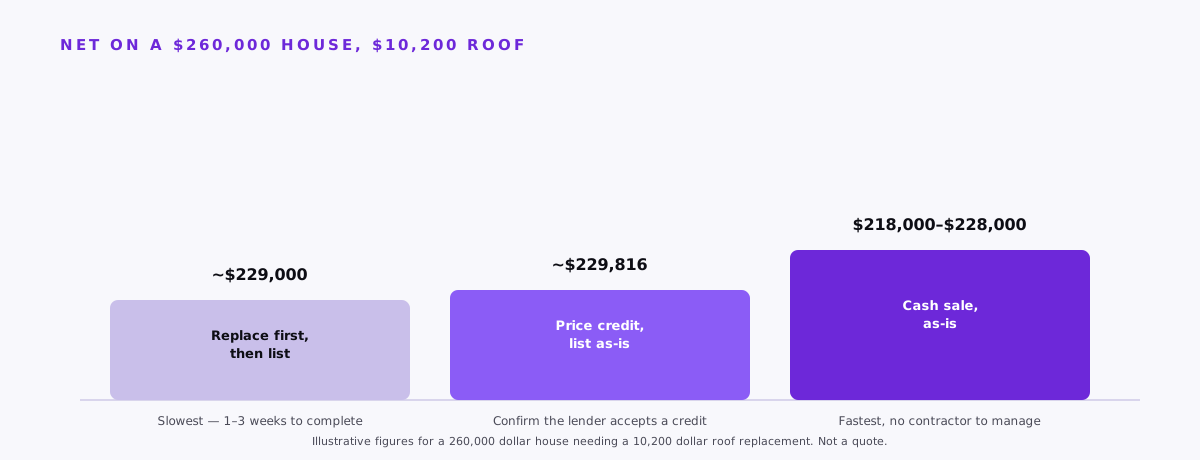
On these numbers, replacing the roof and a price credit land within a few hundred dollars of each other — the credit route just gets you there faster and without managing a contractor yourself, assuming the buyer's lender accepts a credit in place of a completed repair (some loan programs cap how large a seller credit can be, so confirm that with the buyer's lender before agreeing to it). A cash sale trades roughly $1,000 to $11,800 against those two routes for speed and zero contractor management — worth it if you don't have $10,200 to front, don't want to manage the work, or need to close faster than a financed buyer's repair-contingency timeline allows.
Don't assume a national cost-vs-value percentage applies to your house — industry remodeling-cost tracking reports vary significantly by material, region, and market, and the specific dollar-recouped figures published each year shift from one edition to the next. For context on how sellers themselves weigh this: in its 2025 Remodeling Impact Report, the National Association of REALTORS found 37% of REALTORS recommend replacing an aging roof before a listing goes live — roofing was also one of the few projects buyers showed rising demand for over the prior two years. Get your own contractor quote and run the comparison above on your actual numbers rather than a published national average.
Get two or three contractor quotes before deciding anything. The spread within “asphalt shingle” alone is wide enough that a single quote can mislead your math either way.
Ask the buyer's lender directly whether a credit works in place of a completed repair before you agree to a price-credit route — some loan programs cap seller credits or require the repair done before closing regardless.
List with an agent and complete the replacement if you can front the cost and a financed buyer pool is realistic in your market — on most numbers, this nets the most.
Check whether your homeowners insurer will fund any part of it if the roof's condition is tied to a recent storm claim rather than ordinary age — see our guide on storm damage if that applies to you.
If you'd rather skip the contractor quotes and the credit negotiation entirely, send us the address and we'll send a written cash offer within 24 hours that accounts honestly for the roof's condition — no obligation. This page is educational only and is not a quote; get an actual contractor estimate for your roof and confirm any financing-related terms with the buyer's lender directly.
If you can front the replacement cost and a financed buyer pool is realistic in your market, replacing the roof first usually nets the most — we'd tell you that on the phone.
Where a cash sale earns its place is when you don't have the money to front, don't want to manage a contractor, or need to close faster than a repair-and-reinspection timeline allows. Send the address and we'll send a written offer within 24 hours that accounts honestly for the roof's condition. No cost, no obligation.
All guides · Cost of a 4-point inspection in Florida · Cost of lender-required repairs · Cash offer vs listing net proceeds
Step 1 of 5
No obligation, no fees, no repairs. We respond the same day.
You’ll talk to Trevor McAmis, Owner & Acquisitions Lead
(313) 710-6129
Takes about two minutes. Or call (313) 710-6129 — we answer.
