You found out — from an inspector, an appraiser, or just an old disclosure form — that your house has aluminum wiring, and now you're not sure what that means for selling it. It's a known fire-safety issue in homes built or rewired between 1965 and 1973, but it's not illegal to own or sell, and it's genuinely fixable. Here's what it actually affects, what fixing it costs, and the honest math on repairing it first versus selling as-is.

Step 1 of 5
Tell us a bit about your house. We'll walk you through the real cost of fixing it versus selling as-is, honestly.
You’ll talk to Trevor McAmis, Owner & Acquisitions Lead
(313) 710-6129
Takes about two minutes. Or call (313) 710-6129 — we answer.
Educational only. This explains how these situations generally work. It is not legal, tax or financial advice, and the rules differ by state — talk to an attorney or CPA about your own situation before you act on any of it.
Yes, you can sell a house with aluminum wiring. It's not illegal to own or sell, but it's a known fire-safety issue in homes built or rewired between 1965 and 1973, and it can affect financing, insurance, and disclosure. A licensed electrician can repair the connections for a fraction of a full rewire, or a cash buyer can take the house as-is and handle it themselves.
This is general educational information, not legal or electrical-safety advice. Have a licensed electrician evaluate your specific wiring, and confirm your state's disclosure requirements with a real estate attorney before relying on anything here.
Between about 1965 and 1973, copper prices spiked and many homes were built — or had rooms added, or circuits rewired — using aluminum branch-circuit wiring instead of copper, according to the U.S. Consumer Product Safety Commission's own guidance on the issue (CPSC Publication 516, “Repairing Aluminum Wiring”). The problem isn't the aluminum itself failing — it's what happens at the connections. CPSC describes the mechanism directly: corrosion at the metal-to-metal connection, particularly at the aluminum wire itself, increases electrical resistance, and that resistance causes overheating at outlets, switches, and junction boxes.
In a 1974 safety release, CPSC estimated that roughly 2 million homes had been wired with aluminum branch-circuit wiring since 1965 (CPSC, Safety Recommendations for Aluminum Wiring in Homes, 1974). CPSC's technical bulletin on repair methods (Pub. 516) goes further, citing a Franklin Research Institute study finding that homes wired with pre-1972 aluminum wire were substantially more likely to develop a “Fire Hazard Condition” at a connection than comparable copper-wired homes.
There's no outright federal ban on financing a home with aluminum wiring, and FHA and VA don't disqualify a house for having it. In practice, though, an appraiser who spots exposed, frayed, or visibly deteriorated wiring during a standard appraisal inspection can flag it as a condition requiring repair before closing, and some lenders will ask for a licensed electrician's inspection letter confirming the connections are safe before funding the loan. Whether that happens depends on the lender and how visible the wiring is — it's not a guaranteed dealbreaker, but it's a real source of financed-sale delay that a cash sale doesn't carry.
According to Policygenius, most standard homeowners insurers either decline to write a new policy on a home with known, unmodified aluminum wiring or require an inspection and repair certification first — treating it similarly to knob-and-tube wiring or an outdated electrical panel. This isn't a formal rule the way flood-zone requirements are; it's underwriting practice that varies by carrier. If you already have a policy, a claim or a renewal inspection can be the moment this surfaces even if you never planned to sell.
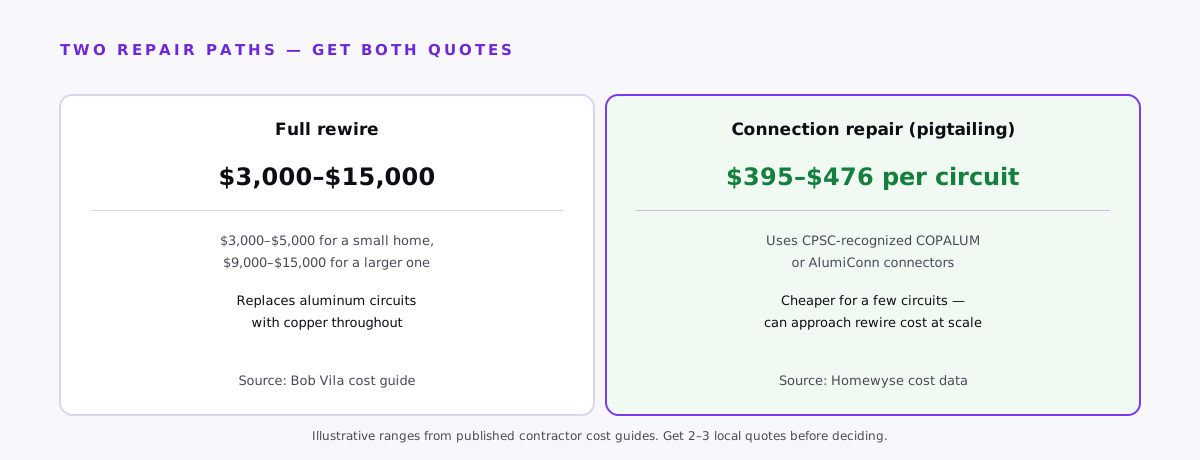
For a house with aluminum wiring on only a handful of circuits, repair is meaningfully less than a full rewire; for a house where most circuits are affected, the per-circuit repair cost can approach or exceed rewire pricing. Get two to three quotes from licensed electricians who've specifically worked with aluminum wiring repair — not every electrician stocks COPALUM crimp tooling, which is a licensed, proprietary system.
There's no federal aluminum-wiring disclosure law. Texas is the clearest named example: the official TREC Seller's Disclosure Notice (TREC No. 55-1) includes a specific “Aluminum Wiring” line item in its safety-hazards section, where a seller writes Y for yes or N for no, alongside asbestos, radon, and lead paint. In states without a named line item, aluminum wiring typically falls under the broader “known electrical system defects” disclosure question most standard forms already ask. Either way, if you know about it, disclose it — a buyer's inspector or appraiser is likely to spot it anyway, and an undisclosed known hazard is a bigger legal problem than the wiring itself.
Take a roughly 1,400-square-foot house worth $150,000 — the kind of starter or rental-grade home common in the 1965–1973 construction window in several of the Rust Belt markets Restar buys in, like Flint, Saginaw, Youngstown, and Dayton — with aluminum wiring confirmed on about ten circuits.
| Repair connections, then list | Full rewire, then list | Sell as-is for cash | |
|---|---|---|---|
| Sale price / typical offer | $150,000 | $150,000 | 75–82% of value |
| Electrical work | −$4,300 (10 circuits × ~$430) | −$6,000 (illustrative, mid-size home) | Buyer absorbs it |
| Closing costs & commission (~9%) | −$13,500 | −$13,500 | $0 |
| Net | ~$132,200 | ~$130,500 | ~$112,500–$123,000 |
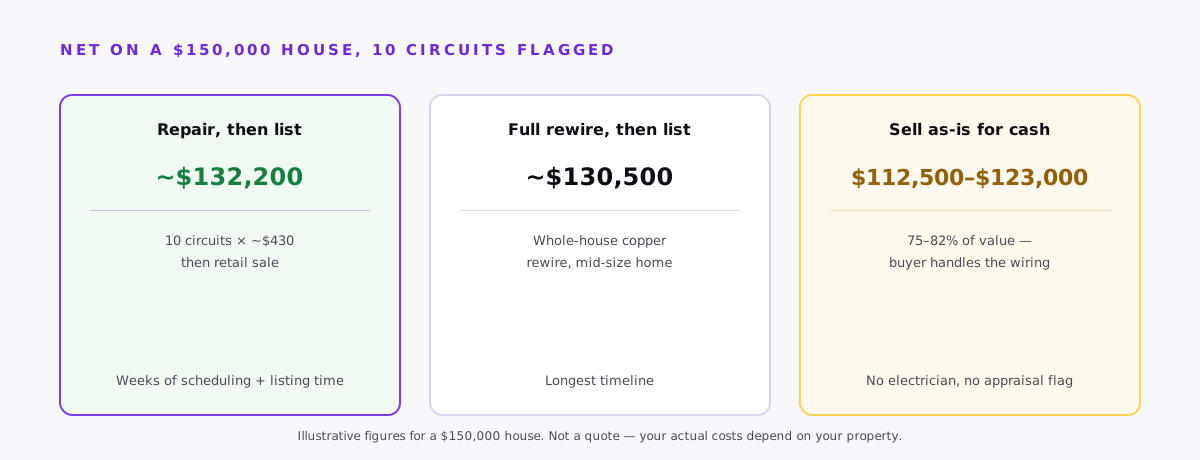
Unlike radon, where fixing it first is nearly always the better math because mitigation is cheap, aluminum wiring repair is a real cost — often in the same range as the gap between a retail and cash sale, not dramatically less. If you have the time to get quotes, schedule the work, and wait out a financed buyer's underwriting, repairing first usually nets more. If you don't — or if the circuit count makes the repair quote climb toward rewire pricing — selling as-is lets a cash buyer absorb that cost and the scheduling risk entirely.
Aluminum wiring is a known, well-documented fire-safety issue, but it's neither illegal to sell nor a guaranteed dealbreaker — it's a cost and a disclosure obligation to plan around. If you have a few thousand dollars and some time, get it evaluated and repaired before you list; it's usually worth it. If you don't, selling as-is to a cash buyer avoids the electrician, the appraisal flag, and the financing delay. Send us the address and we'll walk you through both paths honestly for your specific house.
Repairing the connections or doing a full rewire both take time — scheduling a licensed electrician, waiting on the work, then listing. If you'd rather skip that, we can buy the house as-is and handle the wiring ourselves — no renegotiation, no delay.
Send us the property here and we'll give you a straight read on both options.
All guides · Selling a house with knob-and-tube wiring · Should I repair before selling? · Selling a house with no homeowners insurance
Step 1 of 5
No obligation, no fees, no repairs. We respond the same day.
You’ll talk to Trevor McAmis, Owner & Acquisitions Lead
(313) 710-6129
Takes about two minutes. Or call (313) 710-6129 — we answer.
