You've used that driveway with the neighbor for twenty years without a second thought — then a buyer's title company pulls the survey and asks for the recorded agreement that governs it, and you realize you don't have one. A shared driveway or access easement doesn't stop a sale, but it routinely stalls one, because the thing that makes it work day to day — an informal understanding between neighbors — is exactly what a lender's title policy can't insure around. Here's what the easement actually is, how it surfaces at closing, and the real cost of fixing it against selling as-is.
Step 1 of 5
Tell us what the title company or survey turned up. We'll tell you honestly whether a cash sale sidesteps it or whether it's worth fixing first.
You’ll talk to Trevor McAmis, Owner & Acquisitions Lead
(313) 710-6129
Takes about two minutes. Or call (313) 710-6129 — we answer.
Educational only. This explains how these situations generally work. It is not legal, tax or financial advice, and the rules differ by state — talk to an attorney or CPA about your own situation before you act on any of it.
Yes, you can sell a house with a shared driveway or access easement, but a financed buyer's lender will want a recorded, written agreement spelling out who can use it and who maintains it — and if one doesn't exist, the title company will add an exception and the loan can stall until it's resolved. A cash buyer can often close around the gap while you sort out the paperwork with your neighbor; a financed buyer's underwriter usually can't.
This is general educational information, not legal advice. Easement law is set by your state and the specific history of your property — confirm your situation with a real estate attorney or title company before relying on anything here.
An easement is a legal right to use someone else's land for a specific purpose, without owning it — most commonly here, the right to drive over part of a neighbor's lot to reach your own garage or street access. Cornell Law School's Legal Information Institute has a full rundown of how these rights are created and limited (Cornell LII: easement by prescription).
Shared driveways arise a few distinct ways, and the way yours arose matters a great deal once you try to sell:
Note what this is not: a boundary dispute or encroachment, where a structure physically crosses the property line. A shared driveway easement is about a right to use a path across the line, not about where the line actually sits — though the two problems sometimes show up on the same property, and our guide to boundary line disputes and encroachments covers that separate issue.
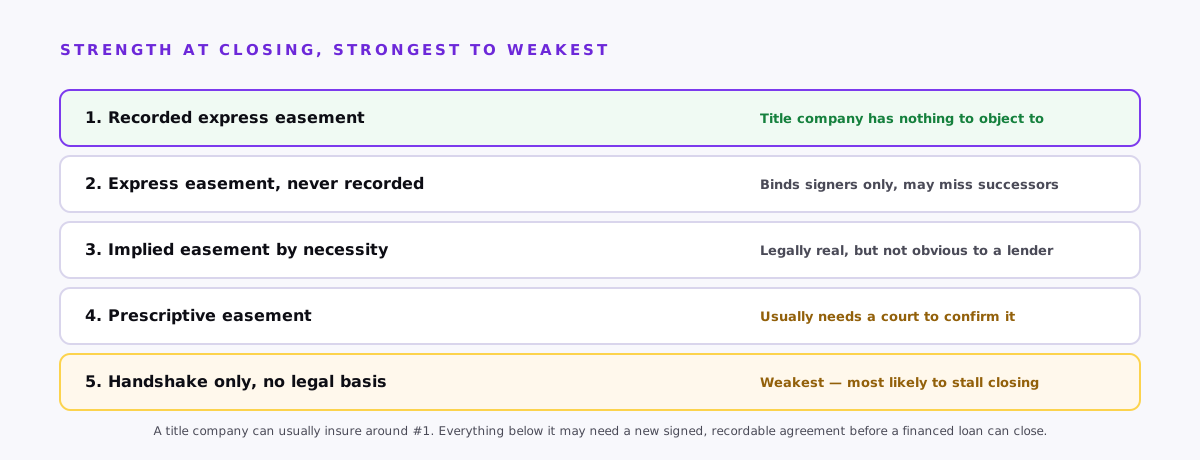
Most sellers find out their easement situation is a problem the same way they find out about a boundary issue: a financed buyer's lender orders a title search and, often, a survey. The title examiner looks for a recorded instrument that defines access rights across the shared drive. If one exists and is properly recorded, it typically becomes an accepted exception on the title policy — noted, insured around, and not an obstacle. If nothing recorded turns up, or what exists is ambiguous about maintenance and future owners, the title company usually won't insure past the gap, and the buyer's lender won't fund without that insurance.
Fannie Mae's own selling guide addresses this directly: mutual easement agreements covering a shared driveway are an acceptable title impediment only if they give every future owner unlimited and unrestricted use — not just the current neighbors (Fannie Mae Selling Guide, B7-2-05: Title Exceptions and Impediments). An informal arrangement between you and your neighbor that was never meant to bind the next two owners of either property does not meet that bar, which is exactly why it gets flagged rather than waved through.
This is not a rare edge case for title professionals. A 2026 American Land Title Association study of title production across 449 professionals in 47 states found that nearly 60% of transactions require clearing three to five title issues before closing, and more than 80% require reviewing at least 11 documents to get there — access and easement questions are a routine part of that workload, not an unusual complication.
What usually happens next: the title company asks both property owners to sign a new, recordable shared-access or maintenance agreement before the policy can issue. If your neighbor is cooperative, this can be resolved in a few weeks. If your neighbor won't sign, is unreachable, or disputes the arrangement outright, the closing timeline you quoted your buyer starts to slip — and a financed buyer with a rate lock and a moving date does not have unlimited patience for that.
Take a house with an after-repair value of $260,000, a long-standing shared driveway with no recorded agreement, and a cooperative neighbor. Clearing the title issue before listing typically means:
| Step | Typical cost |
|---|---|
| Boundary and easement survey | $600–$900 |
| Attorney-drafted, recordable shared-access and maintenance agreement | $750–$1,800 |
| County recording fee | $50–$150 |
| Total to clear it | $1,400–$2,850 |
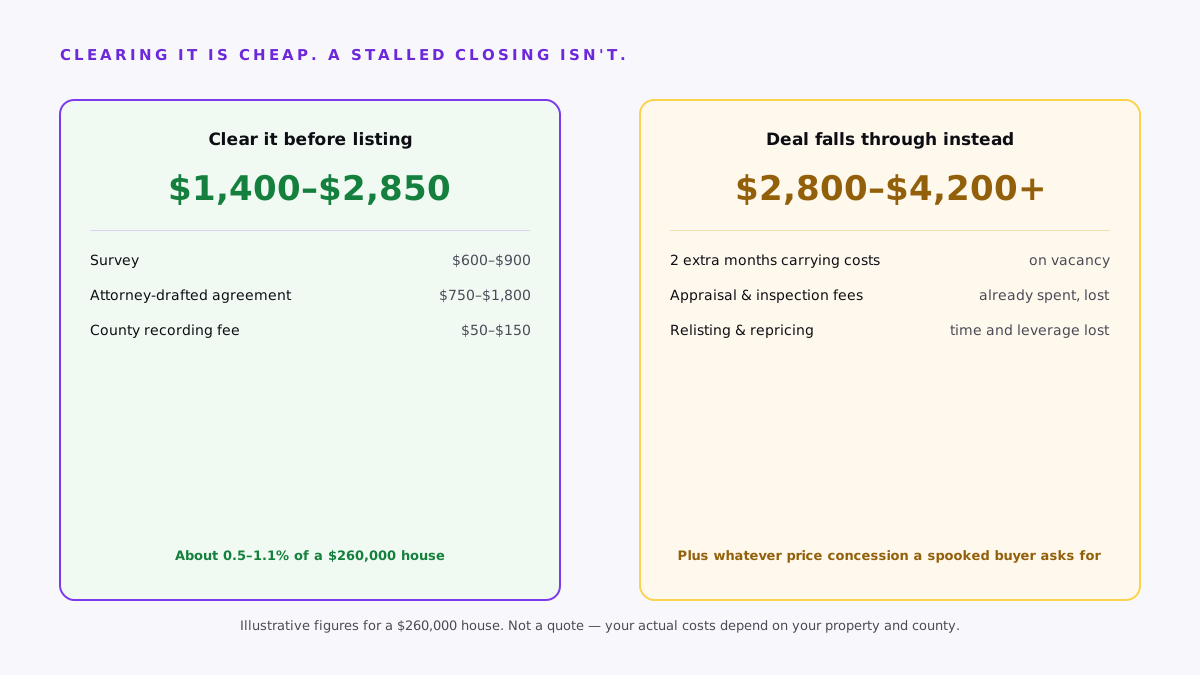
That's roughly 0.5–1.1% of the house's value — genuinely small. What isn't small is what happens if it isn't resolved before a financed buyer's loan is scheduled to fund. A deal that falls through 30–45 days into escrow because the title company couldn't clear the easement commonly costs a seller two to three months of relisting, repricing and renewed carrying costs: on a $260,000 house, two more months of property tax, insurance and utilities while vacant or between buyers often runs $2,800–$4,200, on top of the appraisal and inspection fees already spent and lost.
The honest tradeoff, both ways. If your neighbor is cooperative and you have a few weeks, fixing the agreement before listing is the cheaper path almost every time — it costs a few thousand dollars and lets you list retail with the title problem already gone, netting the full market price minus normal closing costs. A cash sale skips the survey, the attorney, the recording and the risk of a cooperative-but-slow neighbor blowing your timeline — but it prices in that flexibility, landing below what a clean, agent-listed sale of the same house would bring once repairs, commission and holding costs are netted out. On a $260,000 after-repair value needing no repairs, a typical cash offer in the 75–82% range (about $195,000–$213,000) reflects the buyer absorbing the title uncertainty and closing without waiting on your neighbor's signature. If the easement is disputed rather than just unrecorded — your neighbor denies the right exists at all — that calculus shifts hard toward cash or a quiet title action first, because no title company will insure a financed buyer's loan over an active dispute at any price.
A shared driveway or access easement is rarely a dealbreaker, but it is one of the title issues most likely to surface late and derail a financed closing specifically because it depends on a document that may not exist. If you have time and a cooperative neighbor, clearing it before you list is cheap and usually the better math. If you don't — a disputed easement, an unreachable neighbor, or a closing date you can't push — a cash sale lets you move now while the title question gets sorted separately. Send us the address and we'll tell you honestly which side of that line your situation falls on.
A missing or disputed shared-driveway agreement is exactly the kind of title issue that can derail a financed sale and does not have to derail a cash one. We can often close around it while you sort out the paperwork with your neighbor on your own timeline — or help you understand what resolving it first would actually be worth.
Send us the property here and we'll tell you plainly how the numbers compare.
All guides · Selling a house with a boundary line dispute · Seller closing costs · Cash offer vs listing net proceeds
Step 1 of 5
No obligation, no fees, no repairs. We respond the same day.
You’ll talk to Trevor McAmis, Owner & Acquisitions Lead
(313) 710-6129
Takes about two minutes. Or call (313) 710-6129 — we answer.
