Every market page publishes the numbers behind its offer. See the math
Home › Guides › Paying Off a HELOC When You Sell Your House
Guide
Paying Off a HELOC When You Sell Your House
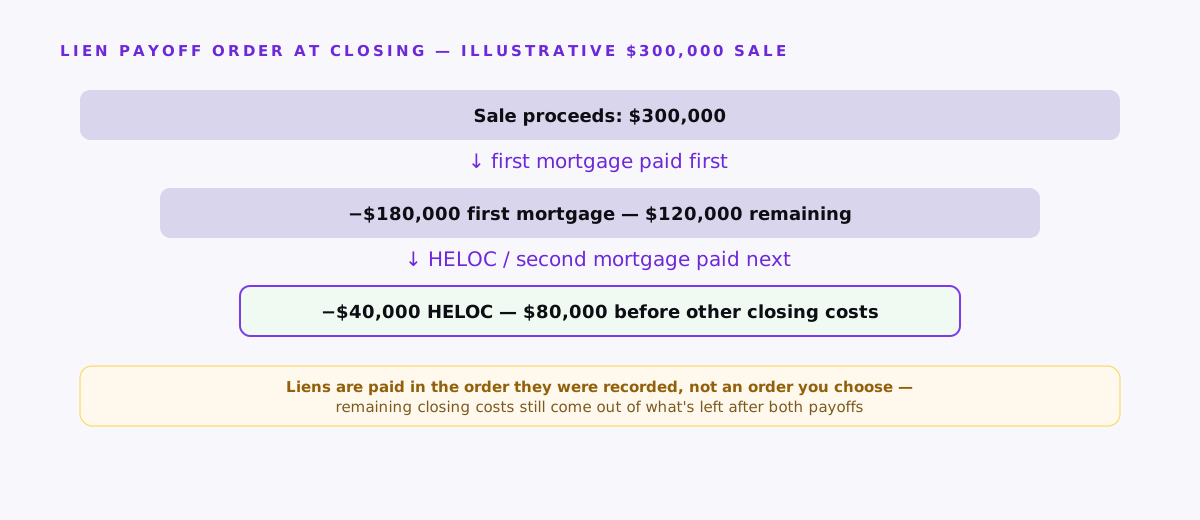
Paying off a HELOC when you sell your house happens automatically at closing — the title or escrow company uses part of your sale proceeds to pay your first mortgage, then your HELOC or second mortgage, in the order the liens were recorded, before you receive anything. You never write that check yourself; it's deducted from proceeds. That single sentence covers the mechanics, but it doesn't answer the question most sellers actually have: will there be anything left over once both loans are paid off, and how does that number compare to what a cash sale would net instead? This guide walks through the real arithmetic — payoff statements, lien order, the short-sale trigger point, and a full worked example comparing a retail listing to a cash offer.
Takes about two minutes. Or call
(313) 710-6129 — we answer.
Educational only. This explains how these situations generally work. It is not legal, tax or financial advice, and the rules differ by state — talk to an attorney or CPA about your own situation before you act on any of it.
Paying Off a HELOC When You Sell Your House: The Basics
Every loan secured by your home — your first mortgage, a HELOC, a fixed second mortgage, and any judgment or mechanic's lien — is recorded against the property's title. Before a buyer's lender or title insurer will let the deal close, every one of those liens has to be satisfied and released, in the order they were recorded: first mortgage first, then the HELOC or second, then anything junior to that.
The closing or escrow agent orders payoff figures from each lienholder and pays them directly out of the sale proceeds — only the remainder, if any, goes to you. This is true whether you sell on the open market or accept a cash offer, and whether or not you've ever drawn against your HELOC's full limit: the lien exists at the recorded credit limit or outstanding balance, and it has to be cleared for title to transfer clean.
Liens are paid in the order they were recorded, not an order you chooseRestar Acquisitions · worked example from this page
Do I Have to Pay Off My HELOC Before I Sell?
Yes, in almost every case. A buyer's lender will not fund a purchase, and a title company will not issue clean title, with an open HELOC or second-mortgage lien still attached to the property. The rare exception is a buyer formally assuming your existing loans, which is uncommon and requires lender approval on assumable loan types — most conventional HELOCs and seconds are not assumable. For a typical sale, plan on the full outstanding HELOC balance being paid off at the closing table, not carried forward.
How to Get a Real Payoff Number, Not Your Statement Balance
Your monthly HELOC statement shows a balance as of your last billing cycle — it is not what you'll actually owe on a future closing date. To get the real number, you or your title/escrow company request a payoff statement (sometimes called a payoff demand) directly from the HELOC or second-mortgage servicer, valid only through a specific date.
The Consumer Financial Protection Bureau notes that a payoff amount is how much you must pay to fully satisfy the loan, and it's different from your current balance because it includes interest that accrues daily (per-diem interest) through your intended payoff date, plus any unpaid fees (CFPB). If closing slips past the statement's valid-through date, the number has to be recalculated — a normal part of closing on a house with more than one lien. See our guide to mortgage payoff statements for how to read one line by line.
If you have both a first mortgage and a HELOC, you'll need a separate payoff statement from each servicer, since they're independent creditors even if the same bank services both.
What If My Payoff Is More Than My House Is Worth?
If your first mortgage payoff plus your HELOC or second-mortgage payoff adds up to more than your expected net sale proceeds, you're in short-sale territory. A short sale means your mortgage servicer (or servicers, if there's more than one lien) has to agree in writing to accept less than the full amount owed so the sale can close (CFPB). This is a materially different — and slower — process than a normal sale, because every lienholder, not just the first mortgage, has to sign off.
Second-lien holders are often the harder approval to get, since they stand to recover little or nothing after the first mortgage is paid. Fannie Mae's servicing guidance, for example, sets limits on what subordinate lienholders can be paid from short-sale proceeds and requires a written release of the borrower's remaining liability before those funds go out (Fannie Mae Servicing Guide). If you're in this position, read our breakdown of what a short sale actually costs and how long it takes before you list.
Worked Example: A House With a First Mortgage and a HELOC
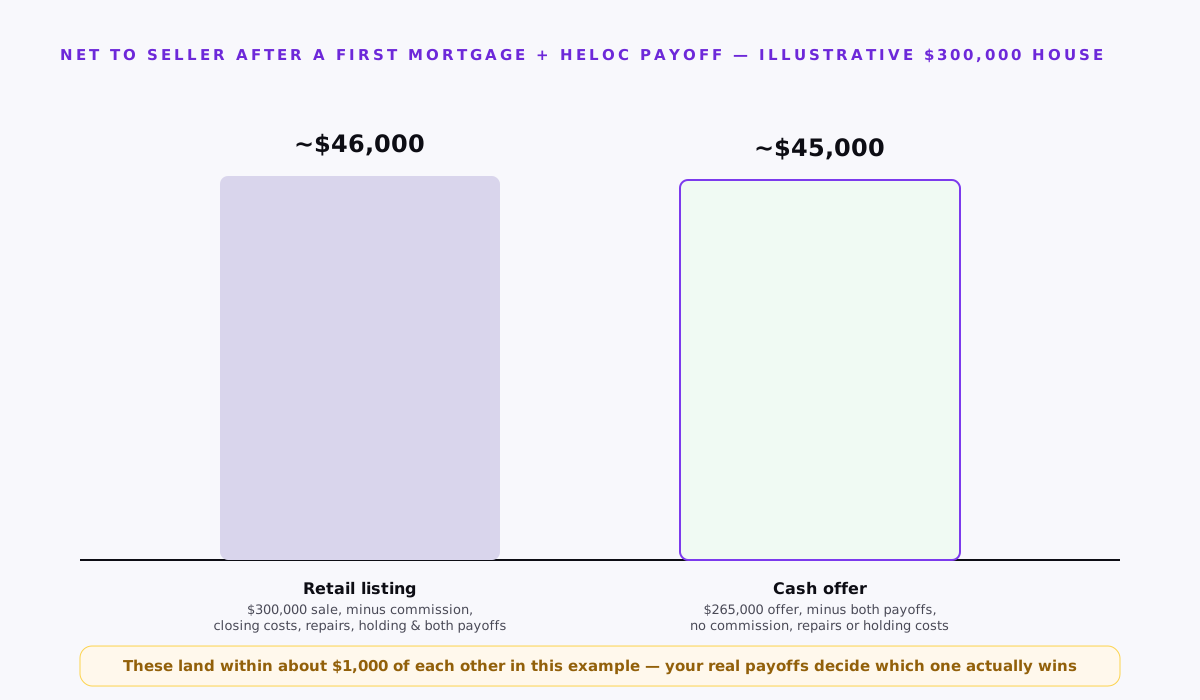
Here's the arithmetic for an illustrative $300,000 house with a $180,000 first-mortgage payoff and a $40,000 HELOC payoff — comparing a retail listing against a cash-offer sale. These are example figures only, not a quote for any specific property.
Retail and cash net within about $1,000 of each other in this exampleRestar Acquisitions · worked example from this page
Line item
Retail listing
Cash offer
Sale price
$300,000
$265,000 (illustrative)
Agent commission (~6%)
−$18,000
$0
Seller closing costs
−$4,000
varies by contract
Title/escrow fees
−$2,000
varies by contract
Repairs/buyer concessions
−$7,500
$0
Holding costs (60–90 days on market)
−$2,500
$0 (faster close)
First mortgage payoff
−$180,000
−$180,000
HELOC payoff
−$40,000
−$40,000
Estimated net to seller
≈$46,000
≈$45,000
The point of this table isn't that one path automatically wins — in this example the two land within about $1,000 of each other, because the retail sale's higher price is largely offset by commission, repairs, concessions, and months of holding costs, while the cash path skips those costs but starts from a lower price. Which one actually nets more for you depends on your home's real condition, your local agent's commission structure, and the real payoff figures on your two loans — not the estimates above. Run the comparison with your actual numbers; see our side-by-side cash-offer-vs-listing breakdown for how to build your own version of this table.
Alternatives If the Math Doesn't Work in Your Favor
A few paths worth knowing about before you assume a sale is your only option:
List with a real estate agent. If you have enough equity to absorb commission, closing costs, and any repair asks, a traditional listing often nets more than a cash sale, especially in a market with active buyer demand. The worked example above shows why: the higher sale price only wins once there's enough equity cushion to cover the costs that come with it.
HELOC subordination, if you're refinancing instead of selling. If your actual goal is to refinance your first mortgage rather than sell, your HELOC lender can agree to "subordinate" — stay in second position behind the new first mortgage — without being paid off. That's a different process than a sale payoff and is negotiated directly with the HELOC servicer.
Negotiate directly with the second-lien holder if you're underwater. Second mortgage and HELOC lenders sometimes accept a reduced payoff, a payment plan, or in limited cases a release of lien, particularly when the alternative is a foreclosure that would leave them with even less.
A formal short sale, if the combined payoffs exceed what any sale — retail or cash — would generate. This requires written lender approval from every lienholder and takes longer than either path above.
A Note on How We Fit In
Restar Acquisitions buys houses directly, as-is, for cash, in 31 markets across Alabama, Arizona, Florida, Georgia, Indiana, Maryland, Michigan, North Carolina, New York, Ohio, and Texas. We provide a written offer within 24 hours of seeing your property, don't require repairs, don't charge commissions, and let you pick the closing date. We are not real estate agents or brokers and don't represent you in a transaction — we're a direct buyer. If your numbers show more equity sitting in a retail sale, an agent is very likely the better call, and we'd rather you know that going in than find out after closing.
This article explains general mechanics and is not legal, tax, or financial advice. Your actual payoff amounts, closing costs, and net proceeds depend on your specific loans and local market. Talk to a real estate attorney, a CPA, or your loan servicer directly about your numbers before making a decision.
Common questions
Does the title company automatically pay off my HELOC at closing?
Yes. The closing or escrow agent orders a payoff statement from your HELOC servicer, pays it directly from your sale proceeds, and records the lien release — you don't handle that payment yourself.
Is my HELOC payoff the same as my current statement balance?
No. Your statement balance is a snapshot from your last billing cycle. Your payoff amount includes interest accrued daily up to your actual closing date, plus any unpaid fees, and it's only valid through a specific date on the statement.
What happens if I don't pay off my second mortgage before selling?
You can't complete a normal sale with an unpaid second mortgage or HELOC lien still attached — title won't transfer clean. It has to be paid off (or, in a short sale, the lender has to agree to release it for less) as part of closing.
Can I sell my house if I owe more than it's worth because of a HELOC?
You can, but it becomes a short sale, which requires your first-mortgage and second-lien holders to both agree in writing to accept less than what's owed. It's a slower, more document-heavy process than a standard sale.
Do I need a lawyer to sell a house with a HELOC or second mortgage?
It's not always required, but if your payoffs are close to or exceed your expected proceeds, or if a lienholder is uncooperative, a real estate attorney can help you understand your options and negotiate directly with the lender.
Will a cash home buyer pay off my HELOC for me?
At closing, the payoff still comes out of the purchase proceeds the same way it would in any sale — the buyer's funds are used to clear the liens before you're paid the remainder. A cash buyer doesn't erase the debt; it still has to be satisfied from the sale price.
Want to see how your specific payoffs change these numbers?
We'll give you a written offer within 24 hours and show the math after your first mortgage and HELOC are paid off — and if listing nets you more once you have equity cushion, we'll say so.
Every offer on this site is underwritten by a person, not a form. If the
numbers do not work for you, say so and I will tell you what would.
Also from Restar
Want the data behind all of this?
Restar Acquisitions is the acquisitions arm of Restar — a housing-market analytics
platform tracking 180+ metrics across every U.S. market, with composite scores and 12-month
price forecasts. The numbers on this page come from the same work.