Yes — you can sell a house with galvanized steel or polybutylene plumbing, but it's a real obstacle for a financed buyer. Many insurers require a 4-point inspection on older homes and can decline or non-renew coverage over either material, which can stall a mortgage before it starts. A cash buyer can move forward without that insurance hurdle; replacing the plumbing first and listing retail usually nets more, but it costs real money and weeks of work up front. If your house still has its original galvanized steel supply lines, or was replumbed with polybutylene sometime between the late 1970s and mid-1990s, you've probably already had a plumber or an insurance agent mention it. Neither material is illegal to leave in place, and neither one automatically kills a sale. What they do is complicate the two things a financed buyer needs before closing — an insurance policy and a loan — in a way a cash sale doesn't have to deal with. This guide covers what each material actually is and why it matters, what it typically costs to replace, how it shows up on the insurance and financing side, what you have to disclose, and the honest math on repiping-then-listing versus selling as-is.
Step 1 of 5
Send the address and we'll tell you honestly whether repiping first and listing retail would net you more.
You’ll talk to Trevor McAmis, Owner & Acquisitions Lead
(313) 710-6129
Takes about two minutes. Or call (313) 710-6129 — we answer.
Educational only. This explains how these situations generally work. It is not legal, tax or financial advice, and the rules differ by state — talk to an attorney or CPA about your own situation before you act on any of it.
Galvanized steel pipe is zinc-coated steel pipe that was commonly used for interior water supply lines in U.S. homes through roughly the 1960s, with some use continuing into later decades. The zinc coating corrodes from the inside over time, and once it's gone the bare steel underneath rusts, narrowing the pipe and eventually leaking or failing outright. It's a slow-motion problem — most galvanized pipe doesn't fail catastrophically, it just gets worse for years before someone notices.
There's a second issue specific to galvanized pipe that the EPA folded into its newest drinking-water rule: galvanized pipe that sits downstream of a lead pipe, or of a pipe of unknown material, can absorb lead particles over decades and keep contributing lead to the water even after the original lead source is gone. The EPA's Lead and Copper Rule Improvements, finalized October 8, 2024, created a specific category for this — “Galvanized Requiring Replacement” — and requires those lines be replaced, not just the lead lines themselves (EPA: Lead and Copper Rule Improvements). That rule is mainly about the water utility's side of the pipe, not the plumbing inside your walls, but it's part of why galvanized plumbing has gotten more attention from insurers and inspectors recently rather than less.
Polybutylene pipe is a different material with a different, worse reputation. It's a flexible gray or blue plastic pipe that was installed as the supply plumbing in an estimated six million U.S. homes and mobile homes, mostly from about 1978 to 1995, marketed at the time as cheaper and easier to install than copper. The problem showed up over the following years: chlorine and chloramine in ordinary tap water slowly oxidize the plastic from the inside, making it brittle, and pipes that looked fine for a decade would fail suddenly and without warning — often inside a wall, where a leak isn't a drip, it's a flood. The scale of the resulting damage claims led to one of the largest class-action settlements in U.S. plumbing history: a national class action against Shell Oil and other polybutylene manufacturers settled in 1995 for roughly $950 million to compensate homeowners for repiping and water damage (Tennessee Court of Appeals: Cox v. Shell Oil Co.). Polybutylene hasn't been installed in new U.S. construction in decades, but plenty of houses from that era still have it.
A full whole-house repipe replaces the supply lines throughout the house — typically with PEX or copper — regardless of whether the original material was galvanized steel or polybutylene. Cost depends mostly on house size, number of bathrooms, and which replacement material you choose.
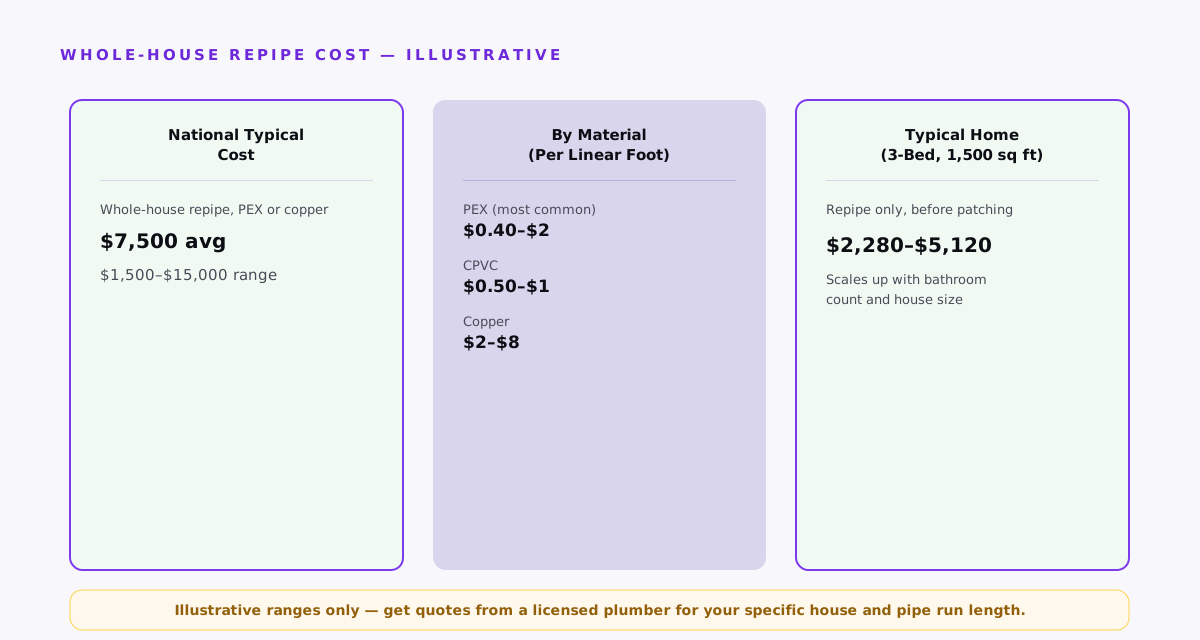
National typical cost: roughly $1,500–$15,000, with a national average around $7,500 (Bob Vila: Cost to Repipe a House).
By material, per linear foot: PEX runs roughly $0.40–$2, CPVC roughly $0.50–$1, and copper roughly $2–$8 — copper costs several times more in materials alone, which is why PEX has become the common modern replacement choice.
For a typical 3-bedroom, 1,500-square-foot home: figure roughly $2,280–$5,120 for the repipe itself, before accounting for drywall patching or a larger, multi-bathroom layout.
These are national averages from contractor and homeowner-reported data, not a quote for your specific house, pipe run length, or local labor market.
Insurers can decline or non-renew coverage over old plumbing, and that can stall a financed sale before the loan is even the issue. Many carriers use a 4-point inspection on older houses — roof, electrical, HVAC, and plumbing — before binding a policy, and both galvanized and polybutylene pipe are common reasons for a decline.
Polybutylene in particular has a documented history of sudden, catastrophic water-damage claims, and many carriers won't write a policy on a home that still has it without proof of replacement; older galvanized pipe in visibly poor condition draws the same scrutiny over corrosion-related leak risk (InspectAndTest: 4-Point Home Inspection Guide).
That matters for a sale because a buyer with a mortgage has to have homeowners insurance in place before a lender will fund the loan. If a buyer's insurer won't write the policy, or will only write it with a large surcharge or a replacement condition, that can stall or kill the financing — not because of the loan itself, but because of the insurance the loan requires.
A documented plumbing failure can trigger a lender's repair requirement even without a material-specific rule. HUD's FHA minimum property standards call for adequate water pressure and flow with no observable leaks, and an appraiser who finds a serious deficiency can require repair or further inspection before the loan proceeds.
Fannie Mae's conventional-loan guidance works similarly: physical deficiencies that could affect a property's safety or soundness can require the appraisal be completed “subject to” the repair being made (Fannie Mae Selling Guide: Property Condition, B4-1.3-06). Neither rule names galvanized or polybutylene pipe specifically — what triggers the requirement is a documented failure or safety issue, which is exactly what an insurance-driven 4-point inspection or a buyer's home inspector is likely to surface on either material.
In practice, the sequence is usually: home inspection flags the pipe material, the buyer's insurance agent won't bind a policy without more information or a replacement, and the closing stalls while everyone waits on a plumber's quote and a repipe schedule that the seller didn't plan for.
There's no plumbing-material-specific disclosure statute in most states — this falls under general material-defect disclosure law instead. If you know your plumbing is galvanized or polybutylene, and especially if it has ever leaked or been the subject of a claim, most states' seller disclosure rules are built to require you to name it.
That requirement shows up either as a specific line item on a standard disclosure form or through general fraud and concealment law, depending on the state. Confirm what your state actually requires with a real estate attorney or your listing agent before you sign a disclosure form — don't assume “as-is” language lets you skip it.
These numbers are illustrative only, built around a hypothetical $220,000 house with failing galvanized plumbing needing a full PEX repipe, not a quote for your property.
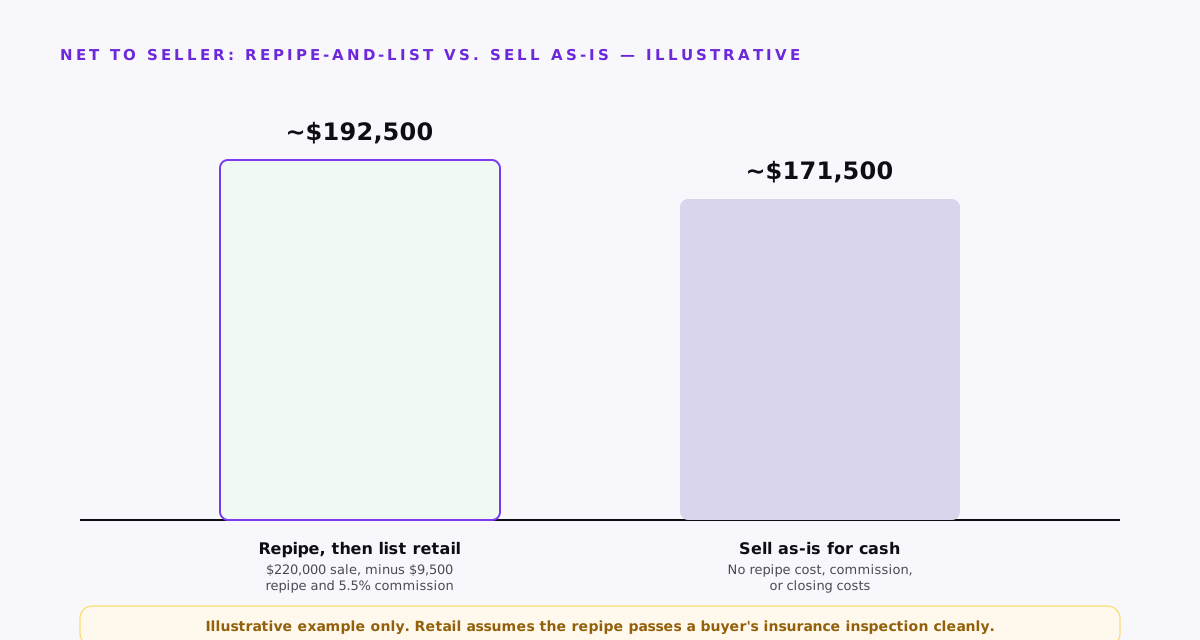
| Repipe, Then List Retail | Sell As-Is for Cash | |
|---|---|---|
| Sale price | $220,000 | — |
| Repipe cost before sale | ~$9,500 (PEX repipe plus drywall patching), paid up front | $0 — buyer takes on the repipe |
| Commission | ~$12,100 (5.5%) | None |
| Closing costs | ~$3,300 (1.5%) | $0 — we cover standard closing costs |
| Holding costs while repiping and listing | ~$2,600 (about 6 weeks) | — |
| Insurance/financing risk | Buyer's insurer or lender can still flag other issues | No mortgage-contingent insurance requirement |
| Time before you have cash | Weeks of repipe work, then a typical retail listing timeline | Days to a few weeks |
| Illustrative net proceeds | ~$192,500 | ~$171,500 |
On this hypothetical house, repiping first and listing retail nets roughly $21,000 more than selling as-is for cash. That's a real gap, and it holds only if you have the cash to front the repipe, the weeks to get it scheduled and inspected, and a buyer's insurer who signs off cleanly afterward. If any of those isn't true — you can't front $9,500, you can't wait out a listing, or the house has other issues that would complicate insurance anyway — the cash route trades some of that $21,000 for certainty and speed. Our how cash home buyers calculate offers guide walks through how a cash figure gets built from a house's condition, and cash offer vs. listing net proceeds covers the same tradeoff in more general terms.
Repiping and cash sale aren't the only two options.
Get a plumber's assessment first. A licensed plumber can tell you whether your galvanized pipe is still functional or actively failing, and whether a partial repipe (just the worst sections) is realistic instead of a full whole-house job.
Repipe, then list retail. If you have the cash and time, a completed repipe with a warranty removes the insurance obstacle entirely and puts the house on equal footing with a comparable home.
Disclose it and price it in on a retail listing. Some buyers, particularly cash investors or contractors, will take on known galvanized or polybutylene plumbing at a discounted price without requiring you to replace it first.
Sell as-is to a cash buyer. If you can't fund or don't want to manage a repipe, an as-is sale hands the plumbing problem to a buyer who isn't relying on a mortgage lender's insurance requirement.
Restar Acquisitions buys houses directly, as-is, for cash, in 45 markets across Alabama, Arizona, Florida, Georgia, Indiana, Maryland, Michigan, Missouri, New York, North Carolina, Ohio, and Texas — many of them older housing markets where galvanized and polybutylene plumbing show up often. If your property is in one of those markets, we can typically give a written offer within 24 hours, and failing plumbing doesn't take you out of consideration, because we're not waiting on a homeowners insurance carrier to sign off the way a financed buyer's lender is.
We are not real estate agents, brokers, plumbers, or insurance agents, and we do not represent you as a seller — we're a direct buyer, and our interests in a transaction are our own, not yours. As the comparison above shows, a repiped house sold retail usually nets more than an as-is cash sale, if you have the cash and time to get there. If that's the better fit for your situation, we'll say so.
This article is for general educational purposes only and is not legal, tax, financial, plumbing, or insurance advice. Plumbing condition, insurance underwriting, and disclosure requirements all vary by property, insurer, and state. Talk to a licensed plumber about the condition of your pipes, your insurance agent about coverage, and a real estate attorney about your disclosure obligations before making a decision.
We'll give you a written offer within 24 hours and can work with galvanized or polybutylene plumbing that would typically stall a financed retail sale — and if repiping it first and listing nets you more, we'll say so.
All guides · How cash home buyers calculate offers · Cash offer vs listing net proceeds · Cost of lender-required repairs
Step 1 of 5
No obligation, no fees, no repairs. We respond the same day.
You’ll talk to Trevor McAmis, Owner & Acquisitions Lead
(313) 710-6129
Takes about two minutes. Or call (313) 710-6129 — we answer.
