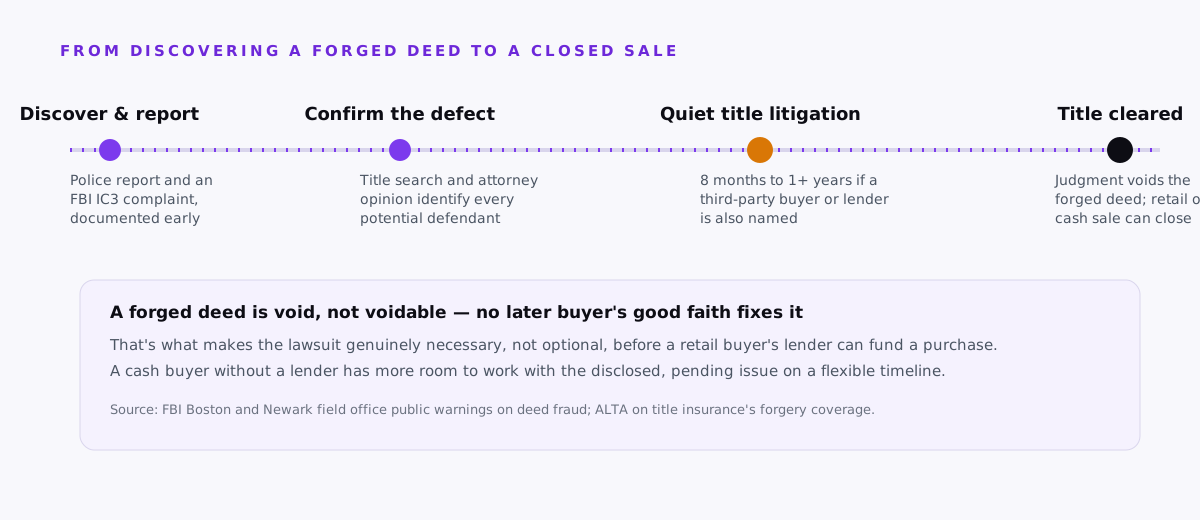
Selling a house with a forged deed in the chain of title generally isn't possible until the forgery is legally cleared, because a forged deed is void from the moment it was created — it transfers nothing, to anyone, no matter how many good-faith buyers came after it. A retail buyer's lender won't fund a purchase without insurable title, and a title company won't insure around a known forgery. Clearing it almost always means a quiet title lawsuit naming the fraudster (and anyone who bought or borrowed against the property relying on the fake deed), which commonly takes six months to well over a year. This guide covers what actually triggers that process, how it differs from a routine title cloud, and what options exist while it's pending.

Step 1 of 5
Tell us where things stand with the title. We'll tell you plainly whether we can work with it on a flexible timeline or whether you need a quiet title judgment first.
You’ll talk to Trevor McAmis, Owner & Acquisitions Lead
(313) 710-6129
Takes about two minutes. Or call (313) 710-6129 — we answer.
Educational only. This explains how these situations generally work. It is not legal, tax or financial advice, and the rules differ by state — talk to an attorney or CPA about your own situation before you act on any of it.
Most title problems — a missing heir, an old lien that was paid off but never released, a legal-description error — are curable with paperwork or, at worst, a quiet title action against people who simply can't be located. A forged deed is a harder problem because of a single legal distinction: it's void, not voidable. If the person named as the seller on a recorded deed never actually signed it, and never authorized or ratified the forgery, that deed conveyed nothing — not to the forger, and not to anyone who later bought from the forger in good faith, paid full price, and had no idea anything was wrong. A later buyer's innocence doesn't fix a forgery; a void deed stays void all the way down the chain. A voidable deed — one the real owner actually signed, but was tricked or pressured into signing — is different: it stands unless and until a court sets it aside, which is a meaningfully easier fight.
That distinction is why forged-deed cases commonly take longer and cost more than a routine quiet title filing: the lawsuit has to identify, locate, and formally serve the actual fraudster, and if the fraudster already sold or mortgaged the property to someone else who didn't know it was stolen, that person is now a defendant too — often backed by their own title insurance company's legal defense. What started as one claim against one forger can turn into a multi-party fight over who bears the loss.
The FBI has issued direct public warnings about this. The FBI's Boston field office warned in 2025 that scammers are forging quitclaim deeds, recording them with the county, and then selling, renting, or mortgaging properties before the real owner finds out — Special Agent in Charge Jodi Cohen put it bluntly: people are having their homes "literally pulled out from under them." The FBI's Newark field office issued a similar warning the same year, describing property-owner impersonation carried out largely through electronic communication with everyone involved in a sale.
Between 2019 and 2023, the FBI's Boston division alone tied 2,301 victims and more than $61.5 million in losses to real-estate fraud cases in its region — and the pattern both offices describe targets the same kinds of properties over and over: vacant homes, mortgage-free homes, homes owned by elderly people, and inherited property sitting unoccupied while heirs sort things out — exactly the circumstances a lot of this site's readers are in. Report a suspected forgery to local police and to the FBI's Internet Crime Complaint Center at ic3.gov; that's the right first move for documentation and potential prosecution, but it's a separate track from the civil quiet title action that actually clears your ability to sell.
A growing number of county recorder and clerk offices let owners register for free notifications any time a document is recorded against their property — catching a fraudulent filing within days instead of months. Coverage is genuinely uneven, county by county in most states, so check your own county rather than assuming it's unavailable. Confirmed, currently live examples across markets we buy in: Fort Bend County, Texas; Georgia's statewide Filing Activity Notification System (FANS), run by the Georgia Superior Court Clerks' Cooperative Authority; Chippewa County, Michigan; and Volusia County, Florida. These services only notify you after something is recorded — they don't stop a fraudulent document from being filed in the first place — but early notice is what turns a forgery caught in a week into a quick police report instead of a forgery discovered a year later during your own sale.
If you bought the property with an owner's title insurance policy, and the forgery happened earlier in the chain — before your purchase — that's exactly the kind of defect a standard owner's policy is built to cover. The American Land Title Association confirms existing owner's policies "already protect against title defects, including forgery, that occurred before the homeowner acquired the property" (ALTA). Your insurer's duty to defend the claim can fund the quiet title litigation itself.
What a policy doesn't do is skip the litigation. A claim gets you a legal defense and, if you lose value, compensation — it doesn't substitute for a court declaring the fraudulent deed void and confirming your title. Someone still has to win that judgment before a title company will issue a clean policy to your buyer. Separately, ALTA has introduced newer endorsements (ALTA 49 and 49.1) that cover forgeries happening after a policy is issued — a gap standard policies didn't originally close — but those protect against future forgery, not a fraud that already happened before you bought.
A routine, uncontested quiet title case (see our full cost breakdown) commonly runs $1,500–$5,000 and four to nine months. A forged-deed case is closer to the contested end of that range almost by default, because there's an actual adversary — the forger, and possibly an innocent third-party buyer or lender — not just an unreachable missing heir. Realistically budget attorney fees well past $5,000, and a timeline of eight months to well over a year if a third-party defendant with their own legal defense gets involved.
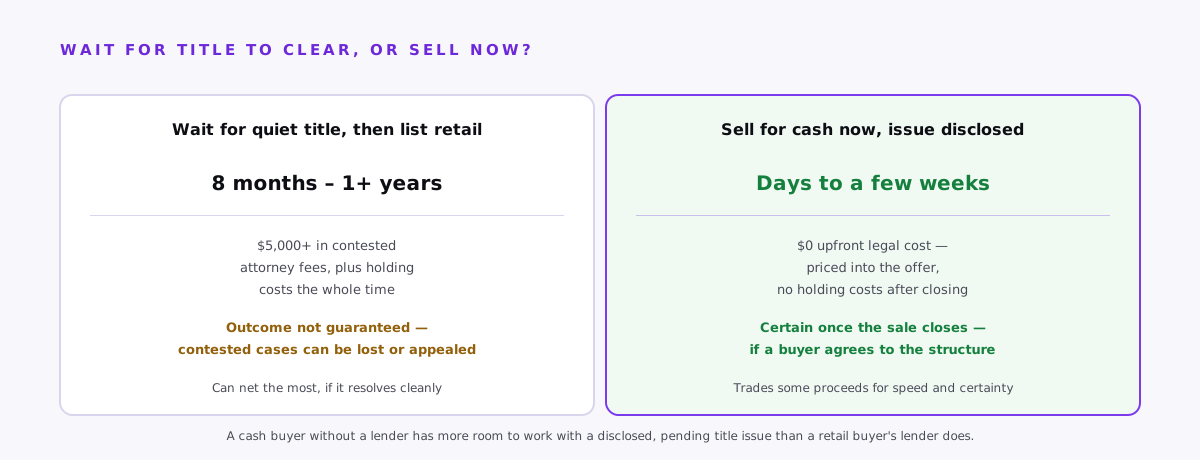
Here's the tradeoff sellers actually face while that plays out. A retail buyer's lender cannot fund a purchase without insurable title, full stop — so a retail listing is effectively frozen until judgment clears the title. A cash buyer without a lender in the loop has more room to work with a disclosed, pending title issue: purchasing subject to it, waiting through the litigation on a flexible timeline, or structuring a sale that closes once judgment is entered. That flexibility is real, but it isn't free — a cash, as-is offer already runs below a fully clean retail price before a title problem ever enters the picture, and a buyer taking on the uncertainty of a pending lawsuit will price that risk in too. The honest comparison is a lower number sooner against a potentially larger number only after a year or more of litigation, a judgment that isn't guaranteed to go your way, and holding costs the whole time the house sits unsellable to anyone needing a loan.
| Wait for quiet title, then list retail | Sell for cash now, subject to disclosed title issue | |
|---|---|---|
| Timeline to a closed sale | 8 months – 1+ years (litigation), then a normal retail timeline | Days to a few weeks, if a buyer agrees to the structure |
| Legal costs before you can sell | $5,000+ in attorney fees for a contested quiet title case | $0 upfront — priced into the offer instead |
| Holding costs during litigation | Taxes, insurance, utilities, upkeep for the full litigation period | None after closing |
| Outcome certainty | Not guaranteed — contested cases can be lost or appealed | Certain once the sale closes |
Report it and document everything first. A police report and an FBI IC3 complaint create a record that helps both the criminal case and your civil quiet title claim.
Hire a real estate attorney before you do anything else. This is not a do-it-yourself situation — identifying every potential defendant (the forger, and anyone who relied on the forged deed) is exactly the kind of judgment call that determines whether your case moves quickly or drags for years.
File the quiet title action and wait it out, then list retail. Nets the most if you can carry the holding costs and the case resolves cleanly.
Sell to a cash buyer willing to work with the disclosed issue. Trades some net proceeds for speed and certainty while litigation is pending — send us the property here and we'll tell you honestly what's realistic given where your case stands.
This article is general educational information, not legal advice. Whether a given deed is void or voidable, who the proper defendants are, and how long your specific case will take all depend on facts a court has to weigh — talk to a real estate attorney in your state before taking any action.
We sometimes can work with a disclosed, pending title issue on a timeline a retail buyer's lender can't — but we're not a law firm, and if a quiet title judgment has to come first, we'll tell you that plainly rather than waste your time.
All guides · Cost of a quiet title action · Title insurance cost, explained · Selling an inherited house
Step 1 of 5
No obligation, no fees, no repairs. We respond the same day.
You’ll talk to Trevor McAmis, Owner & Acquisitions Lead
(313) 710-6129
Takes about two minutes. Or call (313) 710-6129 — we answer.
