A point-of-sale inspection is a city- or township-required check of a house's condition or systems before a sale can legally close. Some places inspect for general code violations (Philadelphia, Shaker Heights OH), some require a specific certificate like a smoke/CO alarm check (New Jersey) or a sewer lateral scope (several California cities). If the house fails, most ordinances let a buyer close anyway by posting a bond or escrow deposit to guarantee the repairs happen later.
Step 1 of 5
Tell us about the house and what the inspection found. We'll give you a straight read on what it's worth as-is and whether a cash sale beats fronting the repairs.
You’ll talk to Trevor McAmis, Owner & Acquisitions Lead
(313) 710-6129
Takes about two minutes. Or call (313) 710-6129 — we answer.
Educational only. This explains how these situations generally work. It is not legal, tax or financial advice, and the rules differ by state — talk to an attorney or CPA about your own situation before you act on any of it.
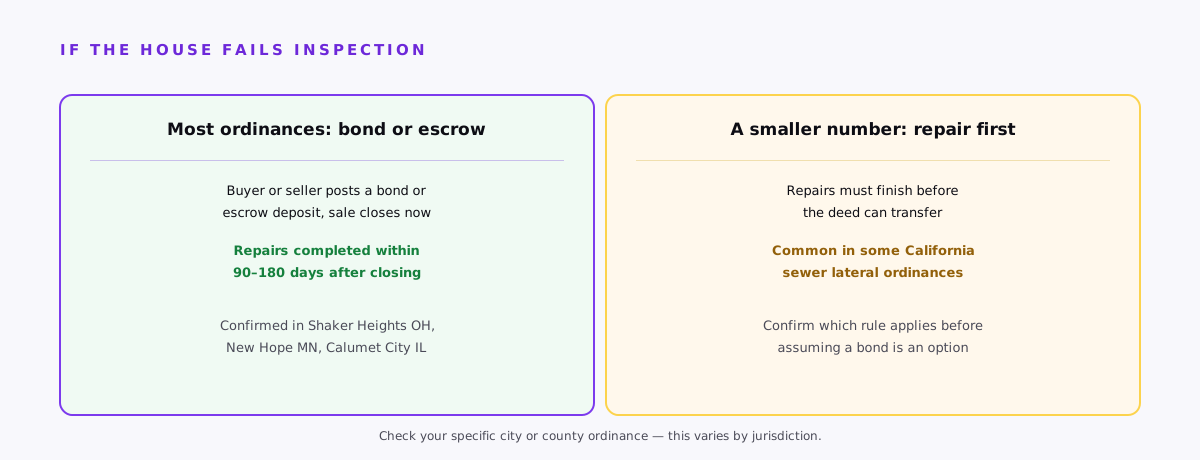
A point-of-sale inspection is a city- or township-required check of a house's condition or systems before a sale can legally close. Requirements vary widely — some cities walk the whole property for code violations, others check a single system like smoke detectors or a sewer lateral. Most ordinances let a buyer close anyway by posting a bond or escrow deposit if the house fails, with repairs completed afterward.
The rest of this page walks through real cities with this requirement, what happens if your house fails, who typically pays, and the honest math on repairing first versus selling as-is for cash.
This article is general educational information, not legal advice. Point-of-sale ordinances are set locally and change — confirm your own jurisdiction's current requirement with its code enforcement or building department before you list.
Requirements fall into two types: a general code-compliance walkthrough, or a single-system certificate. Philadelphia's Property Sales Certification ($139, about 5 business days) is a records check, not a physical inspection — it discloses the property's zoning classification, its last established use, and any uncorrected violations already on file with the city.
Shaker Heights, Ohio sends an inspector to walk the interior and exterior of the house, a process that takes roughly 1.5 to 2 hours for an average single-family home. New Jersey takes a narrower approach: since January 1, 2019, the state's Uniform Fire Code has required a smoke and carbon-monoxide alarm compliance certificate, valid for 6 months, before any sale, lease, or occupancy change of a one- or two-family home.
| Jurisdiction | What's checked | If it fails |
|---|---|---|
| Philadelphia, PA | Zoning, use, and open violations on file | Certificate still issues; violations transfer with the property |
| Shaker Heights, OH | Full interior/exterior code walkthrough | 90 days to fix, or buyer escrows 150% of a contractor's repair estimate |
| New Hope, MN | Interior/exterior walkthrough | Blocked until a certificate issues, unless buyer escrows $500+ and repairs within 90 days |
| Calumet City, IL | Code compliance | Seller can close if buyer posts a bond; buyer then has 180 days to comply |
| New Jersey (statewide) | Smoke/CO alarm compliance only | Closing typically waits for the certificate |
| Oakland, Berkeley, and other EBMUD-area CA cities | Private sewer lateral condition | Certificate required before close; valid 20 years if fully replaced, 7 if repaired |
The bond and escrow mechanisms above aren't a workaround invented for investors — Calumet City's ordinance was challenged in federal court and upheld in Mann v. Calumet City, Illinois, 588 F.3d 949 (7th Cir. 2009), which found the city's inspect-and-bond system constitutional.
Usually yes, through the bond or escrow mechanisms above — but this depends entirely on your specific city's ordinance, and some do require repairs finished before the deed can transfer (several California sewer-lateral ordinances work this way). Before you assume you can post a bond and move on, pull your own municipality's actual ordinance text or call the code office directly.
We have not found any ordinance that waives the inspection outright for a cash or as-is sale — the bond and escrow options exist for any buyer, financed or not.
There's no single rule. In an owner-occupied sale, the seller is typically on the hook unless the buyer specifically agrees to take on the repair obligation (and the bond or escrow amount) in exchange for a lower price or a faster close. That negotiation is exactly where a cash, as-is buyer changes the math, because taking on a known repair list in exchange for a price adjustment is a routine part of how we evaluate a property.
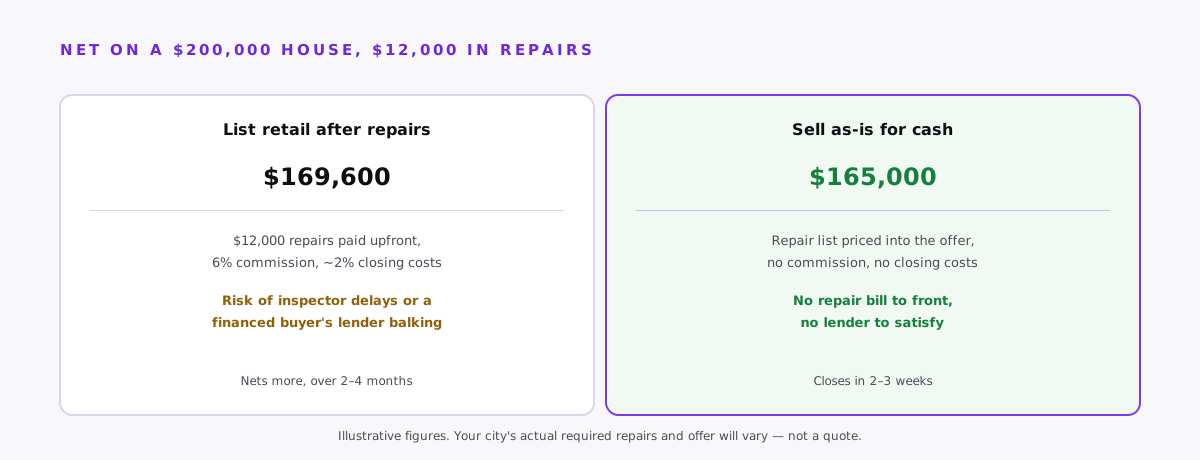
Say a house is worth $200,000 retail and the point-of-sale inspection turns up $12,000 in required repairs — wiring, a water heater, a few missing smoke detectors, and a code violation from a prior permit.
| List retail after repairs | Sell as-is for cash | |
|---|---|---|
| Starting value | $200,000 | $200,000 |
| Required repairs | −$12,000 (paid upfront) | $0 |
| Agent commission (6%) | −$12,000 | $0 |
| Seller closing costs (~2%) | −$4,000 | $0 |
| Holding costs, ~2 months | −$2,400 | $0 |
| As-is cash offer | — | $165,000 |
| Net to seller | $169,600 | $165,000 |
| Timeline | 2–4 months | 2–3 weeks |
Listing nets about $4,600 more here. That's the honest number — a cash sale is not the higher-net option. It's the faster, lower-certainty-risk option: no fronting $12,000 in repairs before you have a buyer, no inspector walkthrough delaying your closing date, and no risk of a financed buyer's lender getting cold feet over open violations.
Do the repairs yourself and list. Nets the most if you have the cash to front the work and the time to manage it.
Negotiate the bond or escrow option with a retail buyer. Several ordinances above let a financed buyer take on the repair obligation directly — ask your agent whether your city's ordinance allows this before assuming you must repair first.
Sell as-is for cash. Skips the repair-financing problem entirely in exchange for a lower price.
If your city requires repairs before you can close and you don't want to pay for them out of pocket before you have a confirmed buyer, we can make a cash offer that already accounts for the inspection's findings — no repair invoice to front, no bond to post, no risk of a financed buyer's lender holding up your closing date.
Send us the property here and we'll walk you through the numbers.
All guides · Selling a house with code violations · Cost of not disclosing a known defect · Seller closing costs
Step 1 of 5
No obligation, no fees, no repairs. We respond the same day.
You’ll talk to Trevor McAmis, Owner & Acquisitions Lead
(313) 710-6129
Takes about two minutes. Or call (313) 710-6129 — we answer.
