Every market page publishes the numbers behind its offer. See the math
Home › Guides › Selling a House While on Active Military Duty: What SCRA Actually Protects
Guide
Selling a House While on Active Military Duty: What SCRA Actually Protects
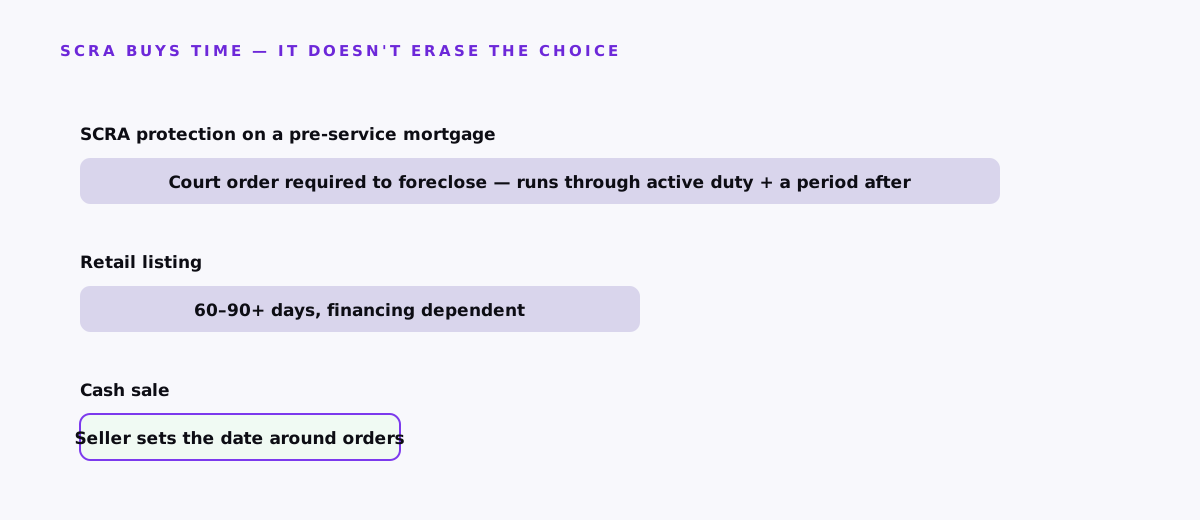
Selling a house while on active military duty is a financial choice, not a legal requirement. SCRA already protects you: it can cap interest on pre-service debt near 6% and requires a court order before foreclosure on a pre-service mortgage. SCRA doesn't erase debt — it buys time to choose forbearance, a rental, or a sale on your schedule. If you're active duty and a house back home has become a financial or logistical problem — missed payments during a deployment, a mortgage you can't manage from overseas, a PCS date closing in — it's easy to assume selling is the only way out. It usually isn't the only way, and it isn't automatically the right one. This article is not about the moving logistics of a PCS (see our <a href="/guides/selling-a-house-on-military-pcs-orders/">guide to selling a house on military PCS orders</a> for that). It's about the legal protections SCRA gives you before you decide anything, and how those protections should shape whether selling, renting, or working out the loan is the better move.
Takes about two minutes. Or call
(313) 710-6129 — we answer.
Educational only. This explains how these situations generally work. It is not legal, tax or financial advice, and the rules differ by state — talk to an attorney or CPA about your own situation before you act on any of it.
What Is the Servicemembers Civil Relief Act (SCRA)?
SCRA is a federal law that gives active-duty servicemembers, activated Guard and Reserve members, and some commissioned officers temporary relief on financial and legal obligations they took on before entering service. For homeowners, the two protections that matter most are an interest rate cap on pre-service debt and a court-order requirement before a lender can foreclose. It applies automatically to qualifying debt once you're on active duty — you generally don't need to sue anyone to get it, but you do need to notify your creditor in writing.
Does SCRA Stop a Foreclosure?
Not permanently, but it changes how a foreclosure can happen. For a mortgage taken out before you entered active duty, SCRA prohibits your lender from foreclosing (in most states, this means no non-judicial foreclosure sale) without first getting a court order, both during your active duty and for a period afterward. A judge can also adjust your payment terms to reflect your military income. It does not cancel the debt or stop interest and principal from accruing — it slows the process and puts a court in the middle of it.
Selling a House While on Active Military Duty: What SCRA Does and Doesn't Cover
Selling a house while on active military duty is legal and common, and SCRA protections don't disappear if you decide to sell — they just change your leverage and your timeline while you weigh the decision. SCRA covers debt incurred before your active-duty period began; a mortgage you took out or refinanced after you were already serving generally isn't covered by the interest-rate cap or the foreclosure protection. SCRA also doesn't apply to voluntary sale decisions — it protects you from being forced out through foreclosure or an unfair rate, but the choice of whether to sell, rent, or keep the house is still yours to make.
What Are the Real Limits of SCRA?
SCRA is relief, not forgiveness. The interest rate reduction and foreclosure delay only apply to debt from before your service began, they require you to notify the lender (with your orders) and typically to do so within a set window after your service ends, and they don't reduce the principal balance you owe. If your financial trouble is with a house you bought or refinanced during your current service window, SCRA's mortgage protections likely don't apply to that debt, and other options — forbearance, a modification, or a sale — matter more.
SCRA buys time — it doesn't erase the choiceRestar Acquisitions · sourced from DOJ and CFPB guidance
Under the DOJ's guidance, qualifying servicemembers can have interest reduced to roughly 6% on pre-service obligations, including mortgages, and the reduced rate on a mortgage can continue for an additional period after active duty ends. The CFPB confirms the same court-order requirement for foreclosure and notes it runs through active duty and for a period afterward. Because the exact notice deadlines and post-service windows can change and depend on your specific loan and orders, don't rely on this article for the current figures — confirm them with your installation's Legal Assistance Office before you act.
What Alternatives Do I Have Besides Selling?
Before listing or accepting any offer, it's worth ruling out the options that let you keep the house or exit the loan without selling under pressure. None of these require you to have already missed a payment.
Forbearance. Many servicers offer temporary payment pauses or reductions for military hardship, including deployment. This buys time without selling, but the missed amounts are usually still owed later — see what happens when mortgage forbearance ends before you agree to a plan.
VA loan assumption or refinance. If you have a VA loan, a qualified buyer may be able to assume it at your existing rate, or you may be able to refinance into more manageable terms depending on your equity and credit.
Renting the house out during deployment. A property manager can handle a rental while you're overseas or reassigned, turning a house you can't sell quickly into income instead of a liability. This only works if the numbers cover the mortgage and management fees, and if you're comfortable being a landlord from a distance.
Formal loan modification. Separate from SCRA, your servicer may restructure the loan permanently — different rate, term, or principal deferral — if you qualify.
Your installation's Legal Assistance Office. This is free, staffed by military attorneys, and is the right place to get SCRA notices drafted correctly and to understand what your specific loan and orders qualify you for. Nothing in this article substitutes for that conversation.
When Does Selling for Cash Make Sense?
Selling makes more sense than the alternatives above when your timeline or circumstances don't leave room for them to work. That's typically true when a deployment or PCS date is close enough that forbearance or a rental setup can't be arranged in time, when you can't realistically manage a rental from your next duty station, or when the house needs repairs you can't afford or coordinate before you have to leave. In those cases, a cash sale trades some proceeds for speed and certainty — which is a fair trade if the alternative is missing payments or leaving the house vacant.
Retail Listing vs. Cash Offer: A Real Numbers Comparison
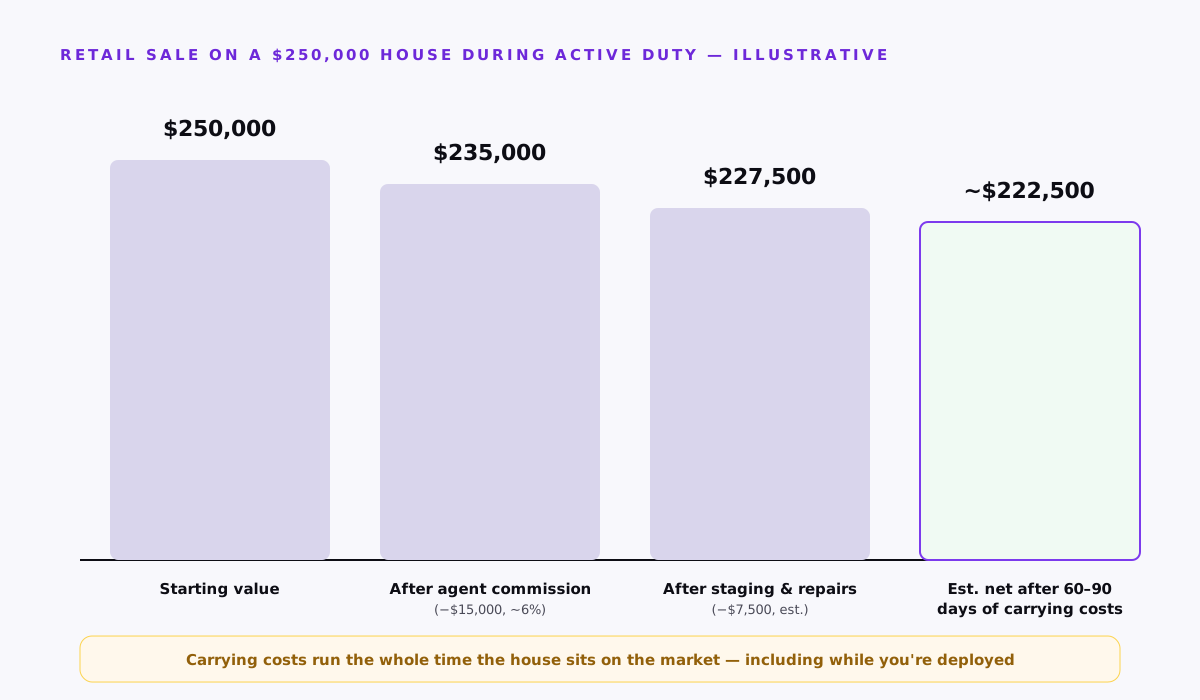
Here's an illustrative example on a $250,000 house — these are example figures to show the kind of costs involved, not a quote for your property.
What a $250,000 retail sale nets after commission and carrying costsRestar Acquisitions · worked example from this page
Cost factor (EXAMPLE)
Retail listing
Cash sale
Starting value
$250,000
$250,000
Agent commission (~6%)
−$15,000
$0
Staging & pre-sale repairs
−$5,000 to −$10,000
$0
Carrying costs, 60–90 days on market (mortgage, utilities, insurance while deployed)
−$4,000 to −$6,000
$0
Typical timeline
60–90+ days, plus closing
Can be scheduled around your PCS or deployment date
Closing date control
Buyer financing and negotiation dependent
Seller picks the date
On the retail side, a $250,000 listing can realistically net somewhere in the $219,000–$226,000 range after commission, prep costs, and carrying costs during a 60–90 day market period — and that assumes it sells on the first listing and nothing falls through. A cash offer removes the commission, staging, repair, and carrying-cost line items entirely, and the closing date can be set around military orders rather than a buyer's financing timeline. The actual cash offer amount depends on the property's condition and location, so treat this table as a way to see where the retail costs come from, not as a promise of what any specific house is worth. For a deeper breakdown of this tradeoff, see our cash offer vs. listing net proceeds guide.
Restar Acquisitions buys houses as-is for cash in 31 markets across 11 states (AL, AZ, FL, GA, IN, MD, MI, NC, NY, OH, TX), gives a written offer within 24 hours, and lets the seller pick the closing date. We don't require repairs, staging, or commissions. We're a direct buyer, not a real estate agent or broker, and we don't represent you in the transaction. That doesn't make a cash sale the right choice for everyone reading this — for some homeowners, forbearance or a rental is genuinely the better outcome, and we'd rather you make that call with accurate information than rush into a sale.
This article is for general education and isn't legal, tax, or financial advice. SCRA rules, notice deadlines, and post-service protection windows can change and depend on your specific orders and loan — confirm current terms with your installation's Legal Assistance Office or a licensed attorney before making decisions.
Common questions
Does being on active duty stop me from selling my house?
No. Active duty doesn't restrict your right to sell your own property. SCRA protects you from certain creditor actions like foreclosure without a court order; it doesn't limit your ability to list, negotiate, or close a voluntary sale whenever you choose.
Does SCRA cover a mortgage I refinanced after I joined the military?
Generally no. SCRA's interest rate cap and foreclosure protections are built around debt incurred before your period of active duty. A mortgage or refinance taken on after you were already serving typically isn't covered the same way — confirm your specific situation with a Legal Assistance Office attorney.
Can my lender foreclose while I'm deployed?
For a pre-service mortgage, your lender generally needs a court order to foreclose during your active duty and for a period afterward, per SCRA and CFPB guidance. A lender can still pursue foreclosure through the courts — SCRA changes the process and timeline, it doesn't make foreclosure impossible.
Will missing a payment while deployed hurt my credit?
It can, depending on your servicer and whether you've arranged forbearance or invoked SCRA protections in writing. Missed payments are one of the first signs of trouble worth addressing early, before options narrow.
Is a cash sale my only option if I'm behind on payments and facing a PCS?
No. Forbearance, a VA loan assumption, a rental with a property manager, and a formal loan modification are all worth checking before you sell. A cash sale is one option among several, useful mainly when your timeline is too tight for the others to play out.
Where do I go for help specific to my situation?
Your installation's Legal Assistance Office (JAG) provides free SCRA guidance tailored to your orders, loan, and state. Military OneSource can also connect you with free legal and financial counseling. This article is educational only and isn't legal advice — talk to a military attorney or your servicer before acting on anything here.
Want to see the cash-sale option alongside your other choices?
We'll give you a written offer within 24 hours that you can set against forbearance, a rental, or a loan modification — and we'll say so plainly if one of those is the better call.
Every offer on this site is underwritten by a person, not a form. If the
numbers do not work for you, say so and I will tell you what would.
Also from Restar
Want the data behind all of this?
Restar Acquisitions is the acquisitions arm of Restar — a housing-market analytics
platform tracking 180+ metrics across every U.S. market, with composite scores and 12-month
price forecasts. The numbers on this page come from the same work.