Every market page publishes the numbers behind its offer. See the math
Home › Guides › Cost of Termite Damage Repair Before Selling a House
Guide
Cost of Termite Damage Repair Before Selling a House
The cost of termite damage repair ranges from $300–$2,000 for cosmetic damage up to $5,000–$15,000+ for severe structural damage, with most sources putting the overall average somewhere between $1,800 and $3,000. That's separate from treatment, which typically runs $500–$3,000. Before selling, get a WDO inspection first — it tells you which range you're actually in. If you found termite damage while getting your house ready to sell — a soft spot in the subfloor, hollow-sounding trim, mud tubes along the foundation — the first question isn't whether to fix it. It's how much fixing it actually costs, and whether that number is smaller or larger than what you'd lose by not fixing it. Those are two different questions, and sellers who only answer the first one often get the second one wrong. This guide breaks down real repair-cost ranges by severity, separates out treatment cost (which is not the same expense as repair), looks at how FHA and VA financing treats termite damage, and walks through one full worked example comparing repairing-then-listing against selling as-is for cash.
Takes about two minutes. Or call
(313) 710-6129 — we answer.
Educational only. This explains how these situations generally work. It is not legal, tax or financial advice, and the rules differ by state — talk to an attorney or CPA about your own situation before you act on any of it.
How Much Does Termite Damage Repair Cost?
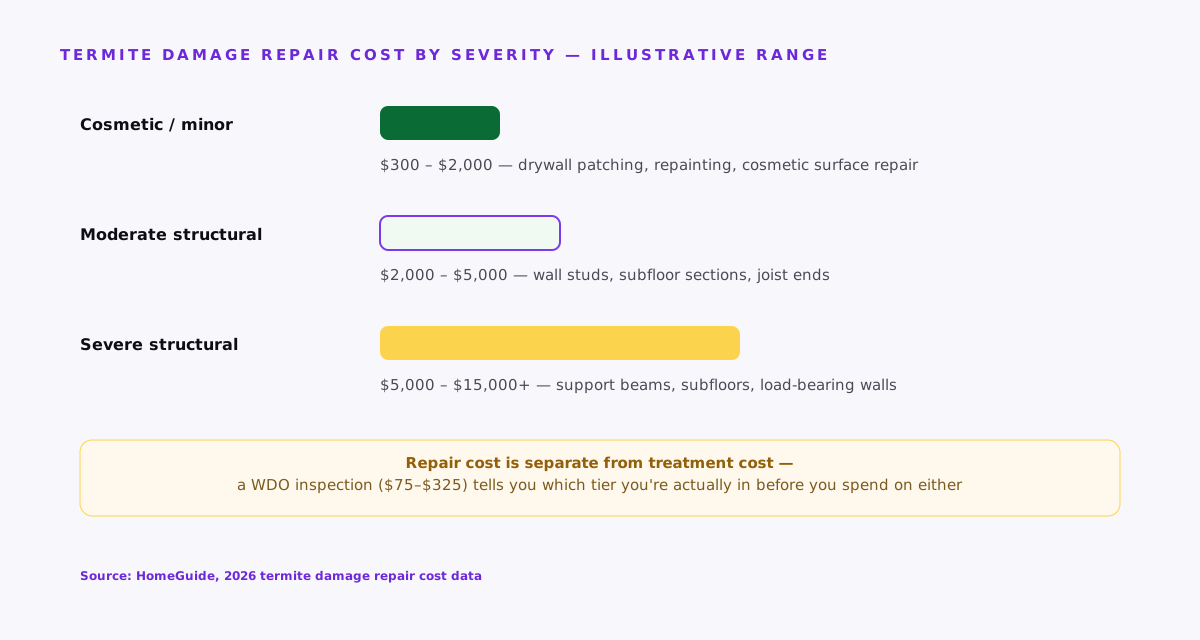
Termite damage repair cost depends almost entirely on how far the damage has progressed — cosmetic surface damage and severe structural damage are, in practical terms, two different projects with two different price tags. Estimates vary by source (commonly cited national averages range from about $1,800 to $3,000), but the realistic range runs from a few hundred dollars to well over $10,000 depending on severity, based on 2026 cost figures from HomeGuide (HomeGuide).
Repair cost is separate from treatment costRestar Acquisitions · sourced from Angi 2026 termite damage repair cost data
Damage severity
Typical repair cost
What's usually involved
Cosmetic / minor
$300–$2,000
Patching drywall, replacing damaged trim or baseboards, spot-repairing or repainting affected surfaces
Moderate structural
$2,000–$5,000
Replacing sections of subfloor, fascia board, siding, or a small number of floor joists
Severe structural
$5,000–$15,000+
Replacing support beams, multiple joists, or load-bearing framing; whole-structure damage can run well past $15,000
The deciding factor isn't the square footage of the house — it's the square footage of damaged wood, and specifically whether that wood is load-bearing. A pest control operator or licensed contractor can usually tell you which category you're in after a single inspection. Guessing from the outside (a little visible frass, a hollow-sounding board) tends to make people assume the worst, when a meaningful share of found damage really is cosmetic.
Termite Treatment and Inspection Costs (Separate From Repair)
Repairing the wood termites already damaged is a different expense from treating the termites themselves, and sellers frequently conflate the two. You generally need both: treatment stops the active infestation, repair fixes what it already did. Skipping treatment and only repairing means the new wood is exposed to the same colony.
Service
Typical cost
WDO / termite inspection
$75–$325 (national average around $100)
Spot or localized chemical treatment
$150–$500
Whole-house liquid barrier treatment
$900–$2,500
Bait system with first-year monitoring
$1,800–$3,800
Fumigation / tenting (drywood termites)
$1–$4 per sq ft, often $1,500–$8,000+
Figures above reflect commonly cited 2026 ranges from HomeGuide's cost data (HomeGuide). Which treatment method applies depends on termite species and region — subterranean termites, the most common type across much of the country, are usually handled with a liquid barrier or bait system, while drywood termites, more common in parts of the Southwest and coastal areas, sometimes require full-structure fumigation. A licensed pest control company, not a general contractor, is who prices and performs this part.
Does Termite Damage Affect FHA or VA Financing?
This matters more than most sellers expect, because it can shrink your buyer pool before you've made any decision about repairs. VA loans require a termite or wood-destroying-insect inspection in most states where termites pose a moderate-to-high risk — more than 35 states, by some counts — regardless of what the appraiser sees on a walkthrough. FHA loans are less automatic: an inspection is typically only required if the appraiser flags visible evidence of infestation or damage, or the property sits in a known high-risk area. In either case, if active termites or unrepaired damage turn up, the loan generally cannot close until the issue is treated and, in many cases, repaired — the underwriter enforces this, not the buyer's personal preference.
That's the real cost of untreated termite damage that doesn't show up on a repair-cost chart: it doesn't just cost money to fix, it can knock a chunk of financed buyers out of your pool until it's addressed. A cash buyer, without a lender requiring a WDO clearance letter, isn't subject to that requirement — which is one of the only structural (not just cosmetic) differences between a cash sale and a financed one when termite damage is on the table.
Do You Have to Disclose Termite Damage When Selling?
In most states, yes — known termite damage is treated as a material defect, and sellers generally have a legal duty to disclose known material defects that a buyer wouldn't discover through an ordinary walk-through, whether or not the sale is “as-is.” An as-is sale changes who's responsible for fixing the problem; it doesn't remove the obligation to tell the buyer the problem exists. Texas's standard seller disclosure form, for example, specifically asks whether the seller is aware of active termites, termite damage needing repair, previous termite damage, and previous termite treatment (Texas Real Estate Commission) — and most other states' disclosure forms ask some version of the same question.
Exact disclosure requirements vary by state, and this isn't a substitute for asking a real estate attorney or agent what your state's form actually requires. What's consistent across states is the underlying principle: hiding a known, material defect — termite damage included — exposes a seller to real legal risk well after closing, in a way that disclosing it upfront does not.
A Worked Example: Repair-and-List vs. Sell As-Is for Cash
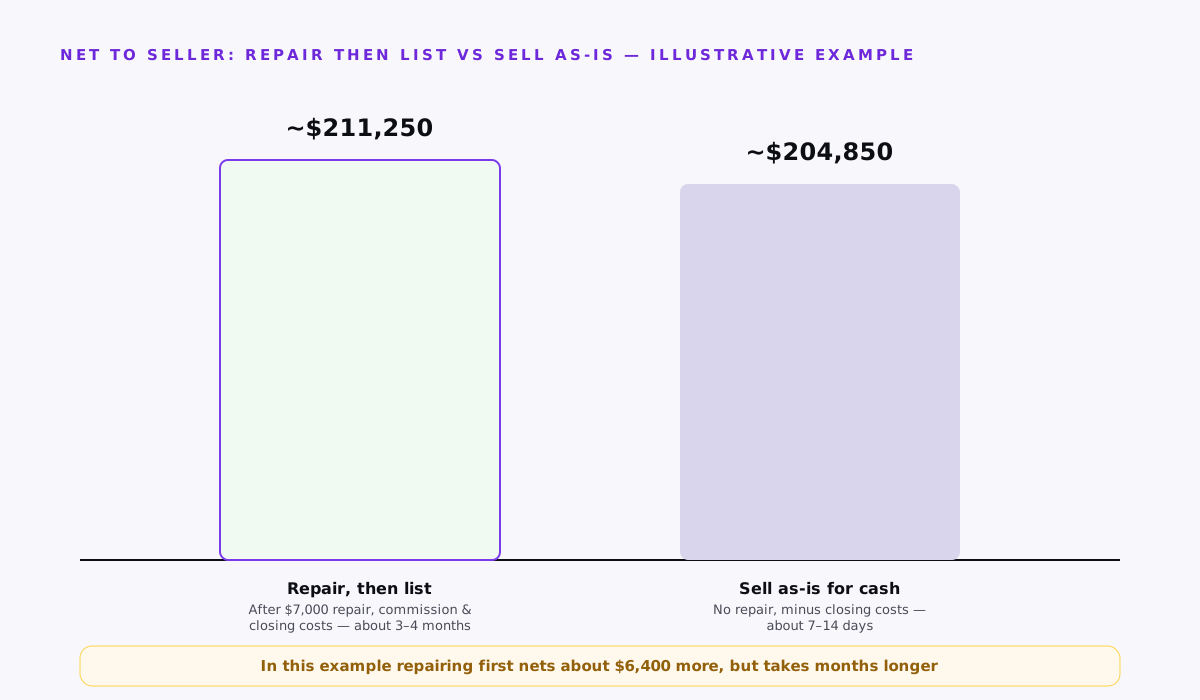
The numbers below are a hypothetical, illustrative example only — not a quote for any specific house — built around a house needing $7,000 in moderate structural termite repair plus treatment, with an as-repaired retail value of $240,000.
That illustrative offer reflects a buyer pricing in the $7,000 repair, the $1,800 treatment, their own holding and resale costs, and their margin on the deal — the same math any legitimate cash buyer should be able to walk you through, not a fixed percentage of value.
Repairing first nets about $6,400 more in this example, but takes months longerRestar Acquisitions · worked example from this page
What the two routes actually say
Repair, treat, then list
Sell as-is for cash
Net to you (illustrative)
$211,250
$204,850
Time to closed sale
~3–4 months
7–14 days
Cash you front before closing
~$8,950 (repair + treatment)
$0
Who carries contractor/timeline risk
You
Buyer
Financing risk on your buyer
Yes — buyer's lender can require WDO clearance
No, if buyer pays cash
In this illustrative example, repairing first nets about $6,400 more — but that number assumes the repair goes to plan, on schedule, at the estimated price, and that the house appraises and sells at $240,000 within a normal window. It also assumes you have roughly $9,000 in cash to front before you see any of it back. If your damage is smaller, your local commission is lower, or your market is softer, the gap narrows or reverses. Run your own numbers before deciding, ideally with an actual contractor estimate and an actual cash offer in hand rather than these illustrative figures.
Alternatives to a Full Repair
A full structural repair isn't the only option, and it isn't always the right one:
Get a WDO inspection before assuming the worst. If the damage turns out to be cosmetic, treating the active infestation and leaving the cosmetic repair for later (or skipping it) is a legitimate, far cheaper path — treatment stops the problem from getting worse even if you never touch the drywall.
Negotiate a repair credit or price reduction with a retail buyer instead of doing the repair yourself before listing. This shifts the work (and the risk of a contractor running over budget or schedule) to after you have an accepted offer, and lets the buyer choose their own contractor. See our guide on the cost of lender-required repairs before closing for how this plays out when a lender is involved.
List as-is with full disclosure. This keeps your options open and avoids fronting repair cash, but it does narrow your buyer pool to cash buyers and investors if the damage is severe enough to affect financing, and it still requires disclosing what you know. Our guide on whether to repair before selling walks through that decision more broadly.
Sell directly to a cash buyer. This removes both the repair and the financing risk described above, at the cost of a lower price than a repaired retail sale would likely bring. For the fuller math on how a cash offer compares to a financed listing across different repair scenarios, see our guide on cash offer vs. listing net proceeds.
A Note on How We Fit In
Restar Acquisitions buys houses directly, as-is, for cash, across 45 markets in 12 states: Alabama, Arizona, Florida, Georgia, Indiana, Maryland, Michigan, Missouri, New York, North Carolina, Ohio, and Texas. We give a written offer within 24 hours of seeing a property, we don't require repairs or treatment before closing, and we don't charge commissions. We are not real estate agents or brokers, and we don't represent sellers in a transaction.
We are also not a pest control company or a law firm, and nothing here is a substitute for an actual WDO inspection or advice from a real estate attorney. If you're not sure whether your damage is cosmetic or structural, the right first call is a licensed pest control operator — that inspection report is what turns guesswork into an actual number.
This article is for general educational purposes only and is not legal, tax, or financial advice. Termite repair and treatment costs, financing requirements, and disclosure obligations vary by property, lender, and state. Talk to a licensed pest control operator and, where legal questions apply, a real estate attorney before deciding how to proceed.
Common questions
Does the cost of termite damage repair differ if the damage is only cosmetic?
Yes, significantly. Cosmetic termite damage — surface-level marks, minor drywall or trim damage — typically costs $300 to $2,000 to repair, and some of it can be handled without a contractor at all. Structural damage, involving joists, beams, or subfloor, is a different category entirely and can run $5,000 to $15,000 or more.
Do I have to fix termite damage before selling my house?
Not necessarily. There's no law requiring repairs before a sale. What you generally can't skip is disclosing known damage to a buyer. Whether repairs make financial sense depends on whether your buyer pool needs financing (which may require a WDO clearance) and whether the repair cost is smaller than the discount an as-is sale would require.
Will FHA or VA financing fall through if an inspection finds termite damage?
It can. VA loans require termite inspections in most higher-risk states regardless of visible signs, and FHA loans require one if the appraiser sees evidence of infestation or damage. If active termites or unrepaired damage are found, the loan typically cannot close until treatment (and often repair) is completed, which can delay or derail a sale to a financed buyer.
Am I legally required to disclose termite damage to a buyer?
In most states, yes. Known material defects — including termite damage and past termite treatment — generally must be disclosed to a buyer, even in an as-is sale. Requirements vary by state, so confirm what your state's disclosure form specifically requires; a real estate attorney or agent licensed in your state can tell you exactly what applies.
What's the difference between termite treatment cost and termite repair cost?
Treatment cost covers eliminating the active infestation — inspection, chemical barriers, bait systems, or fumigation, typically $500 to $3,000. Repair cost covers fixing the wood the termites already damaged — drywall, trim, subfloor, framing — typically $300 to $15,000+ depending on severity. Most situations require both, and they're billed by different types of companies.
Can I sell a house with termite damage as-is for cash?
Yes. A cash sale doesn't require repairs, treatment, or a WDO clearance letter the way a financed sale often does, since there's no lender in the transaction requiring one. The tradeoff is a lower price than a repaired, retail-listed sale would likely bring — the worked example above shows how to compare the two honestly for your own numbers.
Found termite damage and want an honest read on your options?
We buy houses with termite damage as-is — no repairs, no treatment, no WDO clearance required on our end. But if the repair math favors listing on your house, we'll tell you that plainly.
Every offer on this site is underwritten by a person, not a form. If the
numbers do not work for you, say so and I will tell you what would.
Also from Restar
Want the data behind all of this?
Restar Acquisitions is the acquisitions arm of Restar — a housing-market analytics
platform tracking 180+ metrics across every U.S. market, with composite scores and 12-month
price forecasts. The numbers on this page come from the same work.