Every market page publishes the numbers behind its offer. See the math
Home › Guides › The Cost of Asbestos Abatement Before Selling a House
Guide
The Cost of Asbestos Abatement Before Selling a House
If a pre-listing inspection just turned up asbestos-containing material — old floor tile, pipe wrap, popcorn ceiling texture, vermiculite attic insulation — the question isn't whether it's a problem. It's what removing or containing it actually costs, and whether that's cheaper than what you'll lose negotiating it after an inspection instead. Asbestos abatement typically runs $5–$20 per square foot for full removal, or $2–$6 per square foot for encapsulation — so a contained area like a basement floor generally runs $1,200–$3,300, and a whole-home project can run $5,700 or more.
Tell us about your property and we'll send a written cash offer within 24 hours, priced for the condition it's in today. No repairs, no showings, no commissions.
Takes about two minutes. Or call
(313) 710-6129 — we answer.
Educational only. This explains how these situations generally work. It is not legal, tax or financial advice, and the rules differ by state — talk to an attorney or CPA about your own situation before you act on any of it.
The cost of asbestos abatement: the short answer
Asbestos abatement typically runs $5–$20 per square foot for full removal of interior materials, or $2–$6 per square foot for encapsulation (sealing it in place instead of removing it) — so a contained area like a basement floor or a bathroom generally runs $1,200–$3,300, and a whole-home project can run $5,700 or more. Encapsulation is legal and EPA-recognized where the material is intact, and it's typically 30–50% cheaper than removal.
This is educational information, not a professional inspection, legal advice, or a quote. Asbestos identification requires a trained, accredited professional — don't disturb suspected material yourself. Confirm your state's specific disclosure requirements with a real estate attorney.
When asbestos is actually a problem — and when it isn't
Per the EPA, asbestos-containing material that's intact and undisturbed generally isn't a health hazard on its own. The risk comes from disturbance: materials that get cut, sanded, drilled, torn, or crumbled release fibers into the air. That distinction is the whole reason encapsulation — sealing the material in place with a specialized coating rather than removing it — is a legitimate, EPA-recognized option, not a shortcut. It only works when the material is in good condition, though; damaged or "friable" (easily crumbled) asbestos generally needs full removal.
You generally can't identify asbestos by looking at it. A trained, accredited asbestos professional needs to take samples for lab analysis — the EPA specifically warns against touching or disturbing suspected material yourself, since that's exactly the disturbance that creates the risk. OSHA separately regulates asbestos exposure for anyone doing renovation or abatement work, which is part of why abatement contractors are licensed and why DIY removal is a bad idea even where it's not outright prohibited.
What abatement actually costs
Cost depends heavily on the material, its location, and whether you remove or encapsulate. Based on 2026 contractor cost data from This Old House and HomeGuide:
Interior removal: roughly $5–$20 per square foot, depending on the material and how accessible it is.
A single contained area (one room, a section of flooring, a bathroom) typically runs $1,200–$3,300 total.
Whole-home removal — multiple rooms, insulation, and flooring — can run $5,700 or more, scaling with square footage and how much material is affected.
Encapsulation, where the material qualifies, runs $2–$6 per square foot — generally 30–50% cheaper than full removal, because it doesn't require the same containment and disposal process.
Disposal adds roughly $10–$50 per cubic yard of removed material, plus a $50–$100 permit fee in most jurisdictions, since asbestos waste has to go to a licensed facility.
Labor runs $75–$200 an hour for licensed abatement crews, on top of material and disposal costs.
None of these are a quote — get a licensed abatement contractor to inspect and bid your specific situation before you budget around any of these numbers.
What you're actually required to disclose
Federal law doesn't mandate asbestos disclosure the way it mandates lead-based paint disclosure for homes built before 1978. But most states require disclosing known asbestos as part of the standard "known material defects" disclosure form — some states, like Colorado, include an explicit line item asking directly about it, while a handful of states (mostly in the South and Midwest) don't require volunteering it but still hold sellers liable for lying if directly asked. The common thread across every state: if you know it's there, don't say it isn't. We cover the broader mechanics and legal exposure of non-disclosure in our cost of not disclosing a known defect guide — this page focuses specifically on the abatement math.
One more wrinkle worth knowing before you list: HUD's Single Family Housing Policy Handbook 4000.1 directs FHA appraisers to flag damaged or deteriorated asbestos as a health-and-safety condition. If your buyer is financing with an FHA or VA loan, a flagged condition generally has to be remediated before the loan can close — which is the same dynamic we cover in more general terms in the cost of lender-required repairs before closing. That's a real deal-killer risk for a financed sale that a cash sale doesn't carry.
The honest price tradeoff: four paths on the same house
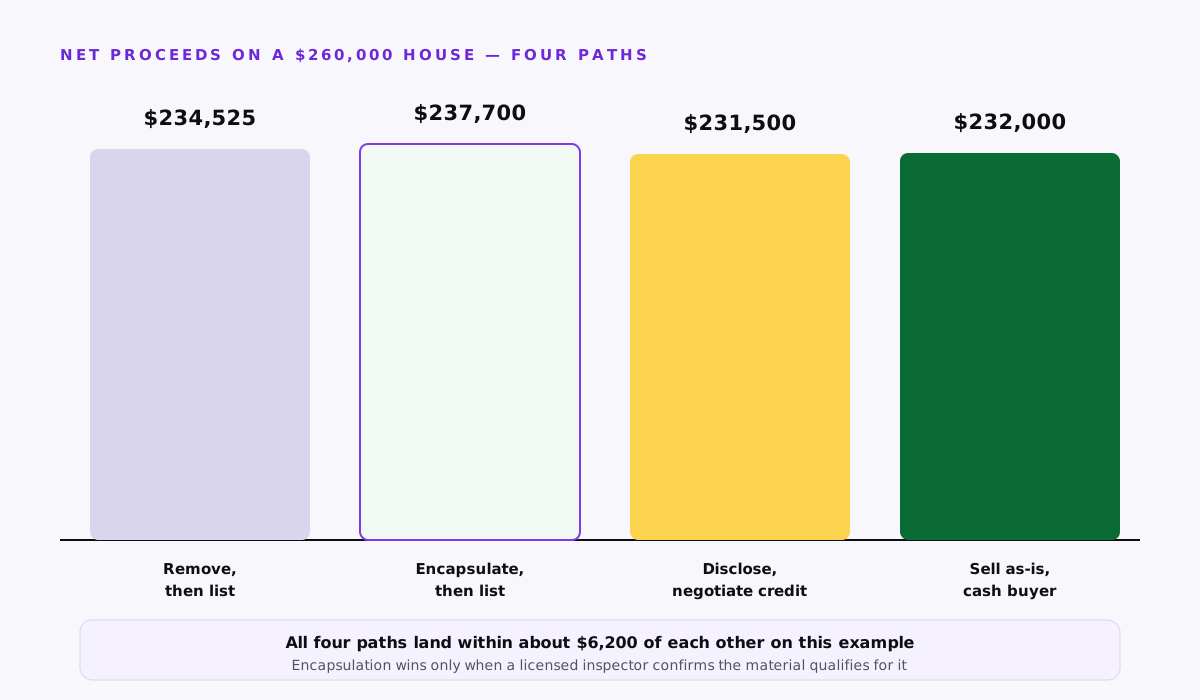
Encapsulation nets the most — when the material actually qualifies for itRestar Acquisitions · worked example from this page
Take a house worth $260,000 where a pre-listing inspection finds asbestos floor tile in a 700-square-foot finished basement, in good, undisturbed condition. Here's what each path actually nets, using the cost ranges above. These are illustrative numbers on one hypothetical property, not a quote for yours.
Path 1 — Fully remove the asbestos, then list at retail.
Removal (700 sq ft × ~$8/sq ft, mid-range)
−$5,600
Disposal and permit
−$375
Sale price
$260,000
Agent commission (6%)
−$15,600
Seller closing costs (~1.5%)
−$3,900
Net to seller
$234,525
Time
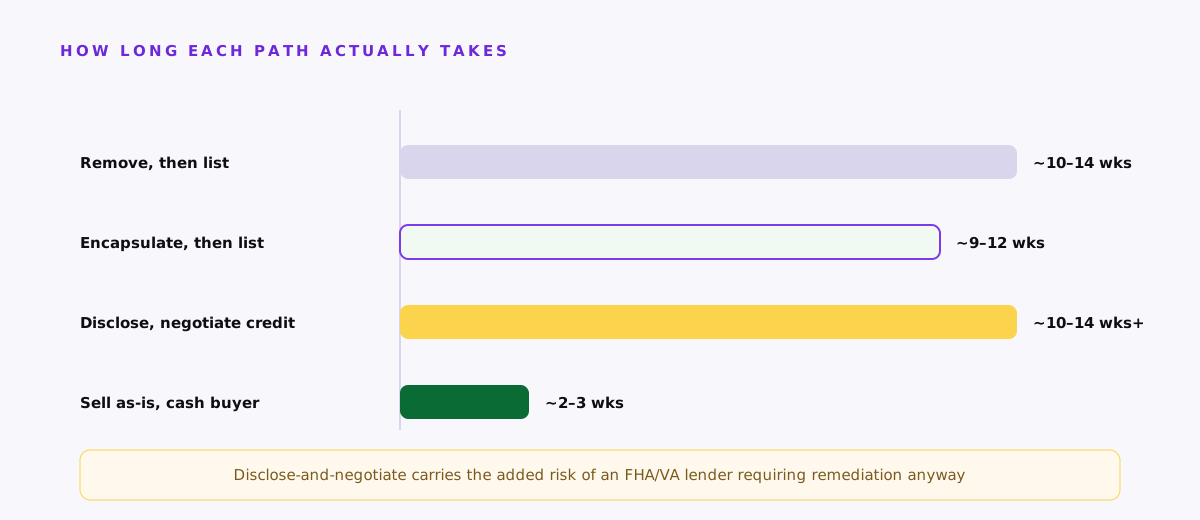
~2–4 weeks abatement, then ~8–10 weeks to close
Path 2 — Encapsulate instead of removing, then list at retail.
Encapsulation (700 sq ft × ~$4/sq ft, mid-range)
−$2,800
Sale price
$260,000
Agent commission (6%)
−$15,600
Seller closing costs (~1.5%)
−$3,900
Net to seller
$237,700
Time
~1–2 weeks, then ~8–10 weeks to close
Path 3 — List as-is, disclose it, and negotiate a buyer credit after inspection.
Sale price (nominal)
$260,000
Buyer's negotiated closing credit (reflects abatement cost plus leverage and uncertainty)
−$9,000
Agent commission (6% of the nominal price)
−$15,600
Seller closing costs (~1.5%)
−$3,900
Net to seller
$231,500
Time
Full listing cycle, plus real risk an FHA/VA lender requires remediation before closing anyway
Path 4 — Sell as-is to a cash buyer.
Cash offer (priced for the condition, no repairs required)
$232,000
Agent commission
$0
Closing costs
$0 — buyer covers standard costs
Abatement cost
$0
Net to seller
$232,000
Time
~2–3 weeks
Path
Net to seller
Time
What it requires
1 — Remove, then list
$234,525
~10–14 weeks
Cash to front $5,975, tolerance for abatement delay
2 — Encapsulate, then list
$237,700
~9–12 weeks
Material has to qualify (intact, not friable)
3 — Disclose, negotiate credit
$231,500
~10–14 weeks+
A buyer willing to proceed, and financing that survives an appraisal flag
4 — Sell as-is, cash
$232,000
2–3 weeks
Nothing — no abatement, no repairs, no negotiation
Encapsulation nets the most here specifically because the material qualified for it — that won't always be true, and a licensed inspector has to make that call, not a spreadsheet. What consistently loses is Path 3: disclosing and hoping a retail buyer negotiates gently almost always costs more than just doing the abatement yourself, because the buyer's credit demand reflects their uncertainty and leverage, not just your contractor's actual bid — and you're still paying full commission on a price you didn't really get. Run your own contractor's bid against your own numbers before assuming any of these orderings holds for your house.
Disclose-and-negotiate is also the slowest path with the added risk of a financing falloutRestar Acquisitions · timeline for the same example
Your other options
Get the material tested before assuming the worst. Only a small share of suspected materials turn out to be asbestos-containing on lab analysis — don't budget for abatement until a licensed inspector confirms it.
Ask whether encapsulation qualifies before pricing out full removal. It's legitimate, EPA-recognized, and meaningfully cheaper when the material is intact.
Sell as-is and let the buyer's financing determine what happens next, understanding that FHA/VA buyers may require remediation before closing regardless of what your disclosure says.
Sell to a cash buyer if the abatement decision itself — cost, timeline, and finding a licensed contractor — is the thing you don't want to manage before closing.
Common questions
Is asbestos always dangerous in a house?
No. Per the EPA, asbestos-containing material that's intact and undisturbed generally isn't a health hazard. The danger comes from disturbance — cutting, sanding, drilling, or crumbling the material releases fibers into the air. That's also why you shouldn't touch or disturb suspected material yourself before it's tested.
Do I have to disclose asbestos when I sell my house?
Federal law doesn't specifically require it, but most states treat known asbestos as a "material defect" you must disclose on the standard seller disclosure form, and a few states ask about it explicitly. A handful of states don't require volunteering it but still hold you liable for lying if a buyer asks directly. Confirm your state's specific form and requirement with a real estate attorney.
Is encapsulation as good as removal?
For material in good, undisturbed condition, yes — the EPA recognizes encapsulation (sealing the material in place) as a legitimate alternative to removal, and it typically costs 30–50% less. It doesn't work for damaged or friable material, which generally needs full removal instead. A licensed inspector determines which applies to your situation.
Will asbestos stop my sale from closing?
It can, if your buyer is financing with an FHA or VA loan — HUD's appraisal guidelines direct appraisers to flag damaged or deteriorated asbestos as a health-and-safety condition, which generally has to be remediated before the loan can close. A cash sale doesn't carry that same financing contingency.
How much does asbestos abatement typically cost?
Based on current contractor cost data, interior removal runs roughly $5–$20 per square foot, with a single contained area typically costing $1,200–$3,300 and whole-home projects reaching $5,700 or more. Encapsulation runs $2–$6 per square foot. Get a licensed contractor's bid for your specific situation — these are ranges, not quotes.
Can I remove asbestos myself to save money?
It's a bad idea even where it isn't outright restricted. Untrained removal is exactly the kind of disturbance that releases fibers, and OSHA regulates asbestos work specifically because of that exposure risk. Licensed abatement contractors carry the training, containment equipment, and disposal permits the job actually requires.
Don't want to manage abatement before you sell? We'll buy it as-is
We're happy to look at the numbers with you, including what a cash offer looks like without doing any abatement first. Send us the address and we'll get back to you with a written offer within 24 hours. No pressure either way.
Every offer on this site is underwritten by a person, not a form. If the
numbers do not work for you, say so and I will tell you what would.
Also from Restar
Want the data behind all of this?
Restar Acquisitions is the acquisitions arm of Restar — a housing-market analytics
platform tracking 180+ metrics across every U.S. market, with composite scores and 12-month
price forecasts. The numbers on this page come from the same work.