Homeowners almost always find out about an open permit at the worst possible time: a title company or a buyer's lender flags it two weeks before closing, and suddenly a sale that looked done has a new, unscheduled problem. Here's what an open or expired permit actually is, how it surfaces, what it costs to fix, and the honest tradeoff between fixing it, discounting for it, and selling around it entirely.
Step 1 of 5
Tell us about the property. We'll give you a written cash offer within 24 hours that doesn't depend on getting the permit closed out first.
You’ll talk to Trevor McAmis, Owner & Acquisitions Lead
(313) 710-6129
Takes about two minutes. Or call (313) 710-6129 — we answer.
Educational only. This explains how these situations generally work. It is not legal, tax or financial advice, and the rules differ by state — talk to an attorney or CPA about your own situation before you act on any of it.
Selling a house with an open permit means dealing with a permit that was legally pulled — for a roof, an HVAC swap, an addition, an electrical panel — but never finaled with the building department. It is not the same as unpermitted work, and most buyers' lenders will not fund until it is closed or credited for. You can pay to close it out before you list, disclose it and sell at a discount, or sell to a cash buyer who doesn't need a lender's sign-off at all.
These four terms get used interchangeably by sellers, and they are not the same thing, so it's worth being precise before anything else.
An open or expired permit sits between “nobody has noticed” and “enforcement has started.” Nobody may be actively pursuing you, but the record is sitting there, and it surfaces the moment anyone looks.
The frustrating part for most sellers: a standard title search will not catch an open permit. Title searches cover recorded liens and encumbrances in the county land records. Open permits live in the city or county building department's own permitting system, which is a separate database entirely. Finding one usually requires a dedicated municipal lien search, something a buyer's agent or title company has to specifically order — it typically costs $125 to $400 and is not automatic in every transaction.
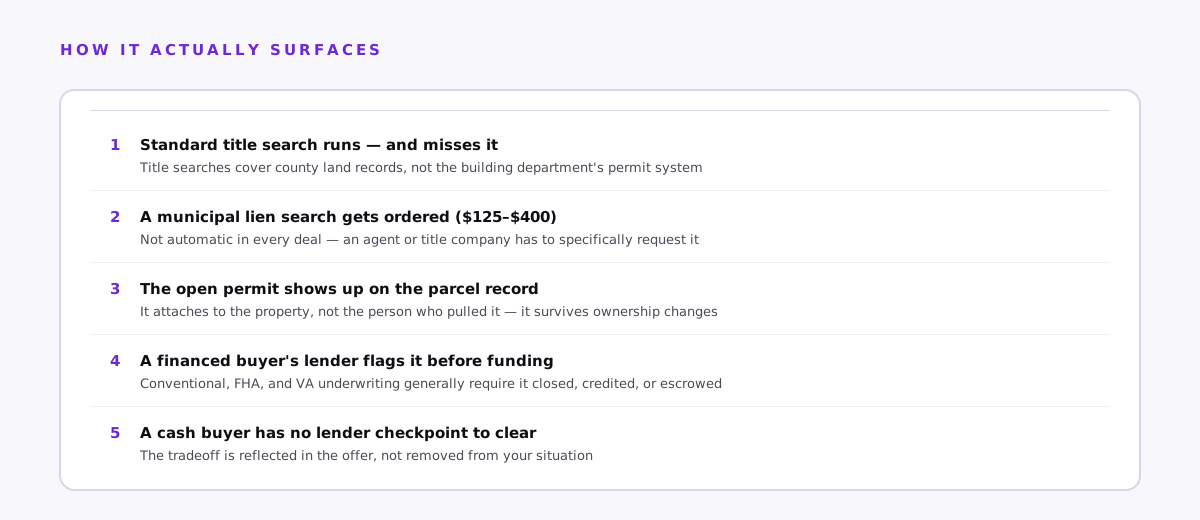
That means an open permit can sit undiscovered through multiple ownership changes, because the permit record attaches to the property, not to whoever pulled it. It becomes your problem the day a diligent buyer, agent, or lender finally checks.
Once it's found, financed buyers have a real obstacle: conventional, FHA, and VA underwriting generally will not fund against a property with a known open permit. In practice, that forces one of three outcomes — the permit gets closed before closing, the lender escrows funds to cover the cost of closing it after closing, or the deal stalls while everyone figures out which. A cash buyer with no lender to satisfy doesn't have this checkpoint at all, which is a real practical advantage — though, as always, it comes with a lower overall price than a financed retail sale would likely bring. More on that tradeoff below.
Title insurance is a separate question from financing. Open permits are typically treated as a zoning-type matter and excluded from standard owner's title policy coverage, meaning your buyer's title company likely won't insure around it as a matter of course. Ask your title company directly whether they'll consider an exception or additional coverage for an additional premium — it isn't a standard off-the-shelf product, and it's entirely the insurer's discretion.
The cleanest path, when there's time for it, is closing the permit out yourself before you ever put the house on the market. The general sequence:
One important wrinkle: reactivating a lapsed permit sometimes requires the completed work to meet the building code in effect now, not the code that applied when the original permit was pulled, if enough time has passed. That can mean updates to electrical grounding, plumbing venting, or structural details that weren't required when the work was originally done — a real added cost that's hard to estimate without a local inspector's input.
There is no universal price discount for an open permit — it depends entirely on what's outstanding and how long it would take to resolve. But the three realistic paths have real, different cost and timeline shapes:
| Path | What it costs | What it costs you in time | Who it works for |
|---|---|---|---|
| Close it out before listing | Reinstatement fee (often 50–100% of the original permit fee) + any required corrections | Often a few weeks if straightforward; longer if work must be re-exposed or brought to current code | Sellers with time before they need to close, and a house where the issue is genuinely minor |
| List as-is, disclose, negotiate | A buyer-requested price or closing credit, sized above the simple repair cost | Can still delay a financed closing while the lender sizes the escrow | Sellers who want to list but don't want to manage the permit process themselves |
| Sell to a cash buyer, as-is | No permit resolution required; reflected in a lower overall offer | Fastest — no lender underwriting checkpoint to clear | Sellers who need certainty and speed more than they need to maximize price |
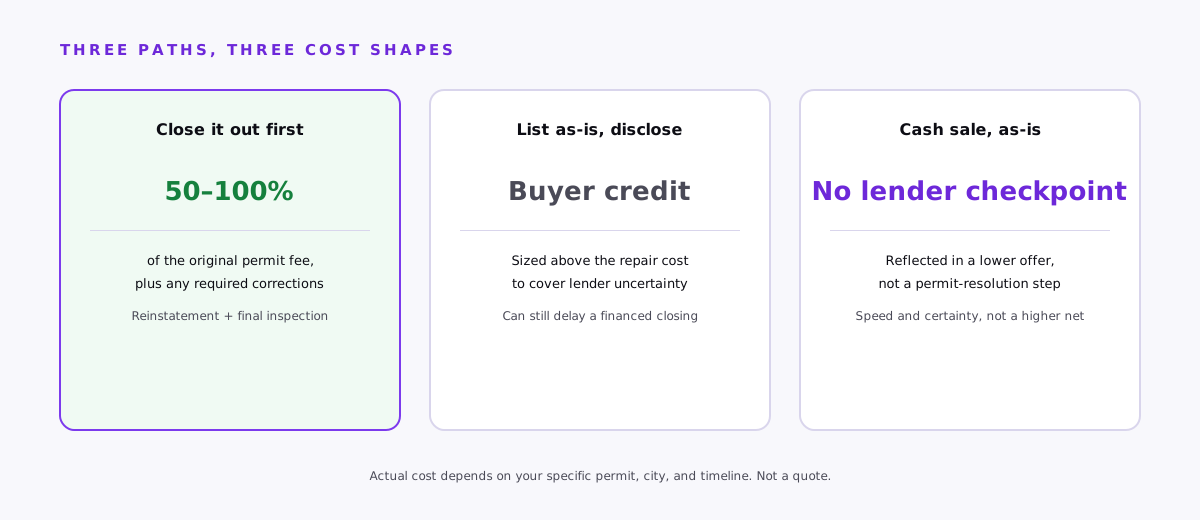
That third row is the trade worth being honest about: a cash sale is not the higher-net option here or anywhere else. It's the option that removes the open-permit problem from your plate entirely, in exchange for a lower number than a fully resolved, financed retail sale would likely bring. If you have the time and the issue is modest, closing the permit yourself and listing conventionally will usually net you more.
This article is for general educational purposes only and is not legal or financial advice. Permit rules, fees, and reinstatement processes vary by city and county and change over time. Check with your local building department and consult a real estate attorney about your specific situation before making a decision.
A cash sale doesn't need a lender's sign-off, so there's no underwriting checkpoint for an open permit to trip.
Send us the address and we'll give you a straight number — permit and all.
All guides · Selling a house with unpermitted work · Code violations and open permits · Should I repair before selling?
Step 1 of 5
No obligation, no fees, no repairs. We respond the same day.
You’ll talk to Trevor McAmis, Owner & Acquisitions Lead
(313) 710-6129
Takes about two minutes. Or call (313) 710-6129 — we answer.
