The cost of a sewer line repair before selling a house typically runs $1,388 to $5,323, averaging around $3,319, though a full dig-and-replace on a long line can reach $10,000 or more. Costs run $60 to $250 per linear foot depending on method — trenchless lining and bursting usually cost less in disruption than traditional excavation. A few California cities legally require a sewer lateral certificate before you can close, and standard homeowners insurance almost never covers the failure itself.
Step 1 of 5
Tell us about the house and what the sewer scope found. We'll give you a straight read on what it's worth as-is versus after a repair.
You’ll talk to Trevor McAmis, Owner & Acquisitions Lead
(313) 710-6129
Takes about two minutes. Or call (313) 710-6129 — we answer.
Educational only. This explains how these situations generally work. It is not legal, tax or financial advice, and the rules differ by state — talk to an attorney or CPA about your own situation before you act on any of it.
A sewer lateral repair before selling typically runs $1,388 to $5,323, averaging around $3,319, with per-foot costs of $60 to $250 depending on the method. A few California cities legally require a sewer lateral certificate before you can close, and standard homeowners insurance almost never covers the failure itself — it's typically a seller-or-buyer-negotiated cost, not an insurance claim.
The rest of this page covers what actually fails and why, real worked cost figures by repair method, which cities require a certificate before you can sell, and the honest math on repairing first versus selling as-is for cash.
This article is general educational information, not legal advice or a substitute for a licensed plumber's assessment of your specific line. Point-of-sale sewer ordinances are set locally and change — confirm your city's or utility district's current requirement before you list.
Most sewer lateral problems trace back to pipe material and age. Orangeburg pipe — made from wood pulp and coal tar and commonly installed from the late 1940s through the 1970s during a cast-iron shortage — was rated for about 50 years but frequently fails in 20 to 30 as it absorbs moisture and sags, or "bellies." Clay pipe lasts longer but its joints are a weak point where tree roots intrude and groundwater infiltrates.
A bellied section collects standing water and debris and usually needs full replacement rather than a spot repair. These problems are typically discovered at sale through a video sewer scope, either requested by the buyer's inspector or required outright by a city ordinance.
| Service | Typical cost | Notes |
|---|---|---|
| Video/camera sewer inspection | $100–$500 | Up to $6,000 for specialty 360° cameras; confirms pipe condition before you commit to a method |
| Trenchless CIPP lining | $90–$250 / linear ft | Resin liner cured inside the existing pipe; no digging up the yard |
| Trenchless pipe bursting | $60–$200 / linear ft | Pulls a new pipe through while breaking up the old one |
| Traditional dig-and-replace | $60–$250 / linear ft | Full excavation; most disruptive, not always most expensive |
| Average total job | $3,319 (range $1,388–$5,323) | Full range $225–$10,000 depending on length, depth, and obstructions |
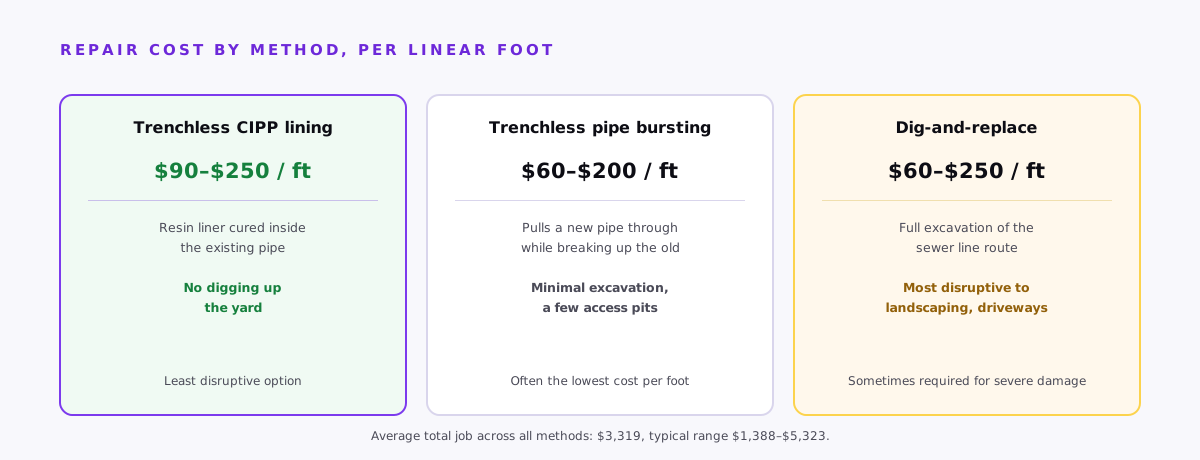
Figures above are sourced from HomeAdvisor's sewer main repair cost data.
A handful of California cities have a real, binding point-of-sale sewer requirement — this isn't just a buyer's inspector's suggestion. Arcata, CA adopted its sewer lateral ordinance in 2015, requiring inspection at sale if the home is over 25 years old, the building permit value exceeds $30,000, or two or more new fixture units were added; repairs must finish before escrow closes, though a bond can extend that up to a year.
Modeled on the same wave of ordinances as Arcata's 2015 rule, the East Bay Municipal Utility District's Private Sewer Lateral Program — covering Oakland, Berkeley, Alameda, Albany, Emeryville, Piedmont, El Cerrito, and Kensington — requires a Certificate of Compliance at sale that's valid 20 years if the lateral was fully replaced, or just 84 months if it was only repaired or passed without work.
If you're outside California, a city-mandated sewer certificate is less common but check with your local public works or utilities department before assuming none applies — sewer lateral ordinances are a growing trend as these pipes age past their original design life nationwide.
Generally no. Standard homeowners policies typically cover sewer line damage only from sudden, accidental causes — a fire, a falling tree, vandalism — not the gradual deterioration, root intrusion, or corrosion that causes most real failures. Coverage for that requires a separate service-line or buried-utility-line endorsement, which isn't automatic on most policies. If you're not sure whether you have one, your policy declarations page will list it as a named endorsement — if it's not there, assume you don't have it.
There's no fixed rule. It's negotiated the same way any other defect is: the seller fixes it before listing, the seller gives the buyer a closing credit, or the buyer takes it on directly. On a financed sale, FHA, VA, and USDA loans generally require anything affecting safety or sanitation resolved before closing, and individual lenders often add their own stricter requirements on top of that — a sewer defect can realistically hold up or kill a financed closing.
It doesn't make the pipe problem disappear — it changes who pays and when. A cash, as-is buyer typically prices a known sewer defect into the offer rather than requiring it fixed before close, which means you're not spending $3,000 to $10,000 out of pocket on a repair before you have a confirmed sale.
Say a house is worth $230,000 retail and a sewer scope turns up a bellied 50-foot clay lateral that needs trenchless lining at $150 per linear foot — $7,500 total, plus the $300 scope that found it.
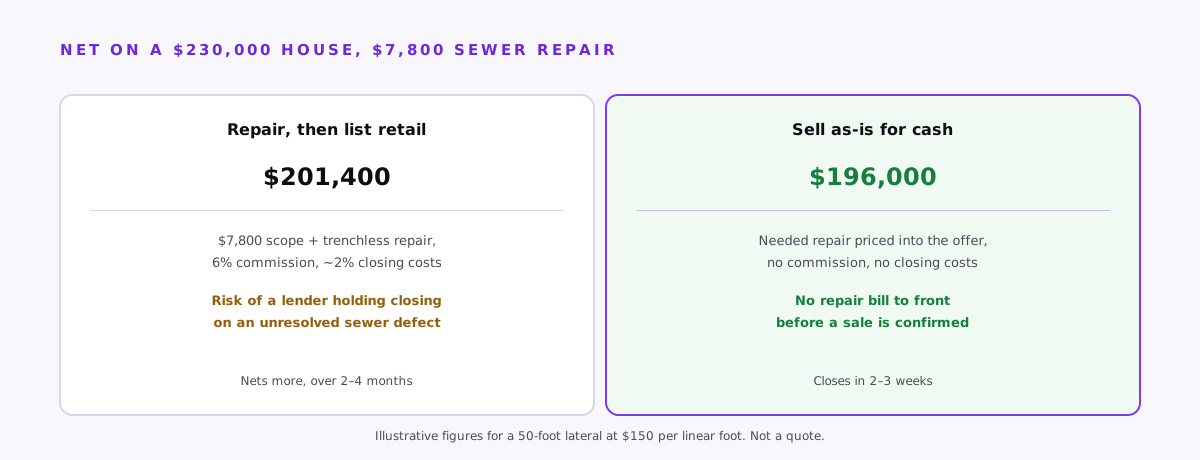
| Repair, then list retail | Sell as-is for cash | |
|---|---|---|
| Starting value | $230,000 | $230,000 |
| Sewer scope + trenchless repair | −$7,800 (paid upfront) | $0 |
| Agent commission (6%) | −$13,800 | $0 |
| Seller closing costs (~2%) | −$4,600 | $0 |
| Holding costs, ~2 months | −$2,400 | $0 |
| As-is cash offer | — | $196,000 |
| Net to seller | $201,400 | $196,000 |
| Timeline | 2–4 months | 2–3 weeks |
Listing after the repair nets about $5,400 more here. A cash sale is the lower-net option in this example — what it buys you is skipping a $7,800 repair bill before you have a buyer, and removing the risk that a financed buyer's lender won't clear closing until the fix is done and reinspected.
Get the camera scope done first, regardless of which path you take. At $100–$500, it tells you whether you're looking at a $1,500 spot repair or a $10,000 full replacement before you commit to either path.
Repair, then list retail. Nets the most if you can front the repair cost and manage the timeline.
Negotiate a closing credit instead of repairing. Some retail buyers will take on the repair themselves in exchange for a price reduction — ask before assuming you have to fix it first.
Sell as-is for cash. Skips fronting the repair cost in exchange for a lower price and a faster close.
If a sewer scope turned up a repair you weren't planning on, we can make a cash offer that prices the known defect into the purchase price — no $3,000 to $10,000 repair bill to front before you have a confirmed buyer, no lender holding up your closing date over it.
Send us the property here and we'll walk you through the numbers.
All guides · Cost of lender-required repairs before closing · Seller closing costs · Cash offer vs listing net proceeds
Step 1 of 5
No obligation, no fees, no repairs. We respond the same day.
You’ll talk to Trevor McAmis, Owner & Acquisitions Lead
(313) 710-6129
Takes about two minutes. Or call (313) 710-6129 — we answer.
