A pre-listing home inspection typically costs $300 to $500 for an average-size house, paid by the seller, separate from whatever inspection the buyer orders later. The real question isn't the $400 or so it costs — it's whether paying it now, before you list, is cheaper than letting a buyer's inspector find the same problem after you're already under contract.

Step 1 of 5
Send the address. We buy as-is, no inspection contingency, no repair negotiation.
You’ll talk to Trevor McAmis, Owner & Acquisitions Lead
(313) 710-6129
Takes about two minutes. Or call (313) 710-6129 — we answer.
Educational only. This explains how these situations generally work. It is not legal, tax or financial advice, and the rules differ by state — talk to an attorney or CPA about your own situation before you act on any of it.
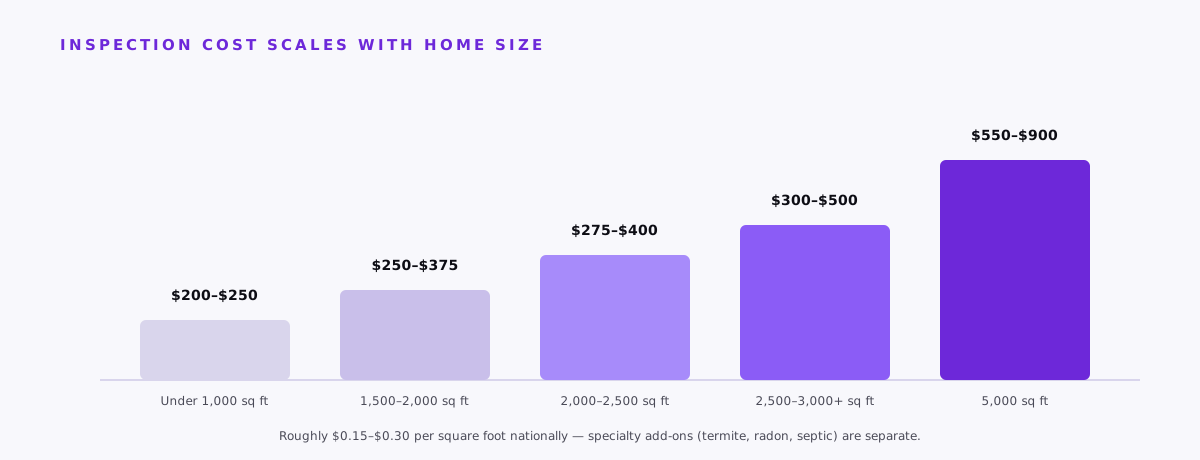
A general home inspection runs roughly $0.15 to $0.30 per square foot nationally, scaling with the house rather than being a flat fee everyone pays the same amount for. A small condo and a sprawling five-bedroom house take a different amount of the inspector's time, and the price reflects that directly. Here's what that works out to in practice:
| Home size | Typical cost |
|---|---|
| Under 1,000 sq ft | $200–$250 |
| 1,000–1,500 sq ft | $225–$325 |
| 1,500–2,000 sq ft | $250–$375 |
| 2,000–2,500 sq ft | $275–$400 |
| 2,500–3,000+ sq ft | $300–$500 |
| 3,500 sq ft | $450–$750 |
| 5,000 sq ft | $550–$900 |
These figures come from Angi's aggregated contractor-cost data, not from a published price survey by the two main inspector trade bodies (American Society of Home Inspectors, InterNACHI) — those organizations set the actual Standards of Practice inspectors follow, but neither publishes its own cost benchmark, so treat any "ASHI says inspections cost $X" claim you see elsewhere with some skepticism.
A general inspection covers the structure, roof, electrical, plumbing, and HVAC — not everything a house might need checked before you list. Termite activity, radon gas, a failing sewer line, mold, a septic system, or well water quality each need their own specialist and their own separate fee, and whether any of them apply depends on the house's age, location, and systems. Real cost ranges, which run wide depending on the region and the problem found:
If your house already has a known issue in one of these categories, our dedicated guides on failed septic systems, selling a house with mold, and radon go deeper on what happens after a positive finding, not just what the test costs.
The seller pays for a pre-listing inspection, because it's optional and the seller is the one choosing to order it. A buyer's inspection is a separate cost the buyer pays for later, and it still happens even when a pre-listing inspection already did.
In virtually every sale, the buyer's own inspector still walks the house even if a pre-listing inspection already happened, because buyers and their lenders generally want their own report, not the seller's. That means a pre-listing inspection is never a substitute for the buyer's inspection; it's an early look that lets you deal with problems on your own schedule instead of the buyer's.
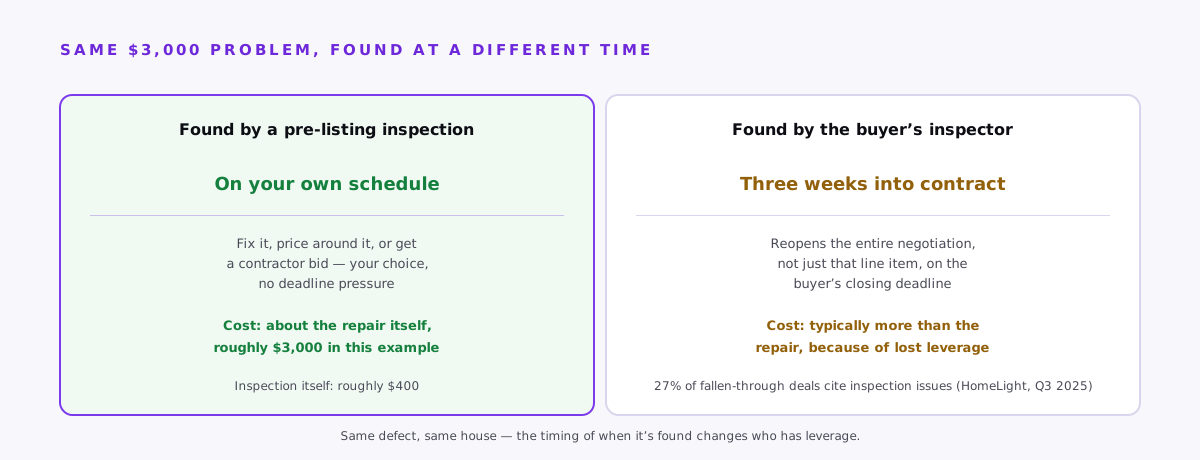
The National Association of Realtors has published on this directly: pre-listing inspections help prevent canceled contracts, because inspection findings are a leading cause of a deal falling apart mid-contract (NAR, July 2025). HomeLight's Q3 2025 Top Agent Insights survey of over 800 agents puts a number on it: inspection issues were the stated reason in 27% of deals that fell through that quarter. When that happens after you're already under contract, you're not negotiating from a neutral position — you're negotiating with a closing date, a moving plan, and often another purchase on the other end all suddenly at risk.
Here's the arithmetic that makes the case, using a real example: say a $400 pre-listing inspection turns up a roof issue that would run about $3,000 to fix. Caught before listing, you have three clean choices: fix it for $3,000, price the house accordingly and disclose it upfront, or get a contractor bid and decide later — all on your own timeline. Caught instead by a buyer's inspector three weeks into a contract, the same $3,000 problem typically reopens the entire negotiation, not just that line item, because the buyer now has leverage and a closing deadline working against you, not for you. Separate survey data (Porch, methodology and date not independently confirmed by us, so treat as illustrative rather than a verified benchmark) found that when buyers used inspection findings to renegotiate, the average price concession was far larger than the cost of the specific defect — which matches the general pattern: a mid-contract surprise usually costs more than the repair itself, because of what it does to leverage and timeline, not because the defect got more expensive overnight.
If a pre-listing inspection finds a real defect, most states' seller disclosure rules require you to disclose material findings to buyers regardless of who paid for the report or whether you ultimately address it — a prior inspection report doesn't stay private just because you commissioned it yourself. Exactly how this interacts with your state's disclosure form is state-specific; our should I repair before selling guide covers the repair-versus-disclose decision in more depth once you have real numbers in hand.
The inspection itself takes 2 to 4 hours for an average house, with the written report typically delivered within 24 to 48 hours. If you want real runway to act on what it finds — get bids, schedule repairs, or simply decide to price around an issue instead — ordering it 6 to 12 months before you plan to list gives you room that a 2-week pre-listing scramble doesn't.
This article is general educational information, not an inspection, legal, or disclosure recommendation for your specific property. Inspection costs vary by region and inspector, and disclosure requirements are set by your state. Talk to a licensed inspector and, if a defect is found, your state's disclosure rules or an attorney before you list.
Send us the address. We'll tell you within 24 hours what we can pay as-is, no inspection or repairs required — and if a prepared, inspected listing would net you more, we'll say so.
All guides · Cash offer vs listing net proceeds · Should I repair before selling · Selling a house with mold
Step 1 of 5
No obligation, no fees, no repairs. We respond the same day.
You’ll talk to Trevor McAmis, Owner & Acquisitions Lead
(313) 710-6129
Takes about two minutes. Or call (313) 710-6129 — we answer.
