Selling a house in Missouri means dealing with one of the country's fastest non-judicial foreclosure processes if you're behind on payments, a “buyer beware” state with no mandatory statewide disclosure form, and one of the few states that charges zero real estate transfer tax. Your main choices are listing with an agent for a likely-higher net, or selling for cash for speed and certainty. Missouri doesn't make sellers jump through the same disclosure hoops as many other states, and it doesn't skim a transfer tax off your proceeds at closing — but if you're behind on your mortgage, Missouri's deed-of-trust foreclosure process can move faster than in most of the country. Whether you're selling because of missed payments, an inherited property, a landlord situation gone sideways, or just wanting a fast exit, the mechanics you're dealing with are specific to Missouri law, not generic to every state. This guide walks through what actually happens here — foreclosure timing, what you legally have to tell a buyer, what closing costs look like, and an honest, numbers-based comparison of listing versus a cash offer.
Takes about two minutes. Or call
(313) 710-6129 — we answer.
Educational only. This explains how these situations generally work. It is not legal, tax or financial advice, and the rules differ by state — talk to an attorney or CPA about your own situation before you act on any of it.
How Fast Can a Missouri Foreclosure Happen?
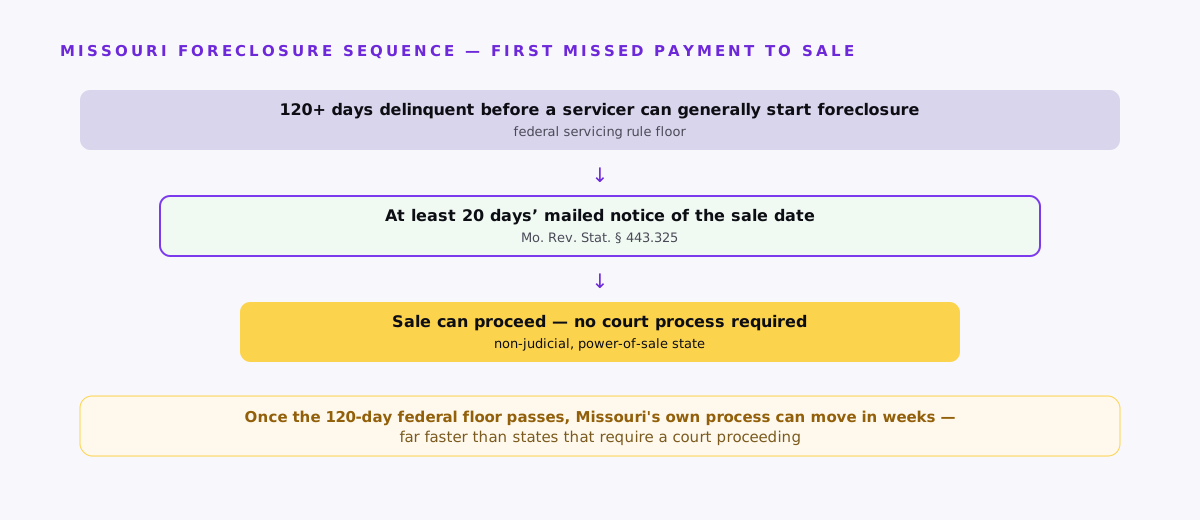
Missouri is a non-judicial, power-of-sale state: your lender or trustee can foreclose through a deed-of-trust sale without going to court, which is why the process here can move faster than in judicial-foreclosure states.
Under Mo. Rev. Stat. § 443.325, the foreclosing party must mail notice of the sale at least 20 days before it happens, after the sale has also been advertised. Combined with no required court process, Missouri is consistently cited among the faster-moving foreclosure states in the country — a sale can be scheduled and completed in a matter of weeks once the notice period runs, versus judicial-foreclosure states where a court docket alone can stretch the process past a year. Federal mortgage-servicing rules generally require your servicer to wait until you're more than 120 days delinquent before starting the process at all, which is the main built-in cushion most Missouri homeowners get before the clock above even starts. See our guide on selling a house in foreclosure for the general national mechanics this builds on.
Once the 120-day federal floor passes, Missouri's own process can move in weeksRestar Acquisitions · sourced from Mo. Rev. Stat. § 443.325
Is There a Right of Redemption After a Missouri Foreclosure Sale?
Only in a narrow situation. Under Mo. Rev. Stat. § 443.410, if the lender itself (not a third-party bidder) ends up as the buyer at the foreclosure sale, the original owner or their heirs may redeem the property within one year of the sale.
To use this right, the statute requires giving written notice of intent to redeem at the sale itself, or in writing no later than ten days before the advertised sale date — notice cannot be given afterward — and then paying the full debt, interest, and the purchaser's costs within that one-year window. If a third party (not the lender) buys the property at the sale, there is no redemption right at all. Because the notice has to happen before or at the sale, this is not a fallback you can activate after the fact — it has to be decided in advance.
Do I Have to Disclose Problems When Selling a House in Missouri?
Missouri does not have a statewide statutory seller disclosure form the way many states do. Missouri follows a “caveat emptor” (buyer beware) legal standard, meaning there's no law forcing you to fill out a mandated checklist of every issue with the house.
That said, this isn't a blank check: Missouri courts have held that sellers can't actively conceal known material defects or lie when a buyer directly asks about them, and one specific statute does require written disclosure if the property was ever used to manufacture methamphetamine. Most listing agents will still have you fill out a voluntary disclosure form because it protects both sides and is customary in practice, even though no single state form is legally required. This is exactly the kind of question where the general mechanics are clear but the application to your specific situation isn't — talk to a Missouri real estate attorney before you sign anything if you're unsure what you're on the hook to disclose.
What Are Closing Costs Like When Selling a House in Missouri?
Missouri is one of a small number of states that charges no state-level real estate transfer tax — no documentary stamp tax is collected on the sale or transfer of a home, and the Missouri Constitution (Article X, § 25) specifically bars state and local governments from creating a new one. A few individual municipalities, such as the City of St. Louis, have their own long-standing local transfer taxes — check with your title company if your property is in one of those areas.
Missouri closings are also typically handled by a title company rather than requiring an attorney — it's an “attorney optional” state, meaning a title company can manage the title search, escrow, and disbursement of funds without a lawyer's involvement, though either side is free to bring one. Sellers should still expect the usual closing-cost categories: owner's title insurance (customarily seller-paid in many Missouri markets, though this is negotiable), a prorated share of property taxes, any outstanding mortgage payoff and liens, and, if you're using an agent, the listing commission.
Cash Offer vs. Listing: What's the Real Math?
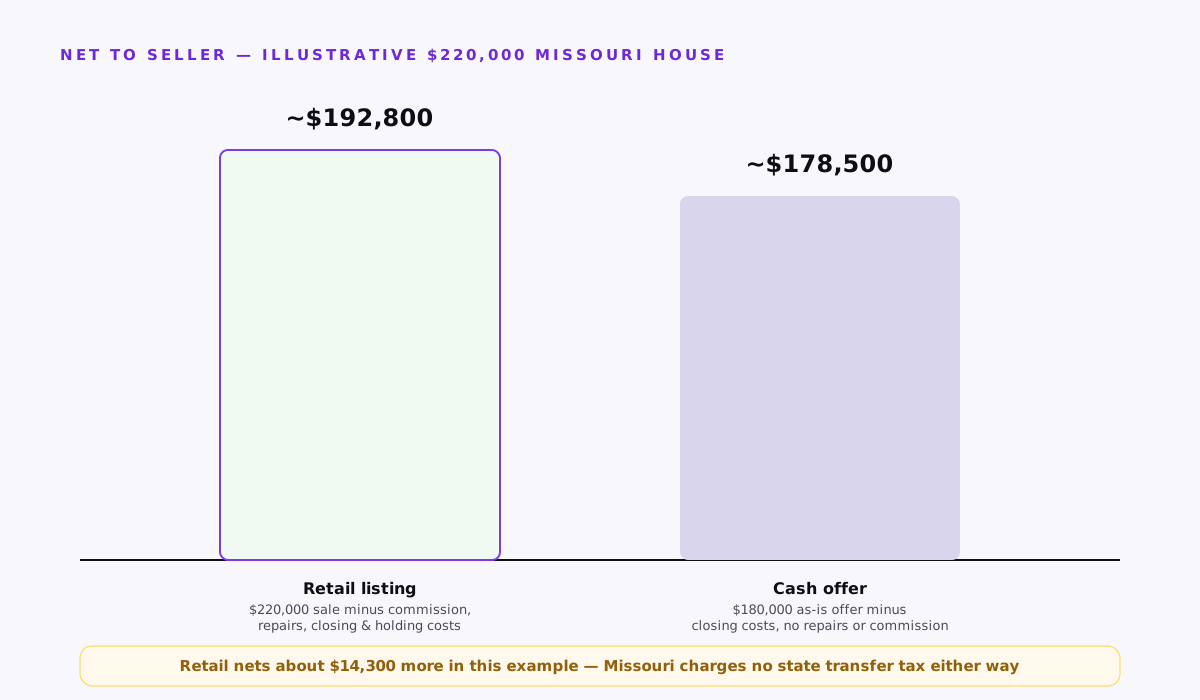
The honest tradeoff is this: a cash offer almost always nets you less than a well-executed retail listing, because you're trading top-line price for speed, certainty, and skipping repairs, showings, and financing contingencies. The example below is illustrative only — not a quote, appraisal, or promise of what any specific house would sell for.
Retail nets about $14,300 more in this exampleRestar Acquisitions · worked example from this page
Retail listing (illustrative)
Cash offer (illustrative)
Estimated sale price
$220,000
$180,000
Agent commission (~6%)
−$13,200
$0 (no agent)
Seller-paid repairs/concessions (est.)
−$8,000
$0 (sold as-is)
Closing costs (title, prorations, est.)
−$3,500
−$1,500
Missouri transfer tax
$0
$0
Holding costs during listing (est. 60–90 days)
−$2,500
$0
Estimated net to seller
≈$192,800
≈$178,500
In this illustrative example, listing nets roughly $14,300 more — that gap is the price of skipping the agent process, repairs, and a marketing timeline. A cash offer makes more sense when speed, certainty, or avoiding repairs matters more than maximizing price — for example, facing foreclosure, an inherited property needing work, or a landlord ready to exit. Run your own numbers before deciding; see our cash offer vs. listing net proceeds breakdown and seller closing costs guide for a fuller accounting.
Alternatives to Consider Before Selling
List with a local agent. If you have equity, time, and a house in sellable condition, an agent-led listing will typically net more than a cash sale, even after commission.
Loan modification or forbearance. If you're behind on payments but not out of options, contact your servicer about a modification, repayment plan, or forbearance before a foreclosure notice goes out. A HUD-approved housing counselor (free, via the CFPB) can walk you through this — see the CFPB's guide to what happens after you apply for foreclosure help.
Renting it out. If you've inherited a house or moved out of one and don't need the equity immediately, renting can generate income while you decide — though it comes with landlord responsibilities, and Missouri's foreclosure clock doesn't pause for that decision if you're behind on the mortgage.
Selling to family or a private buyer. Sometimes the simplest exit is a direct sale to someone who already knows the property.
A cash sale to an investor. Useful when time, repairs, or certainty matter more than maximizing sale price.
A Note on How We Fit In
Restar Acquisitions buys houses directly, as-is, for cash, in 45 markets across 12 states: Alabama, Arizona, Florida, Georgia, Indiana, Maryland, Michigan, Missouri, North Carolina, New York, Ohio, and Texas. In Missouri, our active market is Kansas City. We give a written offer within 24 hours of seeing the property, require no repairs, and charge no commissions.
We are not real estate agents or brokers, and we don't represent you as a seller — we're simply making a direct purchase offer. As shown in the table above, a cash offer is very unlikely to be the highest possible price for your house; if a traditional listing would net you more and time isn't a constraint, that's usually the better path, and we'd rather you know that going in.
This article is for general educational purposes only and is not legal, tax, or financial advice. Missouri foreclosure timelines, redemption rights, and disclosure obligations can vary based on your specific loan documents, county, and circumstances. Talk to a licensed Missouri real estate attorney or a CPA about your specific situation before making a decision.
Common questions
How long does a foreclosure take in Missouri?
Because Missouri is a non-judicial, power-of-sale state, the process can move faster than judicial-foreclosure states — often weeks rather than many months once the required notice period (at least 20 days under Mo. Rev. Stat. § 443.325) runs. Federal rules generally require your servicer to wait until you're 120+ days delinquent before starting foreclosure, so that's typically your earliest warning window.
Is there a right of redemption after a Missouri foreclosure sale?
Only in a narrow situation: if the lender itself is the buyer at the foreclosure sale, Mo. Rev. Stat. § 443.410 gives the original owner or their heirs up to one year to redeem it — but written notice of intent to redeem must be given at the sale or up to ten days before it, not afterward, and the full debt plus costs must be paid within the year. If a third-party buyer purchases the property, there's no redemption right.
Do I have to fill out a disclosure form to sell a house in Missouri?
There's no statewide statutory disclosure form required by law — Missouri is a caveat emptor state. However, you still can't lie or actively conceal known material defects, and one specific statute requires disclosure if the home was used to manufacture methamphetamine. Most agent-led sales use a voluntary disclosure form as standard practice even though it isn't legally mandated.
Does Missouri charge a transfer tax when I sell my house?
No state-level transfer tax — Missouri's constitution specifically prohibits creating a new one on real estate sales. A small number of individual cities, including St. Louis, have their own separate local transfer tax, so check with your title company if that applies to you.
Do I need a real estate attorney to close on a house in Missouri?
Not typically. Missouri is an “attorney optional” state where title companies routinely handle closings, title searches, and fund disbursement. You can still choose to involve an attorney, especially in foreclosure, probate, or disputed-title situations.
Will a cash offer get me full market value for my Missouri house?
No, and you should be skeptical of anyone who promises that. Cash offers are priced below retail because the buyer is taking on repair costs, holding costs, and resale risk in exchange for giving you speed and certainty. If maximizing price is your top priority and you have time, a traditional listing is usually the better route.
Every offer on this site is underwritten by a person, not a form. If the
numbers do not work for you, say so and I will tell you what would.
Also from Restar
Want the data behind all of this?
Restar Acquisitions is the acquisitions arm of Restar — a housing-market analytics
platform tracking 180+ metrics across every U.S. market, with composite scores and 12-month
price forecasts. The numbers on this page come from the same work.