One missed mortgage payment does not start foreclosure. Under federal rules, a servicer generally cannot file the first foreclosure notice until you are more than 120 days behind, and specific things must happen before that clock runs out. Here is exactly what happens, in order, and what each stage still lets you do.
Step 1 of 5
Send the address and where things stand with your servicer. We will tell you honestly whether selling makes sense yet — or whether it is too early to give up other options.
You’ll talk to Trevor McAmis, Owner & Acquisitions Lead
(313) 710-6129
Takes about two minutes. Or call (313) 710-6129 — we answer.
Educational only. This explains how these situations generally work. It is not legal, tax or financial advice, and the rules differ by state — talk to an attorney or CPA about your own situation before you act on any of it.
Most mortgage notes include a grace period, commonly around 15 days, before a late fee applies. Missing that first payment does not put you in default and does not appear anywhere yet. Pay it within the grace period and the month is over.
Miss the grace period too, and two things start moving at once: a late fee is assessed, and the loan is now delinquent in the servicer's system, even though nothing has reached your credit report yet.
The mistake people make here is treating this stretch as private. It is the cheapest point to call your servicer and say the sentence 'I am going to miss this payment' — before there is a pattern to explain.
Once a payment is 30 days past due, servicers can and typically do report the delinquency to the credit bureaus. That is a new derogatory mark, separate from any previous one, and it repeats at 60 and 90 days if you stay behind — four separate 30-day marks compound faster than most people expect.
This is also the point where paying only the oldest missed payment usually is not enough. Most servicers require the full delinquent amount, including any assessed fees, brought current in a single payment unless you have a repayment plan in place. Ask specifically what 'reinstatement amount' would bring the loan current today — it is a real number they can give you, not an estimate.
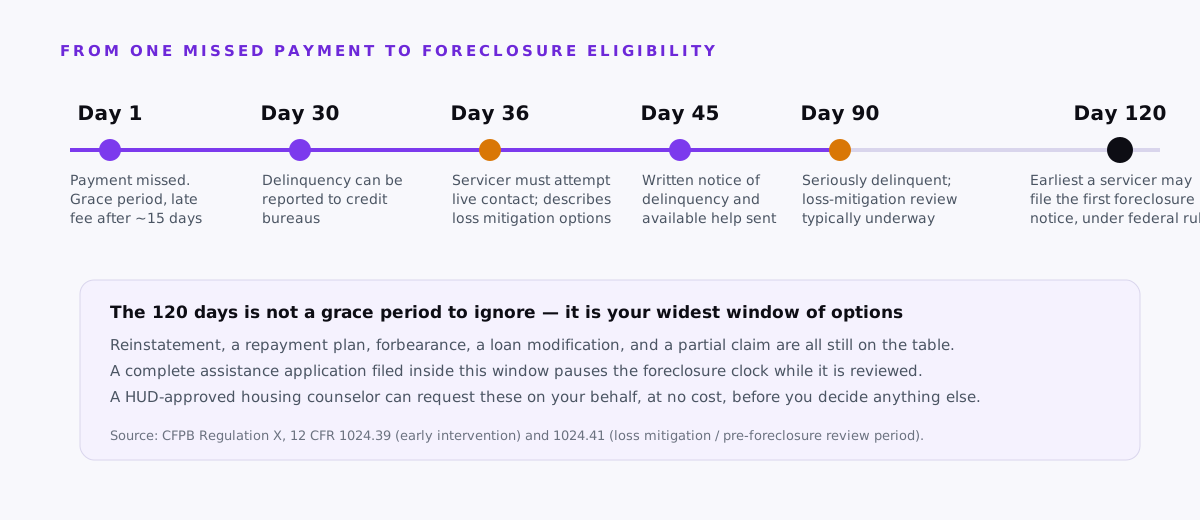
This is the part almost nobody tells you, and it exists specifically to protect you. Under CFPB Regulation X, 12 CFR 1024.39, your servicer must attempt to establish live contact — an actual phone call or in-person conversation, not a voicemail — no later than the 36th day of delinquency, and again every 36 days you remain behind.
By day 45, they are also required to send you a written notice describing the loss-mitigation options that may be available and how to reach a HUD-approved housing counselor. If you have not heard from your servicer by day 45 and are still behind, that is a compliance failure on their part, not a sign nothing can be done — call them.
Loss mitigation is the umbrella term for everything short of losing the house: reinstatement, a repayment plan, forbearance, a loan modification, and a partial claim. Under 12 CFR 1024.41, once you submit a complete application for one of these, the servicer generally cannot move forward with foreclosure while it reviews your application — which is exactly why applying early, inside the 120-day window, matters more than any other single decision here.
At 90 days past due, the loan is internally classified as seriously delinquent. Nothing new is legally required of the servicer at this specific mark, but in practice this is when files move from routine collections toward a foreclosure referral being prepared — the paperwork gets assembled even though nothing has been filed.
If you have not already opened a loss-mitigation application by day 90, day 120 is close enough that timing starts to work against you. Applications take time to process, and a complete application submitted with only a few days of runway may not finish review before the servicer is legally permitted to refer the file to foreclosure.
Federal rules generally bar a servicer from making the first foreclosure filing until you are more than 120 days delinquent. This is a floor, not a target — many servicers wait longer, particularly if a loss-mitigation review is still active. But once day 120 passes with no application on file and no arrangement in place, the servicer is free to begin.
What happens after day 120, and how much time you have once a notice is actually filed, depends heavily on whether your state runs foreclosure through the courts or without them. That split, and the honest arithmetic on selling once you are past this point, is covered in full in our guide to selling a house in foreclosure.
This is general information about federal servicing rules, not legal advice. Exact foreclosure procedures, notice periods, and any redemption rights still vary by state — talk to a HUD-approved housing counselor or an attorney about your specific timeline.
Selling is a legitimate answer, but it is rarely the first move, and every option below is worth asking about by name — servicers are required to evaluate a complete application covering these:
A HUD-approved housing counselor is free and works for you, not the servicer. Find one through HUD's counselor search. Anyone who contacts you asking for an upfront fee to 'stop your foreclosure,' or asking you to sign the deed over temporarily, is not that — the CFPB has a plain guide to spotting foreclosure relief scams.
Some situations genuinely do not have a loss-mitigation fix — the hardship is permanent, the payment was never affordable, or there is more debt against the house than any of these options resolve. If that is where you land, know the honest tradeoff going in: a fast, as-is cash sale nets less than a fully repaired retail listing would, because it skips the repairs, the commission, and the months of carrying costs — not because the number is arbitrary.
The full arithmetic, with a worked example comparing a retail listing against a cash sale on the same house, is in cash offer vs. listing net proceeds. What a sale changes here specifically: the payoff is settled from proceeds at closing, so you do not need to fund back payments out of pocket before you can sell, and a loan that is paid off through a sale reports very differently on your credit than a completed foreclosure does.
That last one changes which options are realistic faster than anything else on this list, so find it out early rather than at the point you are trying to close a sale.
Send us the property address and the last date you spoke with your servicer. We will help you work out where you actually are on this timeline and what still applies — and if a loan modification or forbearance would leave you better off than selling, we will say so.
All guides · Foreclosure · Selling a house in foreclosure · How a cash sale works
Step 1 of 5
No obligation, no fees, no repairs. We respond the same day.
You’ll talk to Trevor McAmis, Owner & Acquisitions Lead
(313) 710-6129
Takes about two minutes. Or call (313) 710-6129 — we answer.