Selling a house inside a homeowners association or condo means one document almost every seller runs into and few budget for: the resale certificate, called an estoppel certificate for a Florida condo. The fee itself is usually small. What isn't small is a slow-walking association blowing up your closing date, or a special assessment the certificate reveals too late to price into your sale. This page covers what the document actually is, what several states cap the fee at by statute, who typically pays, and the honest math on why timing matters more than price here.
Step 1 of 5
Tell us about your association and where the certificate request stands. We coordinate the paperwork directly on a direct sale.
You’ll talk to Trevor McAmis, Owner & Acquisitions Lead
(313) 710-6129
Takes about two minutes. Or call (313) 710-6129 — we answer.
Educational only. This explains how these situations generally work. It is not legal, tax or financial advice, and the rules differ by state — talk to an attorney or CPA about your own situation before you act on any of it.
An HOA resale certificate (called an estoppel certificate for Florida condos) typically costs $200–$400, plus $100–$150 more for a rush order, and several states cap that fee by statute. It's a separate charge from any HOA “transfer fee” charged when ownership changes, which can run from nothing to several hundred dollars depending on your association's bylaws. Both are real closing-cost line items that catch sellers off guard, and a late or missing certificate can delay your closing far more than the fee itself costs.
General information, not legal advice. HOA fee caps and disclosure requirements are set by state statute and change over time — confirm the current figures with your specific association or a local closing attorney before you rely on them.
When you sell a house in a homeowners association, condo association or co-op, the buyer's lender and title company need to know the association's financial picture before closing: is the seller current on dues, is there a pending or approved special assessment, what's in the reserve fund, is there pending litigation, what are the rules. That document is the resale certificate (non-condo HOAs), the estoppel certificate (the term used almost universally for condos, especially in Florida, where it's a defined statutory term), or sometimes a resale disclosure package. All three cover roughly the same content; the terminology just varies by state and property type.
Don't confuse this with the separate HOA transfer fee or capital contribution fee — a charge some associations levy when a property changes hands, to fund the association's operating or reserve accounts. North Carolina law is explicit that these are legally distinct: a “reasonable” resale-certificate fee is not counted against transfer-fee restrictions. You may owe one, the other, or both, depending on your association's governing documents.
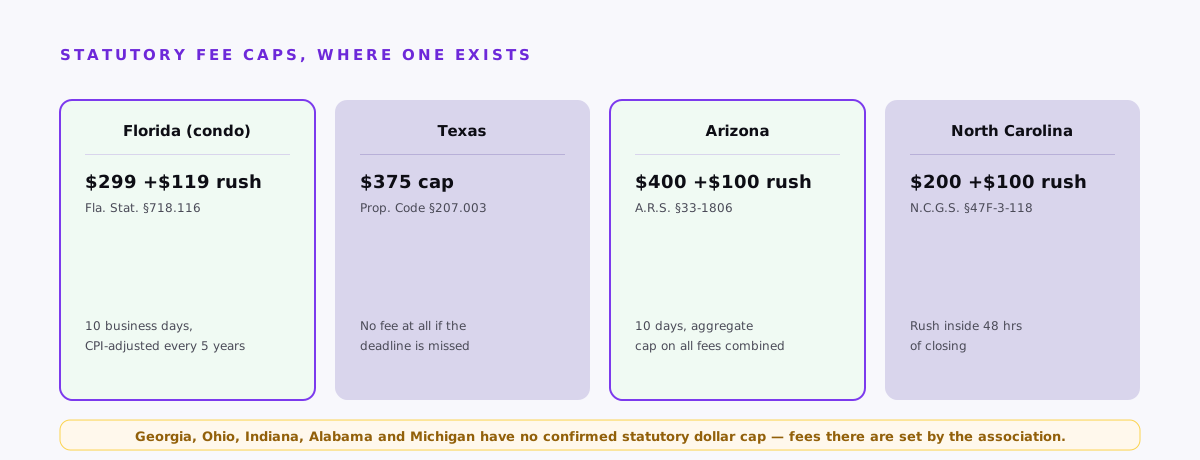
Market-rate document fees generally run $100–$400 for the base certificate, with rush orders (typically inside 3 business days) running 2–3 times the base fee. Several states set hard caps by statute, and those override any “market rate” your management company quotes.
| State | Statute | Base fee cap | Rush fee cap | Turnaround required |
|---|---|---|---|---|
| Florida (condo) | Fla. Stat. §718.116 | $299 (statute sets a $250 base, adjusted every 5 years for CPI) | +$119 (statute sets a $100 base, same CPI adjustment) | 10 business days |
| Florida (HOA) | Fla. Stat. §720.30851 | $250 | +$100 | 10 business days |
| Texas | Prop. Code §207.003 | $375 | — | statutory deadline; no fee if missed |
| Arizona | A.R.S. §33-1806 | $400 aggregate | +$100 (≤72 hrs) | 10 days |
| North Carolina | N.C.G.S. §47F-3-118 | $200 (for the assessment statement) | +$100 (within 48 hrs of closing) | 10 business days |
| Maryland | commonly reported $250 | +$50–$100 | 20 days | secondary-sourced, not independently confirmed on a state statute page |
Georgia, Ohio, Indiana, Alabama and Missouri (for non-condo HOAs) have no statutory dollar cap we could confirm — fees there are set by the association or its management company and reported to typically fall in the same $200–$400 range, but nothing legally stops it from running higher. Michigan has no resale-certificate statute at all. New York has no confirmed statutory cap either — despite some secondary sources circulating a specific citation and dollar figure, we checked it directly against the state's own statute text and could not verify it exists; don't rely on any number you see cited for New York without confirming it against the actual current law yourself.
There's no universal rule on who pays this — it's negotiated in the purchase contract or set by regional custom, not law, in most places. Texas and Florida deals commonly have the seller pay; parts of the Northeast lean toward buyer-paid. Either way, it's usually a small enough line item that it isn't worth fighting over compared to what a delay costs you.
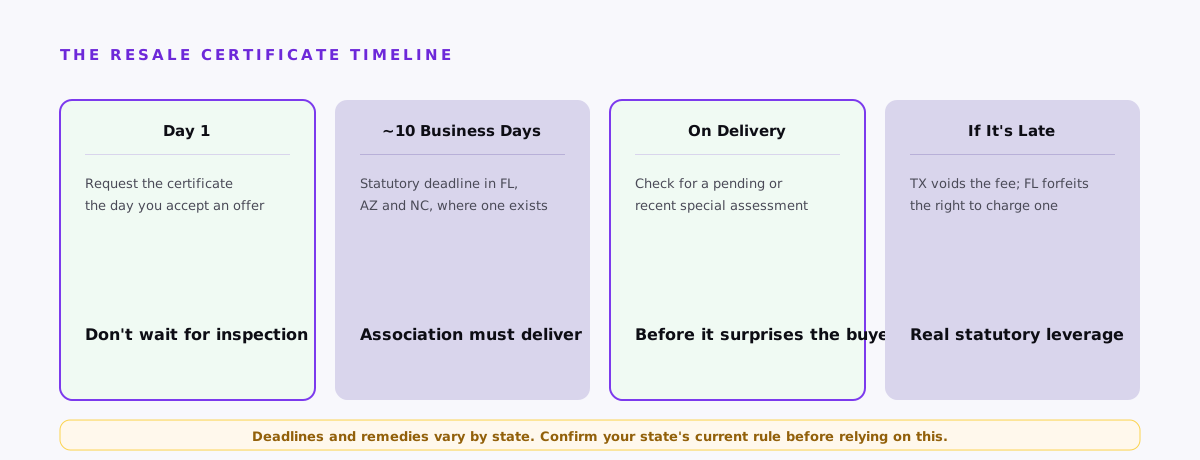
The bigger risk is timing, not price. Every state with a statutory deadline built it in specifically because a slow-walking association can sit on the request and blow up a closing date — Florida and North Carolina give the association 10 business days, Arizona gives 10 days, and Texas voids the fee entirely if the association misses its deadline. If your association is behind on turning this around, you have real statutory leverage in those states to compel it. If you're in a state without a deadline statute, start the request the day you go under contract, not the week before closing.
The other real risk buried in this document: a pending or recently approved special assessment that wasn't priced into your sale. If the certificate discloses a $6,000 roof assessment the buyer didn't know about, that's a renegotiation, a financing problem, or a walked deal — not just a fee. Ask your association directly about any pending assessment before you price your house, not after a buyer's lender flags it.
Per the Community Associations Institute's 2025 Fact Book, an estimated 373,000 community associations across the US now house roughly 78.1 million residents — about 35% of the housing stock — so this is a document most sellers will run into at some point, not an edge case.
Take a Florida condo, sale price $310,000, HOA dues current, no pending litigation. The association's management company quotes the $299 statutory-max estoppel fee, standard 10-business-day turnaround, plus a separately-billed $75 “administrative transfer fee” the bylaws specify is paid by the buyer at closing.
| Line item | Who typically pays | Cost |
|---|---|---|
| Estoppel/resale certificate (statutory cap) | Seller (contract-dependent) | $299 |
| Rush fee, if requested inside 3 business days | Whoever requests the rush | +$119 |
| HOA transfer/capital contribution fee | Buyer (bylaws-dependent) | $75–$500+ |
| Typical total seller-side exposure | $299–$418 |
Against a $310,000 sale, that's roughly 0.1–0.15% of the price — genuinely small next to the seller closing costs, transfer tax and other line items on the same file. What isn't small is a missed deadline: a 10-day statutory turnaround that slips to three weeks because a management company is unresponsive can cost you a rate lock, a buyer's patience, or the whole deal, which is a far bigger number than the $119 rush fee would have been.
A cash sale doesn't make this fee disappear — the association still has to issue the document regardless of who's buying. What it removes is the coordination risk: on a direct sale, the certificate request goes out immediately and the closing date isn't hostage to a slow management company, a financing contingency, or a lender who won't clear to close until the document lands.
The fee itself is rarely the problem — it's usually under $500 and small relative to your sale price. The real risk is timing: request the certificate the moment you're under contract, confirm there's no undisclosed special assessment before you price the house, and know your state's statutory deadline if it has one. If a slow-moving association is a real threat to your closing date, send us the property and we'll coordinate the paperwork directly rather than leaving your closing date dependent on someone else's turnaround time.
The fee for this document is rarely the issue. The risk is a slow association holding up your closing while a buyer's financing contingency runs out. On a direct sale, the request goes out immediately and your closing date isn't hostage to it.
Send us the property here. Request your certificate today either way — the sooner it's in hand, the fewer surprises later.
All guides · Seller closing costs · Cash offer vs listing net proceeds · Who pays realtor fees when selling a house
Step 1 of 5
No obligation, no fees, no repairs. We respond the same day.
You’ll talk to Trevor McAmis, Owner & Acquisitions Lead
(313) 710-6129
Takes about two minutes. Or call (313) 710-6129 — we answer.
