A shared well — sometimes called a community or co-op well — serves two or more homes from one source, usually governed by a recorded agreement covering maintenance costs and access. If that agreement is missing, unrecorded, or out of date, an FHA, VA, or USDA buyer's loan can stall until it's fixed. Getting it drafted and recorded typically runs a few hundred dollars and a few weeks if every neighbor cooperates — a cash sale skips that requirement entirely, at the cost of a lower price.

Step 1 of 5
Tell us about the property. We'll give you a straight read on what it's worth and whether fixing the well agreement first makes sense.
You’ll talk to Trevor McAmis, Owner & Acquisitions Lead
(313) 710-6129
Takes about two minutes. Or call (313) 710-6129 — we answer.
Educational only. This explains how these situations generally work. It is not legal, tax or financial advice, and the rules differ by state — talk to an attorney or CPA about your own situation before you act on any of it.
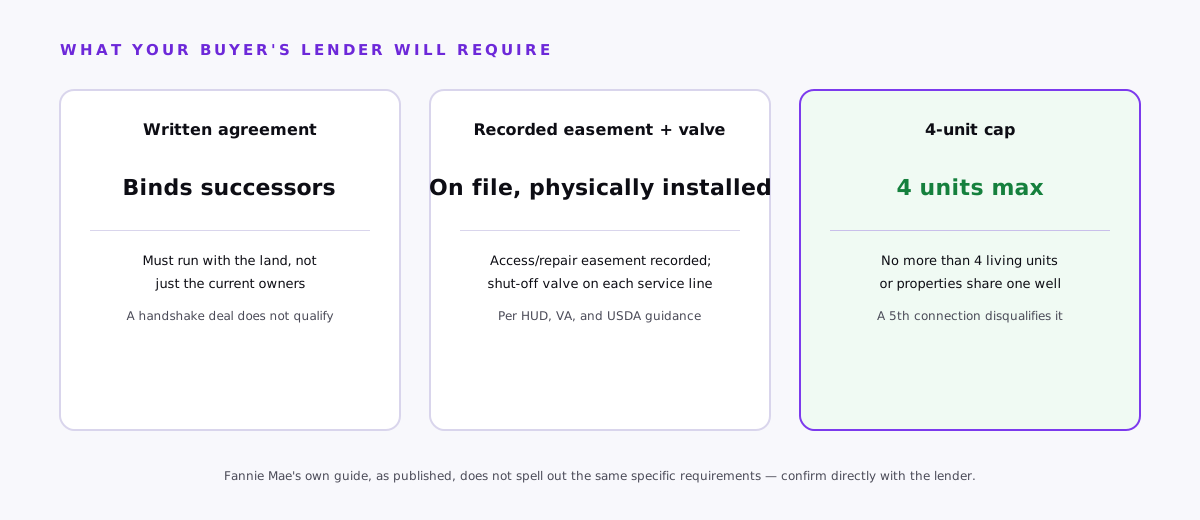
A shared well is exactly what it sounds like: one well, two or more separate parcels drawing from it. HUD's own archived shared-well guidance requires a written agreement “binding upon signatory parties and their successors in title,” a permanent recorded easement for access and repair, a shut-off valve on each home's service line, and no more than four living units sharing the single source.
HUD's shared-well guidance caps a shared system at 4 units per well, and separately, Mortgagee Letter 2005-48 states individual water systems no longer require automatic testing unless the state mandates it or other red flags are present. VA and USDA loan manuals describe substantially the same structure as HUD's — a cost-sharing formula for repairs and a document that runs with the land, not just the current owners. That last phrase is the part that matters when you're selling: a handshake arrangement with a neighbor doesn't transfer to whoever buys your house. Only a properly drafted and recorded agreement does.
FHA, VA, and USDA-backed loans — common in the rural and exurban areas where shared wells are most common — all require that recorded agreement to exist before they'll close. If it doesn't, the loan doesn't close until it does.
We independently checked whether Fannie Mae's conventional Selling Guide carries the identical requirement, since that claim circulates widely online. As of this writing, Fannie Mae's published guide only states that community or shared well and septic facilities “must be available and utilized,” without the specific four-unit cap, valve, or recorded-agreement language FHA, VA, and USDA spell out — so don't assume a conventional underwriter will wave this through; ask the lender directly and don't take either answer for granted.
Plenty of shared wells have run for decades on nothing more than an informal understanding between neighbors, or an agreement one set of owners signed that was never taken to the recorder's office. That's a real closing risk, not just a paperwork technicality.
In a state that requires real property interests to be recorded to bind later buyers, an unrecorded shared-well arrangement can be unenforceable against someone who buys the neighboring parcel without notice of it. Title companies vary in how they handle this — some insure with a specific exception noted, others require a new agreement drafted and recorded before issuing a clean policy. Ask your title company directly and early; don't assume either outcome.
Arizona is the clearest example of a state that treats this formally: a shared-well agreement there is an interest in real property, so it must be in writing, signed, notarized, and recorded with the county recorder to bind future owners — and Arizona law separately requires the well's owner of record to keep the state's water resources department current on who that owner is. Beyond Arizona, we could not confirm a shared-well-specific recording statute in Alabama, Georgia, Indiana, Maryland, Michigan, Missouri, New York, North Carolina, Ohio, or Texas — in most of those states, whether an old or informal agreement holds up is a matter of general property and contract law, best confirmed with a local real estate attorney rather than assumed either way.
If a clean, recorded agreement already exists, there's nothing to fix and nothing to cost you. If it doesn't, you're generally looking at a water quality and flow test — the same kind of test covered in our guide to selling a house with a private well, commonly $100–$400 and often split with the other users — plus a real estate attorney drafting and recording a new agreement, and a possible title insurance exception to clear.
A straightforward, cooperative case is a flat-fee document, in the range typical of other simple real-estate document drafting — though we found no published cost survey specific to shared-well agreements, so treat any number here as a reasoned estimate, not a quoted rate. The real cost is rarely the dollars. It's the weeks it adds to a financed closing, and the risk that a neighbor who doesn't want to sign anything can stall or kill the sale entirely.
Say a house is worth $265,000 retail, on a shared well with an informal, unrecorded arrangement between two neighbors who get along fine but have never put anything in writing.
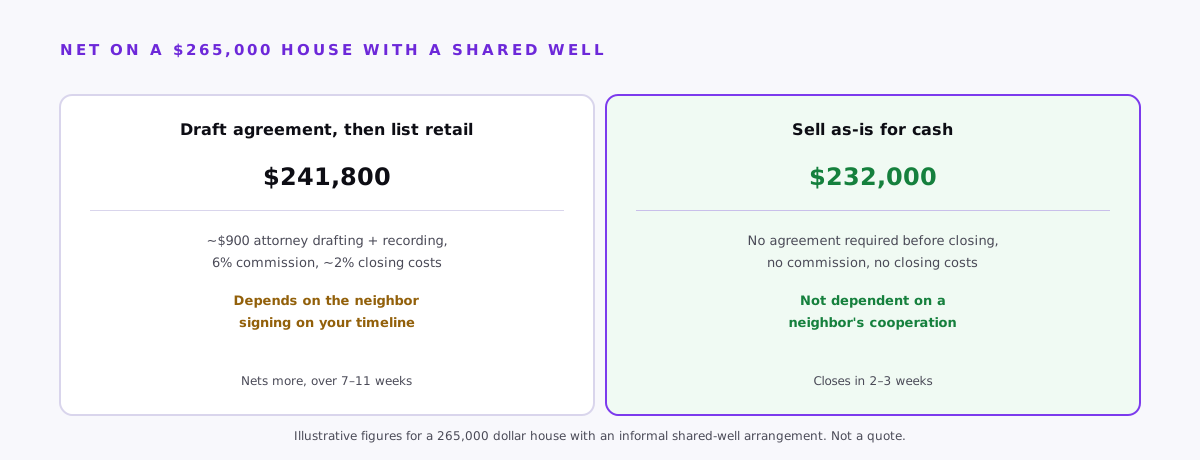
| Draft agreement, then list retail | Sell as-is for cash | |
|---|---|---|
| Starting value | $265,000 | $265,000 |
| Attorney drafting + recording | −$900 (estimate) | $0 |
| Agent commission (6%) | −$15,900 | $0 |
| Seller closing costs (~2%) | −$5,300 | $0 |
| Holding costs during drafting + listing (~7 weeks) | −$1,100 | $0 |
| As-is cash offer | — | $232,000 |
| Net to seller | $241,800 | $232,000 |
| Timeline | 7–11 weeks, depends on the neighbor signing | 2–3 weeks |
Fixing the agreement first nets about $9,800 more here. A cash sale isn't the bigger number — it's the option that doesn't depend on a neighbor you can't control signing paperwork on your timeline, and that doesn't risk a financed buyer's loan stalling out from under you after you've already accepted an offer.
Get the agreement drafted and recorded before you list. Nets the most if the other well users are cooperative and you have time to wait on it.
List retail and disclose the open item, letting the buyer's lender flag it. Some buyers and lenders will work through it during underwriting rather than before listing — slower, and not guaranteed to close.
Sell as-is for cash. Skips the loan-conditioned timeline and the risk of a neighbor who won't cooperate, in exchange for a lower price. Tell us about the property and we'll walk you through the numbers directly.
This article is general educational information, not legal advice. Shared-well recording and disclosure rules vary by state and sometimes by county — confirm your specific situation with a real estate attorney before you list or make an offer contingent on it.
If an unrecorded or informal shared-well arrangement means a financed buyer's lender won't close without a new agreement, we can make a cash offer that doesn't depend on it — no attorney drafting to wait on, no neighbor who has to sign on your timeline.
Send us the property here and we'll walk you through the numbers.
All guides · Selling a house with a private well · Title insurance cost explained · Cost of a property survey before selling a house
Step 1 of 5
No obligation, no fees, no repairs. We respond the same day.
You’ll talk to Trevor McAmis, Owner & Acquisitions Lead
(313) 710-6129
Takes about two minutes. Or call (313) 710-6129 — we answer.
