Selling a house in Michigan differs from selling in most neighbouring states in three ways that cost real money: foreclosure here happens without a court and moves fast, the seller pays a transfer tax of about 0.86% of the sale price, and a disclosure statement is required on almost every residential sale whether or not you sell as-is.

Step 1 of 5
Send the address and we will tell you what it is worth and what your options are.
You’ll talk to Trevor McAmis, Owner & Acquisitions Lead
(313) 710-6129
Takes about two minutes. Or call (313) 710-6129 — we answer.
Educational only. This explains how these situations generally work. It is not legal, tax or financial advice, and the rules differ by state — talk to an attorney or CPA about your own situation before you act on any of it.
Most of the general advice online is written for judicial states, where a lender must sue you and a judge must rule before anything happens. Michigan is not one of those states.
Michigan permits foreclosure by advertisement: the lender publishes notice, posts the property, and sells it at a sheriff's sale, with no lawsuit and no judge unless someone files one. Compare that with Ohio next door, where every foreclosure is a court case and the process commonly runs six months to well over a year. In Michigan the same sequence can conclude substantially faster.
The practical consequence for a seller who is behind: you have less time than the internet is telling you. Federal servicing rules still apply — a servicer generally cannot make the first foreclosure filing until you are more than 120 days delinquent, per the Consumer Financial Protection Bureau — but once that clock starts, Michigan's runs quicker than a judicial state's.
This is the Michigan rule almost nobody explains, and it is the most valuable thing on this page.
In most states, a foreclosure auction ends the story. In Michigan, the former owner generally has a statutory redemption period after the sheriff's sale, under MCL 600.3240, during which the property can be redeemed by paying the sale amount plus interest and allowable costs.
The length depends on the property and the loan. For residential property of four units or fewer, where more than two-thirds of the original mortgage debt was still owed at the notice of foreclosure, the period is commonly six months. It can extend to a year where less of the debt remains, and it can shrink to 30 days if the property is found abandoned. Those are the statutory shapes, not a prediction about your file — the exact period on your sheriff's deed is what governs.
Two things follow. First, you retain rights during redemption, and selling or refinancing within that window is sometimes still possible. Second, the purchaser at the sale has a statutory right to inspect the property during redemption, and refusing a reasonable inspection can cut the redemption period short. If you are in this window, talk to an attorney this week rather than next month.
For the process itself in general terms, see our guide to selling a house in foreclosure.
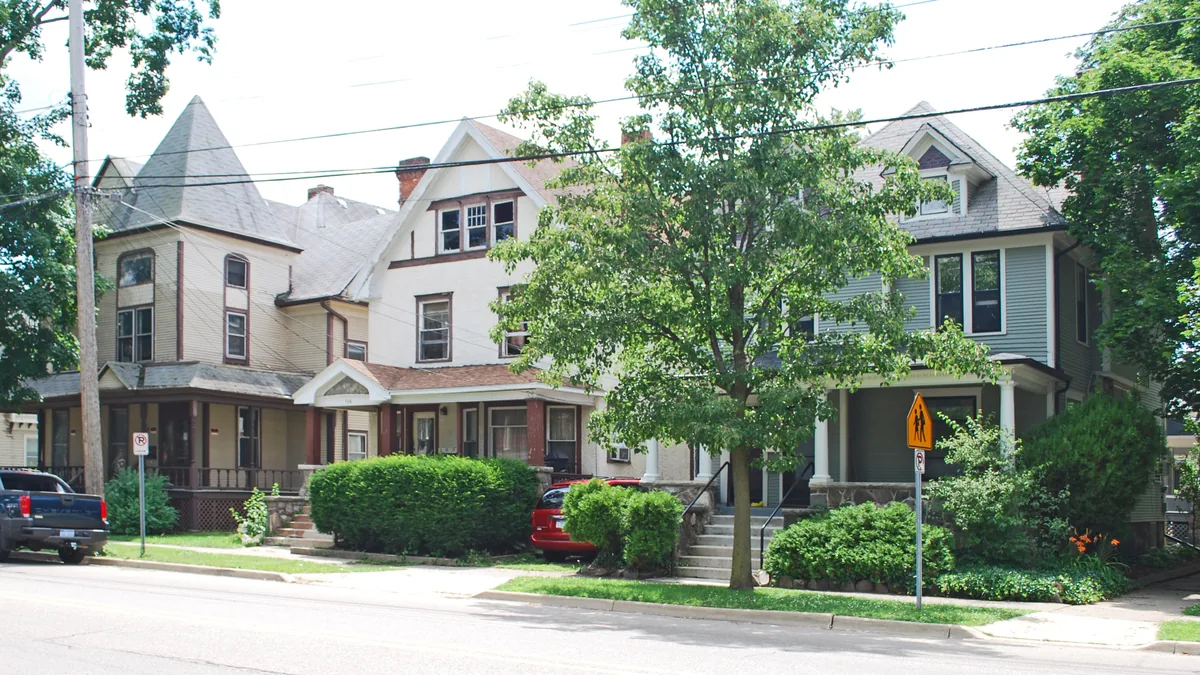
Under Michigan's Seller Disclosure Act, MCL 565.957, a seller of residential property of one to four dwelling units must deliver a completed Seller Disclosure Statement in the statutory form. It covers the roof, basement and water intrusion, plumbing, electrical, heating, wells and septic, and known defects.
The point sellers get wrong: selling "as-is" does not waive it. As-is means you will not make repairs. It does not mean you may decline to disclose what you already know. Those are separate obligations, and treating them as one is how a seller ends up in a dispute after closing.
Real exemptions do exist. Transfers pursuant to court order — including probate — foreclosure sales, and transfers by a trustee in bankruptcy are outside the Act. So if you are selling as the personal representative of an estate, you may well be exempt. Confirm your specific situation with the attorney handling the estate rather than assuming it.
Michigan also abolished dower effective 6 April 2017 under Public Act 489 of 2016 (MCL 558.30). If you have read that a non-owning spouse must sign the deed, that advice is either out of date or about a different state — Ohio still recognises dower, and Michigan no longer does.
Michigan's transfer tax is meaningfully higher than several neighbouring states, and it is charged to the seller.
| Component | Rate | On a $180,000 sale |
|---|---|---|
| State real estate transfer tax | $3.75 per $500 | $1,350 |
| County transfer tax | $0.55 per $500 | $198 |
| Combined | $4.30 per $500 — about 0.86% | $1,548 |
For comparison, Ohio's combined conveyance fee typically runs $1 to $4 per $1,000 — roughly 0.1% to 0.4%. On the same sale that is $180 to $720. Michigan sellers pay two to eight times more to transfer the same house.
There is one exemption worth knowing about specifically, because it is missed often enough that people pay tax they did not owe. Under MCL 207.526, a sale can be exempt from the state portion — the $3.75 per $500 — where the seller claimed a principal residence exemption on the property, the property's state equalized value at sale is no higher than it was when they acquired it, and the sale is arm's-length. In plain terms: if you are selling your own home for less than you paid, check this.
Two caveats. The county portion still applies, so this is a partial exemption, not a full one. And if you have already closed and paid it, Michigan allows a refund claim on Treasury Form 2796 within four years and fifteen days of the sale. Ask your title company or closing agent directly whether you qualify — it is worth $1,350 on a $180,000 sale.
Property taxes here are billed in two cycles, summer and winter, rather than one annual bill, and they are prorated at closing according to local custom — which varies by county and is negotiable in the contract. Expect a proration line rather than a clean stop on the closing date.
One item that affects your buyer rather than you, but shapes what they will pay: under Proposal A, a property's taxable value is capped while the same owner holds it, and uncaps the year after a transfer to 50% of the usual selling price. A long-held house with a low taxable value can carry a substantially larger tax bill for its next owner. Buyers who know this price it in; the new owner files the Property Transfer Affidavit (Form 2766/L-4260) with the local assessor within 45 days.
This is where Michigan's rules meet Michigan's houses.
Our own recorded-sales data for the neighbourhoods we buy in shows the pattern clearly. In Moores Park in Lansing, the median build year is 1926 and the median sale is $138,750 — around 22% below the Lansing median. Housing of that vintage carries knob-and-tube remnants, galvanised supply lines and plaster walls as the norm rather than the exception.
Every one of those is something an appraiser flags and a mortgage underwriter declines. That is the mechanism behind a pattern Michigan sellers know well: the house goes under contract, the financed buyer's lender orders an appraisal, and the deal collapses at week six. It is not bad luck. It is the housing stock meeting lending rules.
Where that describes your house, a cash purchase removes the entire category of risk — no appraisal, no underwriter, no lender-required repairs. Where it does not describe your house, you should list it.
We publish sale prices, ZIP-level breakdowns and rent data for each Michigan market we buy in: Detroit, Grand Rapids, Lansing and Kalamazoo.
Take a $180,000 after-repair value in Grand Rapids or Lansing, needing $20,000 of work.
| List with an agent | Cash sale, as-is | |
|---|---|---|
| Gross price | $180,000 | $132,000 |
| Repairs to make it financeable | −$20,000 | $0 |
| Agent commission (~6%) | −$10,800 | $0 |
| Michigan transfer tax (0.86%) | −$1,548 | $0 (we cover standard costs) |
| Holding costs, 4 months | −$4,400 | −$550 |
| Net to you | $143,252 | $131,450 |
| Time to close | 4–6 months, if it appraises | 7–14 days |
On these numbers listing nets about $11,800 more. If your house is sound, you can fund the repairs, and you are not on a deadline, list it — that is the honest answer and it is the one we would give you on the phone.
The comparison changes when the $20,000 is money you do not have, when a sheriff's sale date is on the calendar, when the house is tenant-occupied, or when a listing has already failed once at the appraisal. Those are the cases where a cash sale genuinely nets more than the alternative that does not close.
For the full method behind any cash offer, see how the offer is calculated.
Written offer within 24 hours, with the comparable sales and repair figures it came from — and if listing would net you more, we will show you that math instead.
All guides · Selling in foreclosure · Where we buy in Michigan · How it works
Step 1 of 5
No obligation, no fees, no repairs. We respond the same day.
You’ll talk to Trevor McAmis, Owner & Acquisitions Lead
(313) 710-6129
Takes about two minutes. Or call (313) 710-6129 — we answer.