No state requires a survey by law to sell a house — it's a lender and title-insurance requirement, not a legal one, which is why the question of whether you need one at all depends on how your buyer is paying. A standard residential boundary or mortgage survey typically runs $375–$745 nationally, an existing survey plus a signed affidavit can often replace a new one for little or nothing, and a cash sale with no lender involved often skips the requirement entirely.

Step 1 of 5
Tell us about the property. We'll give you a straight read on what a cash sale would look like, survey or no survey.
You’ll talk to Trevor McAmis, Owner & Acquisitions Lead
(313) 710-6129
Takes about two minutes. Or call (313) 710-6129 — we answer.
Educational only. This explains how these situations generally work. It is not legal, tax or financial advice, and the rules differ by state — talk to an attorney or CPA about your own situation before you act on any of it.
A standard residential survey typically costs $375–$745 nationally, averaging around $525–$546, though the type of survey you actually need varies a lot by situation. No state legally requires one to sell — it's almost always a lender or title-insurance requirement tied to removing a “survey exception” from the title policy, which means a cash sale with no lender involved often doesn't require one at all.
This is general educational information, not a quote. Survey costs vary significantly by property size, terrain, region, and surveyor — get a local quote before budgeting for one.
Four different things get called a “survey,” and only two of them come up in a typical residential resale:
Based on published national cost data: a boundary survey typically runs $100–$900 depending on lot size and terrain, a mortgage or location survey averages around $500 (commonly $200–$700), and an ALTA survey runs $2,000–$3,000 or more given its scope. A topographic survey, when one is actually needed, typically runs $500–$1,200.
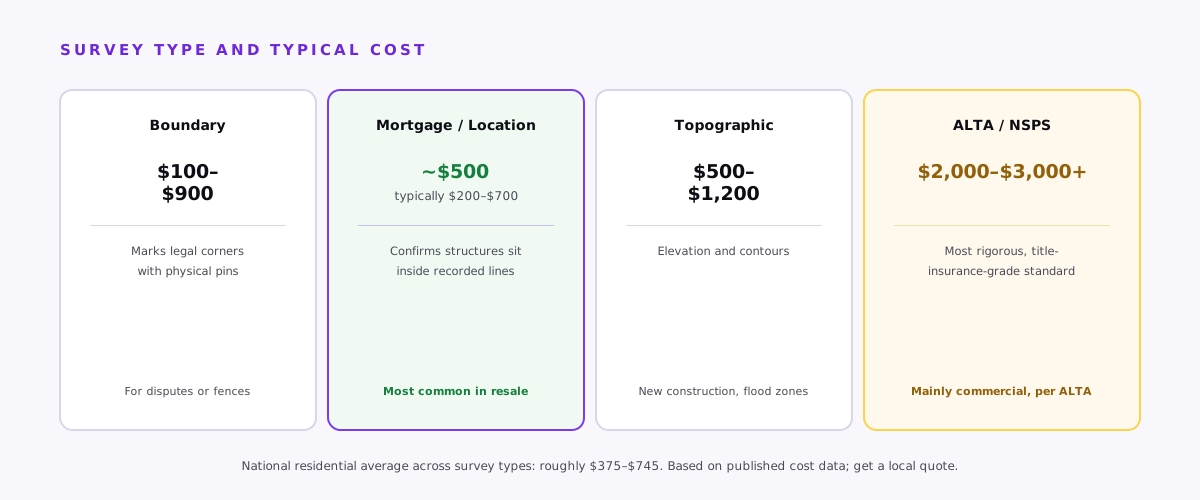
The national average across residential surveys generally is roughly $375–$745, averaging around $525–$546 — which tells you most residential resales are landing on a mortgage/location survey or a modest boundary survey, not the far more expensive ALTA standard.
There's no law assigning this cost to buyer or seller — it's regional custom, negotiated like any other closing cost. In most markets, the buyer customarily orders and pays for the survey as part of their own due diligence, since it's primarily their lender and title company that need it. That said, it's common for a seller to offer to cover it as a negotiating point, the same way closing-cost credits get negotiated generally — see our guide to seller closing costs for how these line items typically get split.
No state we checked has a law requiring a survey to sell a house. What drives the requirement in practice is title insurance: a lender funding a financed purchase generally needs the title company to remove the standard “survey exception” from the policy before the loan is sellable to a secondary-market investor, and a current survey (or an acceptable substitute, below) is how that exception gets removed (Lawyers Title: Residential Surveys).
That's a lender and title-insurance practice, not a statute — which is exactly why it disappears as a requirement once there's no lender in the deal.
If a survey already exists from when you bought the house and nothing has changed since — no new fence, no addition, no new driveway — many title companies will accept that existing survey paired with a signed affidavit confirming no changes, instead of ordering a brand-new one. This is standard practice in multiple states and can save most or all of the cost of a new survey.
Texas regulates this directly: the Texas Department of Insurance's Procedural Rule P-2 allows an existing survey of any age, plus a signed and notarized Residential Real Property Affidavit (Form T-47), or the newer Form T-47.1 — which dropped the notary requirement as of November 1, 2024 — for refinance transactions where the survey is 84 months (seven years) old or less and nothing has changed (Texas Department of Insurance: Title Insurance Basic Manual). Other states don't all publish as specific a rule, so ask your title company directly whether your existing survey plus an affidavit would work before paying for a new one.
Without a lender requiring title insurance tied to a clean survey exception, there's often no one requiring a survey of any kind — which means this cost, and the time it takes to schedule and complete one, can be skipped entirely in a cash sale. That's a genuine tradeoff worth naming plainly: skipping the survey saves money and time, but it also means a boundary or encroachment issue, if one exists, goes unconfirmed rather than resolved. If you have any reason to suspect a boundary problem specifically, our guide to selling a house with a boundary line dispute covers the resolution options directly.
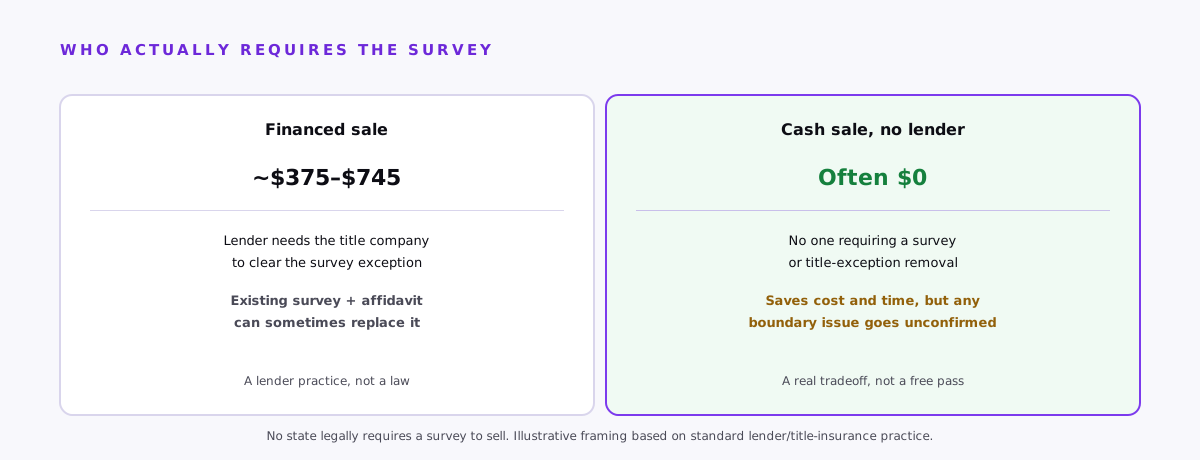
A survey isn't a legal requirement to sell — it's a lender and title-insurance practice that shows up in most financed sales and often disappears in a cash one. If you already have one and nothing's changed, an affidavit can likely save you the cost of a new one. Send us the address and we'll tell you plainly whether a survey would even come up in a cash offer on your house.
Without a lender requiring a clean survey exception for title insurance, there's frequently no one requiring a new survey at all. If you'd rather not spend time or money finding out, we can make a cash offer on the house as it stands.
Send us the property here and we'll walk you through the numbers.
All guides · Selling a house with a boundary line dispute · Title insurance cost explained · Seller closing costs
Step 1 of 5
No obligation, no fees, no repairs. We respond the same day.
You’ll talk to Trevor McAmis, Owner & Acquisitions Lead
(313) 710-6129
Takes about two minutes. Or call (313) 710-6129 — we answer.
