A buyer or their agent asked whether you'll throw in a home warranty, and you're not sure what that actually costs or whether it's worth it. A seller-paid home warranty typically runs $350–$900 for a one-year plan, sometimes more for comprehensive coverage, and it's never legally required. Here's what it actually buys, what it excludes, and the honest comparison to a straight price reduction.

Step 1 of 5
Tell us about your house. We'll give you a straight read on whether a warranty, a price credit, or an as-is cash sale makes the most sense for you.
You’ll talk to Trevor McAmis, Owner & Acquisitions Lead
(313) 710-6129
Takes about two minutes. Or call (313) 710-6129 — we answer.
Educational only. This explains how these situations generally work. It is not legal, tax or financial advice, and the rules differ by state — talk to an attorney or CPA about your own situation before you act on any of it.
A seller-paid home warranty typically costs $350–$900 for a one-year plan, sometimes more for comprehensive coverage, and is usually offered as a closing-table concession to reassure a buyer about an older home's systems. It's never legally required. Whether it's worth it depends on what you'd otherwise spend to get the same reassurance — a price reduction, a repair credit, or simply selling as-is.
This is general educational information, not financial advice. Home warranty plans, prices, and exclusions vary by provider and by state — read the actual contract before buying one.
A home warranty is a one-year service contract that covers repair or replacement of specific home systems (HVAC, plumbing, electrical) and appliances when they break from normal wear, not from poor installation or neglect. It's not homeowners insurance, and it's not a builder's new-construction warranty. When a seller buys one at closing, it's a concession meant to reassure a buyer — especially on an older home — that if the water heater or furnace fails in the first year, it's covered.
According to Redfin, a home warranty “isn't legally required” the way homeowners insurance usually is as a lender condition — no lender mandates it, and no state or local law requires a seller to provide one. It's purely optional and negotiated.
Pricing varies by provider, plan tier, and ZIP code — most providers quote based on your address rather than publishing a flat rate. Based on published cost comparisons: NerdWallet puts the average home warranty premium around $73/month (roughly $876/year), with a typical range of $28–$191/month, plus a separate service-call fee averaging $108.45 each time a technician is dispatched. HomeLight cites a narrower typical range of $350–$900/year for standard plans, rising to $1,200–$1,400/year for comprehensive coverage that adds extras like roof leak or pool equipment coverage.
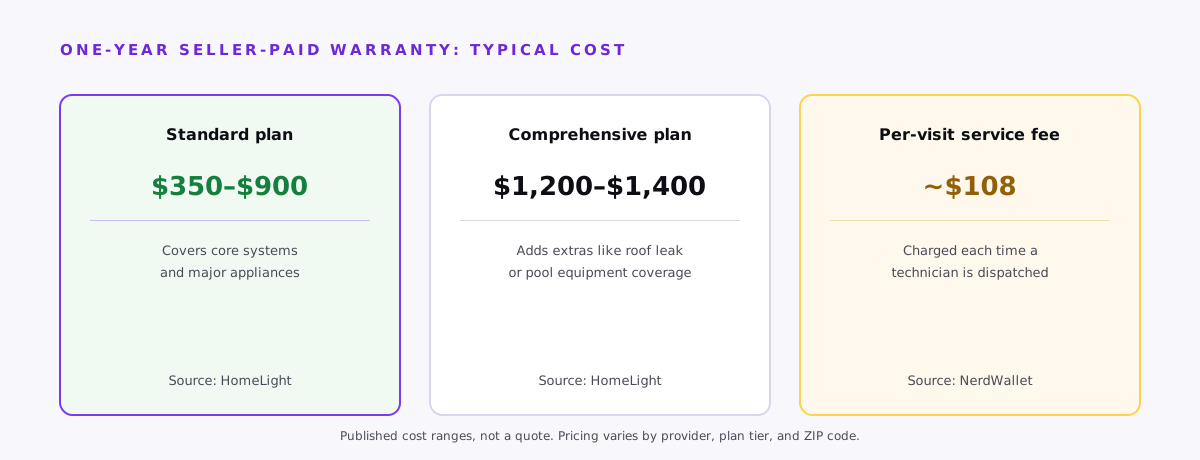
Put together, a reasonable planning range for a seller-paid, one-year plan is roughly $350–$900, with comprehensive plans running higher — plus whatever service-call fees get used during the year, which the buyer typically pays, not the seller.
When a seller buys the warranty as part of the deal, HomeLight notes the cost “comes out of the proceeds, not out of your pocket” at closing — functionally, it's treated like any other seller-paid closing cost or concession, reducing your net rather than requiring a separate payment up front.
A home warranty's exclusions are where buyer complaints concentrate. Standard exclusions commonly include pre-existing conditions, damage from improper installation or “construction-related errors,” problems from lack of maintenance, structural issues, and anything caused by a natural disaster — SelectHomeWarranty's own published exclusions list is representative of the industry standard here. In practice, that means a warranty doesn't cover every failure, only ones the provider agrees weren't pre-existing or maintenance-related, which is exactly the kind of determination that generates disputes.
Two real examples worth knowing before buying one: Choice Home Warranty's own Better Business Bureau profile shows 9,619 complaints filed in the last three years, with a B rating. And in January 2026, the Arizona Attorney General announced an $11.8 million settlement with Choice Home Warranty over allegations the company misrepresented coverage and failed to replace appliances and AC units it had advertised as covered, following more than 1,500 Arizona complaints filed since 2013 (Arizona Attorney General's Office). Neither fact means every claim gets denied — but they're a real reason to read a plan's exclusions closely rather than assume “covered” means “no questions asked.”
There's no NAR or other data confirming that offering a home warranty measurably speeds up a sale or raises the sale price — that causal claim shows up often in industry marketing, but it isn't backed by verifiable survey data. What NAR's own reporting does show is that seller incentives generally — a category that includes closing-cost credits and home warranties together, not warranties alone — were offered by only 24% of sellers in the most recent survey, down from 33% the year before (National Association of REALTORS). It's a common-but-declining tool, not a universal one.
The more useful comparison is to what the warranty is standing in for: a buyer's worry about an old HVAC system or water heater failing. A straight price reduction or repair credit addresses the same worry without the exclusions and claims process.
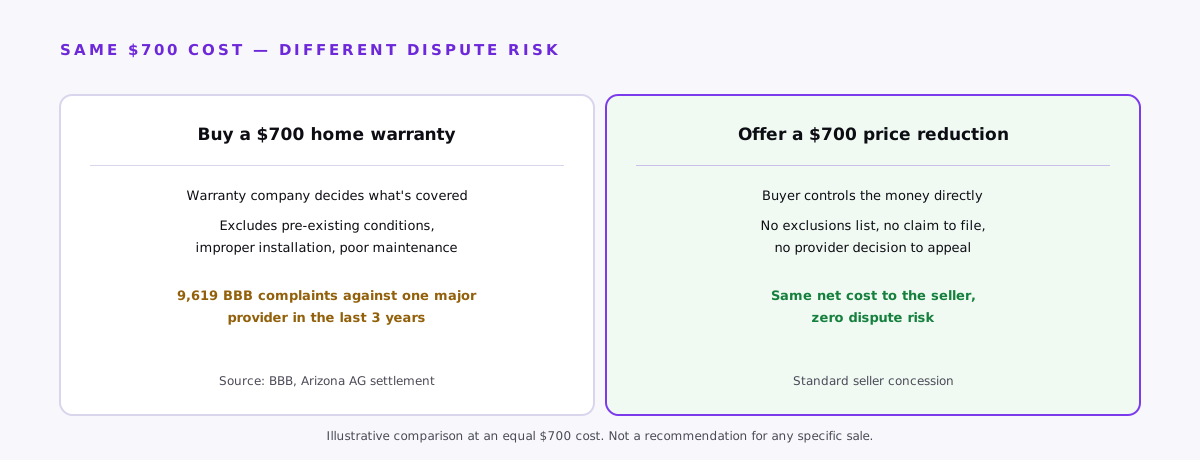
Neither option changes your net proceeds by more than the cost of the warranty either way — the real difference is dispute risk. A credit or price reduction is money the buyer controls outright; a warranty is a promise from a third party with exclusions, and the complaint and enforcement data above shows that promise doesn't always hold up cleanly.
Yes, in a specific way: a cash, as-is sale typically skips the warranty question entirely, because the buyer isn't asking the seller to backstop the home's systems — they're buying the house knowing its condition and pricing accordingly. That's part of the honest tradeoff of a cash sale: you're not getting retail price, but you're also not spending $350–$900 on a warranty, negotiating over exclusions, or betting that a claim gets approved if something fails in year one.
A seller-paid home warranty is a modest, optional cost — usually $350–$900 — that some sellers use to reassure buyers about an older home. It isn't required by any lender or law, and there's no solid data showing it actually speeds up a sale or raises the price. A straight credit or price reduction gives a buyer the same reassurance with less dispute risk, and a cash sale skips the question altogether. Send us the address and we'll give you a straight read on whether any of this is worth spending money on for your specific house.
A home warranty, a price credit, and an as-is cash sale all address the same buyer worry about an older home's systems — they just do it differently. If you'd rather not negotiate any of it, we can buy the house as-is, priced around its real condition, with no warranty shopping required.
Send us the property here and we'll walk you through the honest math.
All guides · Seller closing costs · Seller concessions vs. price reduction · Cash offer vs listing net proceeds
Step 1 of 5
No obligation, no fees, no repairs. We respond the same day.
You’ll talk to Trevor McAmis, Owner & Acquisitions Lead
(313) 710-6129
Takes about two minutes. Or call (313) 710-6129 — we answer.
