An underground propane tank raises a different question than a buried oil tank does. Propane doesn't leach into soil and contaminate groundwater the way heating oil can — the real issue is almost always ownership: is the tank yours, or does the propane company still own it? That answer determines whether the tank transfers cleanly to a buyer, whether a supplier's filing shows up in a title search, and what it actually costs to sort out before you sell.

Step 1 of 5
Tell us about the property and whether the tank is leased or owned. We'll give you a straight read on what it's worth as-is.
You’ll talk to Trevor McAmis, Owner & Acquisitions Lead
(313) 710-6129
Takes about two minutes. Or call (313) 710-6129 — we answer.
Educational only. This explains how these situations generally work. It is not legal, tax or financial advice, and the rules differ by state — talk to an attorney or CPA about your own situation before you act on any of it.
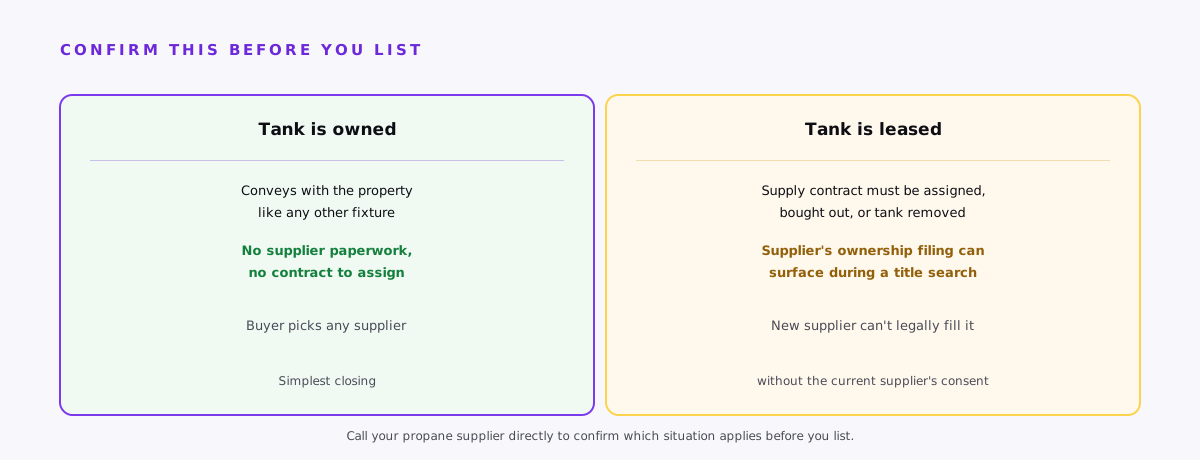
The question that matters most is whether you or the propane supplier owns the tank. A large share of residential propane tanks, especially above-ground ones, stay supplier-owned under a lease-style arrangement for as long as you buy fuel from that company — and a leased tank doesn't just convey to a new buyer the way an owned one does. An underground tank is more often customer-owned than an above-ground one, but not always, so confirm it before you list rather than assume.
This article is general educational information, not legal advice. Propane tank ownership rules and supply-contract terms vary by provider and by state — confirm your specific situation with your propane company and a real estate attorney before deciding how to handle it.
North Carolina's Department of Agriculture, which regulates LP-gas in that state, puts it plainly: “Most of the time in North Carolina, when a propane company sets a tank, they keep ownership of it” — and that's “especially true for above ground tanks,” with underground tanks more frequently, but not universally, owned by the homeowner (NC Department of Agriculture: LP-Gas FAQ).
Alabama REALTORS flags the same confusion as a real, recurring problem at closing, instructing agents to ask sellers directly “the name of the current propane supplier and whether the propane tank on the property is leased from that supplier or owned by the seller” before listing — precisely because the answer changes what has to happen before the sale can close cleanly.
A leased tank isn't just a billing arrangement — several states have laws that make it illegal for anyone other than the supplier to fill or reconnect it without the supplier's consent. North Carolina's statute states it directly: it is unlawful for “any person, other than the supplier or the owner of the system, to disconnect, interrupt or fill the system with liquefied petroleum gas without the consent of the supplier” (N.C.G.S. § 119-58(b)). That's what stops a new owner from simply switching suppliers and filling the existing tank — the supply contract has to be assigned to the buyer, the tank has to be bought out, or it has to come off the property.
Some propane suppliers also file a notice — similar to a UCC financing statement — in county records to document their ownership interest in a leased tank. That filing doesn't work the same way a mortgage or tax lien does, but it can surface during a routine title search before closing, which is why it's worth confirming ownership early rather than finding out about it from a title company two weeks before your closing date.
The issue with a buried propane tank is different from a buried heating oil tank. Propane is stored and released as a gas, not an oil that can seep into soil and groundwater the way a corroded heating-oil tank can — the underground propane concern is physical safety, not environmental contamination. Underground steel tanks are built with corrosion protection and generally need periodic testing of that protection over the tank's service life.
That safety dimension is real, not theoretical: a 2025 federal fatality investigation report documented a Virginia volunteer firefighter's death when propane from an underground residential tank leaked and the home exploded during a delivery — a reminder that this equipment needs to be properly installed, maintained, and serviced by licensed professionals, not a reason to panic about an otherwise well-maintained system (NIOSH Fire Fighter Fatality Investigation Report F2024-01).
Texas's standard seller's disclosure form includes a direct line item asking whether the property has LP (propane) gas, separate lines for underground and above-ground storage tanks, and a specific question about whether the property sits in a propane distribution system's service area. Indiana's disclosure form includes a line for the condition of a propane tank under heating and cooling systems, and a separate yes/no question about underground storage tanks generally — though that line asks about condition, not ownership.
We could not confirm a dedicated propane-tank disclosure line on the standard forms used in Alabama, Arizona, Florida, Georgia, Maryland, Michigan, Missouri, New York, North Carolina, or Ohio. That doesn't mean nothing has to be disclosed — most states still have a general duty to disclose known material defects — but there's no state-specific propane line item confirmed for those ten. Check your state's actual disclosure form, and ask your title company directly whether a leased-tank notice would show up in their search.
Take an illustrative $200,000 rural house, unaffected value, with an underground tank the propane company still owns. Listing retail: buying out the lease to convey clean ownership typically runs somewhere in the range of $1,500–$3,500 for an underground tank of that size, based on published industry cost estimates (not an official price list). After a 6% commission (about $12,000) and 2% closing costs (about $4,000), plus the buyout, a retail net lands roughly $180,500–$182,500 — assuming the sale doesn't stall while the buyout and supplier paperwork get sorted.
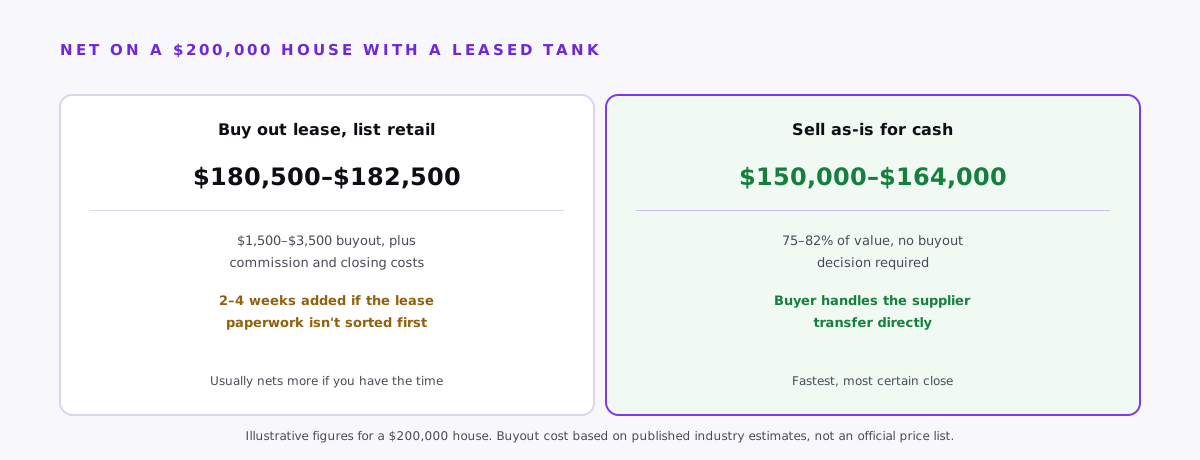
Selling as-is for cash, typically in the 75–82% range of value for a house in otherwise sellable condition, would run roughly $150,000–$164,000 — less than the retail net above, but without the buyout decision, and without the risk of a financed buyer's lender or title company stalling the closing for two to four weeks while the lease-transfer paperwork gets sorted out with the supplier. If you have time, resolving the tank ownership first and listing retail typically nets more. Compare your own numbers against our cash offer vs. listing net proceeds breakdown.
An underground propane tank is a safety and contract question, not a contamination problem the way a buried oil tank is. The single most important thing to confirm before you sell is whether your tank is owned or leased — that answer, not the fact that it's underground, is what determines how much friction your closing will have. Send us the address and we'll give you a straight number, tank and all.
If you're not sure whether your propane tank is leased or owned, or you'd rather not spend weeks sorting out a supply-contract transfer before you can close, we can buy the house as-is and handle the supplier conversation ourselves.
Send us the property here and we'll walk you through the numbers.
All guides · Selling a house with an underground oil tank · Selling a house with a lien on it · Cash offer vs listing net proceeds
Step 1 of 5
No obligation, no fees, no repairs. We respond the same day.
You’ll talk to Trevor McAmis, Owner & Acquisitions Lead
(313) 710-6129
Takes about two minutes. Or call (313) 710-6129 — we answer.
