Yes, you can sell a condemned house. Condemnation means a local authority has formally declared the structure unsafe or unfit for occupancy — it doesn't erase your ownership. The catch is financing: most lenders won't approve a mortgage on a condemned structure, which narrows your realistic buyer pool to cash buyers, land buyers, or a rehab loan contingent on the condemnation being lifted. Getting a condemnation notice is different from getting a code violation notice. A code violation is an earlier-stage problem — a fine, a cure period, a chance to fix it before it escalates. Condemnation is the end-state: a housing or building official has already determined the structure itself is dangerous enough that people can't legally live in it, often after code violations went unaddressed, or after fire, storm, or structural damage made the building unsafe on its own. This guide is specifically about that end-state — what condemnation legally means, the notice and appeal window before it becomes final, what you owe a buyer in disclosure once it's condemned, and the realistic paths off it.
Takes about two minutes. Or call
(313) 710-6129 — we answer.
Educational only. This explains how these situations generally work. It is not legal, tax or financial advice, and the rules differ by state — talk to an attorney or CPA about your own situation before you act on any of it.
What Does “Condemned” Actually Mean?
Condemnation shows up in two very different legal contexts, and it's worth being clear on which one applies to you. Eminent domain condemnation is the government taking your property for public use and paying you just compensation — that's not what this guide is about.
The condemnation that applies to an unsafe house is a police-power action: a local building or housing official has inspected the structure and formally determined it's dangerous or unfit for human habitation, under authority granted by state law to protect public health and safety (Cornell LII: Condemn). No one is taking your land. You still own the property. What changes is that the structure on it can no longer legally be occupied until the condition that triggered the order is fixed and the building is recertified, or the structure is removed.
States grant this authority to cities and counties through statute. Texas, for example, authorizes municipalities to order a substandard or dangerous structure vacated, secured, repaired, or demolished after notice and a public hearing, under Local Government Code Chapter 214 (Texas Local Government Code, Chapter 214). Most states in our markets have an equivalent statute; the trigger, notice period, and appeal window are set locally, so the specifics vary by city and county even under the same state law.
The Notice and Appeal Process Before It Becomes Final
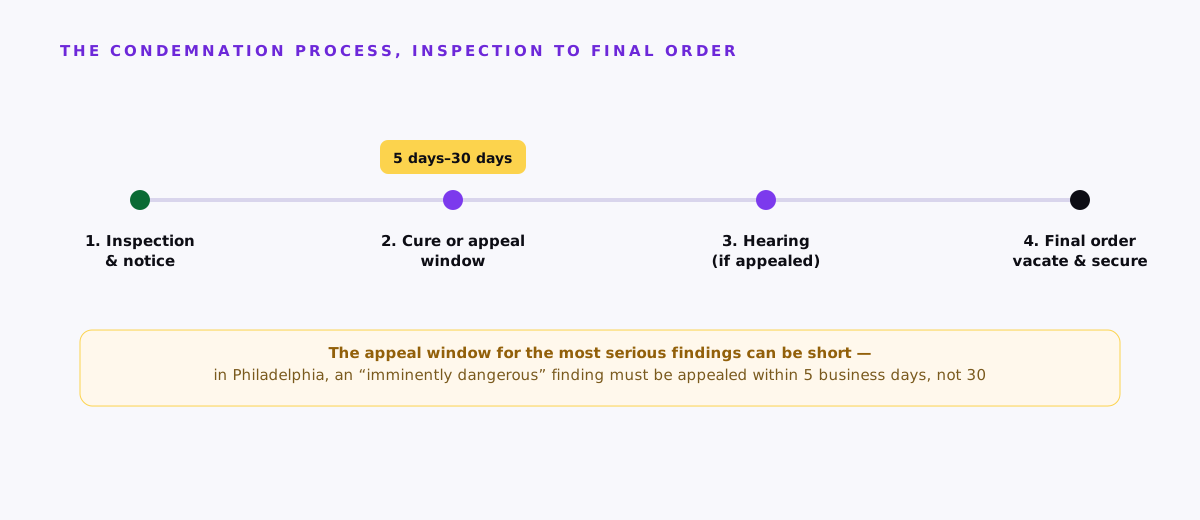
Condemnation is not usually instant, but the window to contest it can be short — shorter than most homeowners expect. The general sequence looks like this:
The appeal window for the most serious findings can be shortRestar Acquisitions · sourced from Philadelphia Board of Building Standards appeal process
Inspection and notice. A code or building official inspects the property (often after a complaint, a fire, storm damage, or an unresolved code violation) and issues a written notice declaring the structure unsafe, dangerous, or unfit for occupancy.
A cure or appeal window. This is the step that catches people off guard. Standard code violations often carry a 30-day cure period, but a designation of “unsafe” or “imminently dangerous” frequently carries a much shorter appeal deadline. In Philadelphia, for example, an imminently dangerous designation must be appealed within 5 business days, versus 30 days for an ordinary violation appeal, and missing that window waives your right to later contest the finding at all (City of Philadelphia: Appeal to the Board of Building Standards). Your jurisdiction's exact deadline will differ, but the pattern — a short window for the most serious designations — is common.
A hearing. If you appeal, a board or hearing officer reviews the evidence and either upholds, modifies, or reverses the finding.
A final order. If the condemnation stands, the order typically requires the structure to be vacated and secured, and sets a deadline to repair and recertify or demolish.
If you believe the finding is factually wrong — the inspector cited the wrong structure, the damage has already been repaired, or the notice wasn't properly served — the appeal window is where that gets resolved. Once it passes, you're generally arguing over how to comply, not whether the order was correct.
What You Have to Disclose Once a Property Is Condemned
A condemnation order is about as material a fact as exists for a piece of real estate, and it's also a public record. Most state disclosure laws require sellers to disclose known material defects — facts a reasonable buyer would consider significant to the value or livability of the property — and a formal condemnation finding clears that bar by definition (Sellers' Obligation to Disclose Latent Defects, NC Real Estate Commission).
Beyond the ethical and legal duty to disclose, practically speaking a buyer's title search or a routine permit/code lookup will surface a recorded condemnation notice anyway, so nondisclosure tends to surface fast and can expose you to liability after closing. Talk to a real estate attorney about what your specific state's disclosure form requires — this varies, and it's not something to guess at.
Can You Still Sell a Condemned House? The Financing Problem
Yes — condemned properties get sold regularly. The obstacle isn't legal ownership, it's financing. FHA and most conventional mortgage programs require a property to meet minimum standards for safety, soundness, and structural security before a lender will underwrite it, under guidelines like HUD's Single Family Housing Policy Handbook 4000.1 (HUD: SFH Handbook 4000.1).
A condemned structure — by definition declared unsafe or unfit for occupancy — fails those standards outright, so a lender generally can't close a normal mortgage on it until the condemnation is lifted. That rules out most retail buyers, who need financing.
What's left is a narrower, real set of paths: cash buyers who don't need mortgage approval, buyers purchasing primarily for the land value who plan to demolish and rebuild, or a buyer using rehabilitation financing (like an FHA 203(k) loan) structured so the loan funds repairs and the condemnation is lifted before or at the point of closing. Each of those is a smaller, more specialized buyer pool than a typical retail listing, which is part of why condemned properties usually sell for less than a comparable move-in-ready home.
The Honest Price Tradeoff
Here's the part that matters most: repairing the structure, getting it recertified, and listing it on the open market will almost always net you more money than selling it as-is right now — if you have the capital, the time, and the risk tolerance to get through the repair and recertification process.
Many owners of a condemned property don't. Recertification after a serious condemnation (structural damage, fire, storm damage) is usually a bigger job than curing a routine code violation — permits, inspections, sometimes engineering review — and it can take months, during which you're carrying insurance, taxes, and financing costs on a house you can't live in or rent.
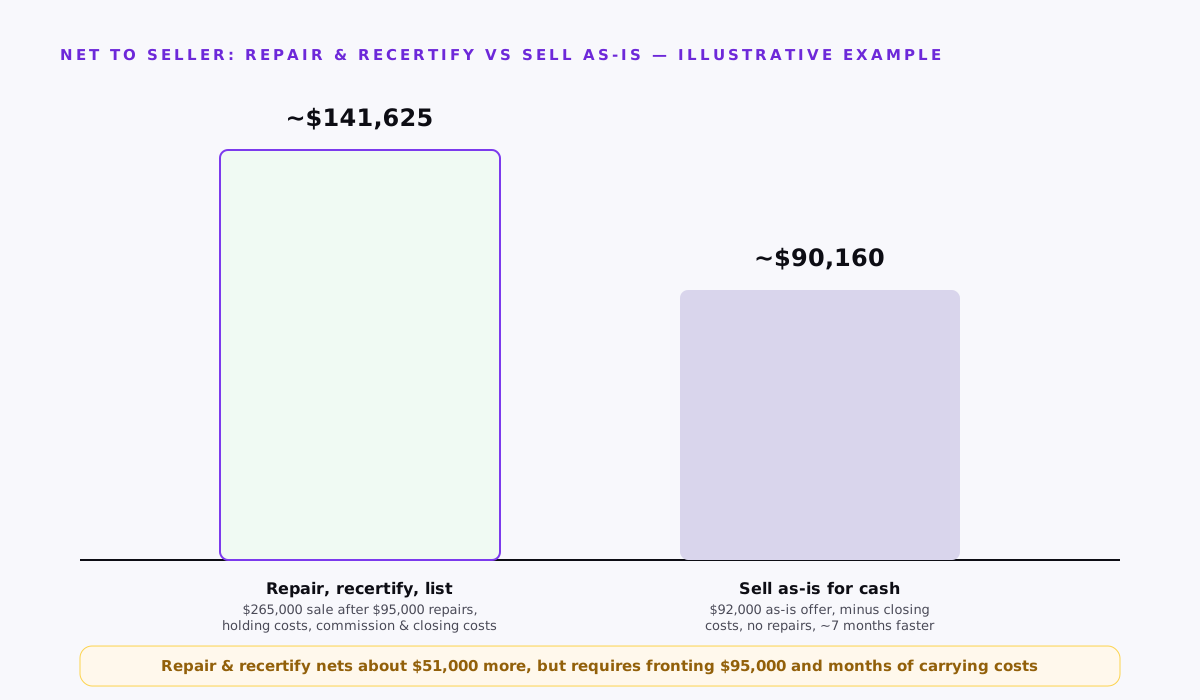
These are illustrative example figures only, not a quote for any specific property. Say a condemned house would be worth $265,000 fully repaired, recertified, and listed, but needs roughly $95,000 in structural and code repairs to get there.
Repair and recertify nets about $51,000 more, but requires fronting $95,000 and months of carrying costsRestar Acquisitions · worked example from this page
Repair, recertify, then list
Sell as-is for cash now
Estimated sale price
$265,000
$92,000
Repair & recertification costs
−$95,000
$0 (sold as-is)
Holding costs during ~7 months of repairs
−$8,500
$0
Agent commission (~5.5%)
−$14,575
$0
Seller closing costs (~2%)
−$5,300
−$1,840
Estimated net to seller
$141,625
$90,160
In this illustrative example, repairing and recertifying nets roughly $51,000 more — but it also requires fronting $95,000 in repair capital, carrying the property for months with no income from it, and managing a permit and inspection process while uninsured occupancy isn't allowed. If you don't have that capital or that runway, the math on paper doesn't reflect a path you can actually take. See our cash offer vs. listing net proceeds breakdown for how this comparison plays out across other situations.
Comparing Your Realistic Options
Here's how the realistic options stack up against each other:
Option
What it involves
Typical capital/time needed
Best fit when
Appeal the condemnation order
Contest the finding at a hearing on factual or procedural grounds
Low cost, but a short deadline
You believe the finding is wrong or the notice was defective
Repair permits & recertify
Fix the underlying hazard, pass reinspection, restore occupancy
High capital, months of time
You can fund and manage the repair, and the math favors listing
Sell the land only
Structure is beyond economical repair; buyer values the lot
Low seller effort, lower price
The building is a total loss (severe fire, structural collapse)
Sell to a cash buyer as-is
Buyer purchases without financing, at an as-is price
Low seller effort, faster close
You need certainty and speed over maximum price
Local rehab/repair assistance
Some cities and nonprofits offer repair grants or low-interest loans for owner-occupants
Varies by program and eligibility
You want to keep the property and may qualify locally
If your house has fire or storm damage that triggered the condemnation, our guide on selling a house with fire damage goes deeper on that specific scenario.
A Note on How We Fit In
Restar Acquisitions buys houses directly, as-is, for cash, in 45 markets across Alabama, Arizona, Florida, Georgia, Indiana, Maryland, Michigan, Missouri, New York, North Carolina, Ohio, and Texas. If your condemned property is in one of those markets, we can typically give a written offer within 24 hours, require no repairs, and charge no commissions — you also pick the closing date. Because we buy with cash, we're not blocked by the financing problem described above.
We are not real estate agents or brokers, and we do not represent you as a seller — we're a direct buyer, and our interests in a transaction are our own, not yours. As the worked example above shows, repairing and recertifying a condemned property usually nets more money than a cash sale, if you have the capital and time to do it. If that's your situation, an agent and a contractor may be the better call, and we'll tell you that directly if you ask.
This article is for general educational purposes only and is not legal, tax, or financial advice. Condemnation procedures, deadlines, and disclosure requirements vary by state and by city or county. Talk to a real estate attorney about your specific notice and jurisdiction before making a decision.
Common questions
Can you sell a house after it's been condemned?
Yes. Condemnation doesn't take away your ownership — it restricts occupancy until the hazard is fixed or the structure is removed. You can sell the property, but most financed buyers won't be able to close because lenders require the property to meet minimum habitability standards.
What's the difference between a condemned house and a house with code violations?
A code violation is an earlier-stage problem: a cited issue with a cure period and usually a path to fix it before it escalates. Condemnation is the formal declaration that a structure is unsafe or unfit for occupancy, often after violations went unaddressed or after damage like fire or a structural failure.
How long do I have to appeal a condemnation order?
It depends entirely on your city and county, and the window can be short for the most serious designations — in Philadelphia, for example, an imminently dangerous finding must be appealed within 5 business days. Check your notice for the specific deadline and don't assume you have 30 days.
Do I have to tell a buyer the house was condemned?
Yes. A condemnation order is a material fact under most state disclosure laws, and it's also a public record that a buyer's title search or permit check is likely to find regardless. Talk to a real estate attorney about your state's specific disclosure requirements.
Can a buyer get a mortgage on a condemned house?
Generally no, not until the condemnation is lifted. FHA and most conventional loan programs require the property to meet minimum safety and structural standards, which a condemned structure fails by definition. Financed sales usually require repairs and recertification first, or a rehab loan structured around that process.
Will selling as-is for cash get me as much as repairing and listing it?
Usually not. Repairing, recertifying, and listing on the open market typically nets more money than an as-is cash sale, if you have the capital and time to complete the repair process. A cash sale trades some of that value for speed and certainty, which matters most when you don't have the capital, time, or risk tolerance to carry a repair project.
Want to see your own numbers with the condemnation factored in?
We'll give you a written offer within 24 hours, even though the property can't be financed conventionally — and if repairing and recertifying nets you more, we'll say so.
Every offer on this site is underwritten by a person, not a form. If the
numbers do not work for you, say so and I will tell you what would.
Also from Restar
Want the data behind all of this?
Restar Acquisitions is the acquisitions arm of Restar — a housing-market analytics
platform tracking 180+ metrics across every U.S. market, with composite scores and 12-month
price forecasts. The numbers on this page come from the same work.