A legitimate cash home buyer puts the full purchase price in a written contract, closes through a licensed, independent title or escrow company, and never asks you to sign over your deed before you've been paid. A scam version does one or more of the opposite: pressure to sign today, no real written contract, or a request to transfer title before any money changes hands. Check those three things first — they catch most of what's actually out there.
Step 1 of 5
Send the address. We'll give you a real written number and a real closing company.
You’ll talk to Trevor McAmis, Owner & Acquisitions Lead
(313) 710-6129
Takes about two minutes. Or call (313) 710-6129 — we answer.
Educational only. This explains how these situations generally work. It is not legal, tax or financial advice, and the rules differ by state — talk to an attorney or CPA about your own situation before you act on any of it.
The Consumer Financial Protection Bureau and the Federal Trade Commission both publish direct guidance on this, and it's worth reading in its own words because the patterns are specific, not vague:
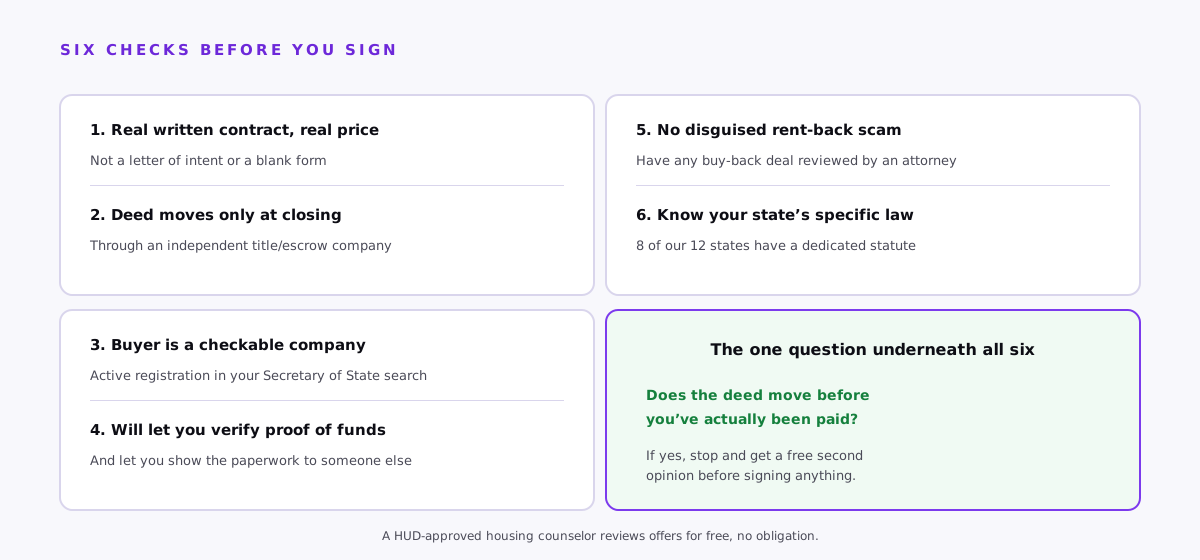
Equity skimming. The FTC describes a scheme where someone tells a struggling homeowner, "If you sell us your home, we'll help you stay... you can get it back once you're on your feet" — then the scammer collects rent on the house while the original mortgage keeps running toward foreclosure, leaving the homeowner both homeless and still legally liable for a loan they no longer control (FTC, consumer.ftc.gov).
Rent-to-buy ripoffs. A close cousin: the homeowner deeds the house over, the scammer gets new financing in their own name, and the promised buy-back terms become unaffordable over time — rent gets raised, and the original owner eventually gets evicted from the house they used to own.
Advance-fee foreclosure rescue. The CFPB's own warning signs, listed directly on its site: charging an up-front fee before any real relief happens, pressuring you to act immediately, telling you to stop paying your mortgage or to pay someone other than your actual lender, and — specifically — trying to get you to "sign over title to your property" as part of the "help." None of this requires you to actually be behind on payments; the same pressure tactics show up around any distressed-sale situation.
The common thread in all three: the deed moves before you've actually been paid, or before a transaction most people would recognize as a normal sale has happened. That's the single question worth asking before you sign anything.
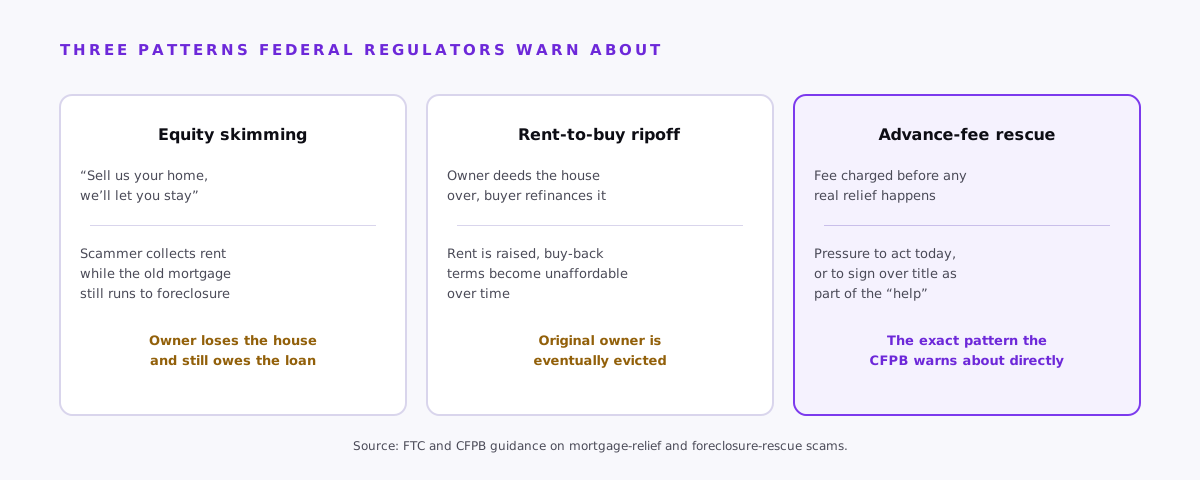
1. Is there an actual written purchase agreement, with a real price? Not a letter of intent, not a verbal number, not a form that's mostly blank. A real contract names the price, the closing date, and the closing agent.
2. Does the deed move only at closing, through a title or escrow company? In a normal cash sale, you sign the deed at closing, simultaneously with receiving your proceeds, through an independent third party — not before, and not directly to the buyer with no closing agent involved at all.
3. Is the buyer a real, checkable company? Every state's Secretary of State runs a free, public business-entity search. Look up the LLC or company name on the offer. If it isn't registered, or the registration is inactive, that's worth a direct question before you go further.
4. Will they let you verify proof of funds, and will they let you get it reviewed? A buyer who refuses to show how they're paying, or who pressures you not to show the paperwork to anyone else — a friend, a family member, an attorney — is asking you to skip the one step that protects you.
5. Is the "rent it back and buy it later" offer actually a sale-leaseback scam? This is the FTC's equity-skimming and rent-to-buy pattern described above, wearing a friendlier name. If a deal involves you deeding the house over now and renting or buying it back later, treat it with the same skepticism as an advance-fee scheme — get an attorney to look at the actual paperwork, not just the verbal pitch.
6. Does your state give you a specific legal protection here, and does this buyer follow it? Several states have a dedicated statute regulating anyone who buys homes from owners facing foreclosure, modeled on California's "Home Equity Sales Contract" law. Of the states we buy in:
Even once you're working with a verified, legitimate buyer, there's a separate scam to watch for right at closing: someone impersonating your title company or closing agent by email, sending "updated" wiring instructions that redirect your proceeds to an account you don't control. The CFPB has warned about this directly and reported that these attempts rose more than tenfold between 2015 and 2017, with close to $1 billion lost in 2017 alone. The only real protection is procedural — call your title company or closing agent on a phone number you already had, not one from an email, and verify wiring instructions verbally before any money moves, no exceptions.
A related but different scheme, already covered on this site in more depth, is outright title theft — someone impersonating a real owner to forge a deed and sell or mortgage a house the real owner never agreed to part with, which the FBI's Boston and Newark field offices have both issued public warnings about (see our forged deed guide). That's a criminal stealing someone else's house. What this page covers is different: a seller who is the real owner, approached by a company that structures a legitimate-looking sale in a way that's actually designed to take the house without fully paying for it. Both are real. Neither requires you to assume every cash buyer is one of them — but both are reasons to insist on the checks above regardless of who's making the offer.
This article is general educational information, not legal advice. Whether a specific statute applies to your situation, and how to evaluate a specific offer, depends on your state and your facts. Talk to an attorney or a HUD-approved housing counselor before signing anything you're unsure about.
Send us the address. We'll give you a written offer with a specific price, a named title company, and no fee of any kind to consider it — the same checks this page recommends, applied to us.
All guides · Cash offer vs listing net proceeds · Selling a house with a forged deed · Facing foreclosure
Step 1 of 5
No obligation, no fees, no repairs. We respond the same day.
You’ll talk to Trevor McAmis, Owner & Acquisitions Lead
(313) 710-6129
Takes about two minutes. Or call (313) 710-6129 — we answer.
