A title search or a neighbor turned up language in your deed limiting how the property can be used — an age restriction, a no-rental clause, an architectural rule — and now you're wondering whether that stops your sale. It almost never does. A deed restriction mostly narrows who can buy, not whether you can sell, and for a small number of older deeds it can include racially restrictive language that's been legally void for decades but still physically sits in the public record. Here's what these restrictions actually are, how they affect a sale, and the real math on listing versus selling as-is.
Step 1 of 5
Tell us what the covenant says. We'll tell you honestly whether it affects your sale at all, and whether we're even eligible to buy under it.
You’ll talk to Trevor McAmis, Owner & Acquisitions Lead
(313) 710-6129
Takes about two minutes. Or call (313) 710-6129 — we answer.
Educational only. This explains how these situations generally work. It is not legal, tax or financial advice, and the rules differ by state — talk to an attorney or CPA about your own situation before you act on any of it.
Yes, you can sell a house with a deed restriction or restrictive covenant. It's recorded language in your chain of title that limits how the property can be used — age restrictions, rental caps, architectural rules — and it runs with the land regardless of whether an HOA is even active. It rarely blocks a sale outright, but it can narrow your buyer pool, and for a small number of old deeds, may contain void racially restrictive language some states now let you formally strike.
This is general educational information, not legal advice. Covenant enforceability, modification procedures and disclosure duties vary by state — confirm your specific situation with a real estate attorney or title company before relying on anything here.
A restrictive covenant is a provision in a property's recorded deed or chain of title that limits how the land can be used, binding the current owner and — because it's recorded against the land itself, not against a person — every future owner too (Cornell Law School Legal Information Institute: restrictive covenant).
This is different from an HOA rule or lien. An HOA's authority comes from an active association with bylaws and dues; a deed restriction is baked into the title itself and can exist — and keep binding owners — whether or not any association is still operating, or ever existed at all.
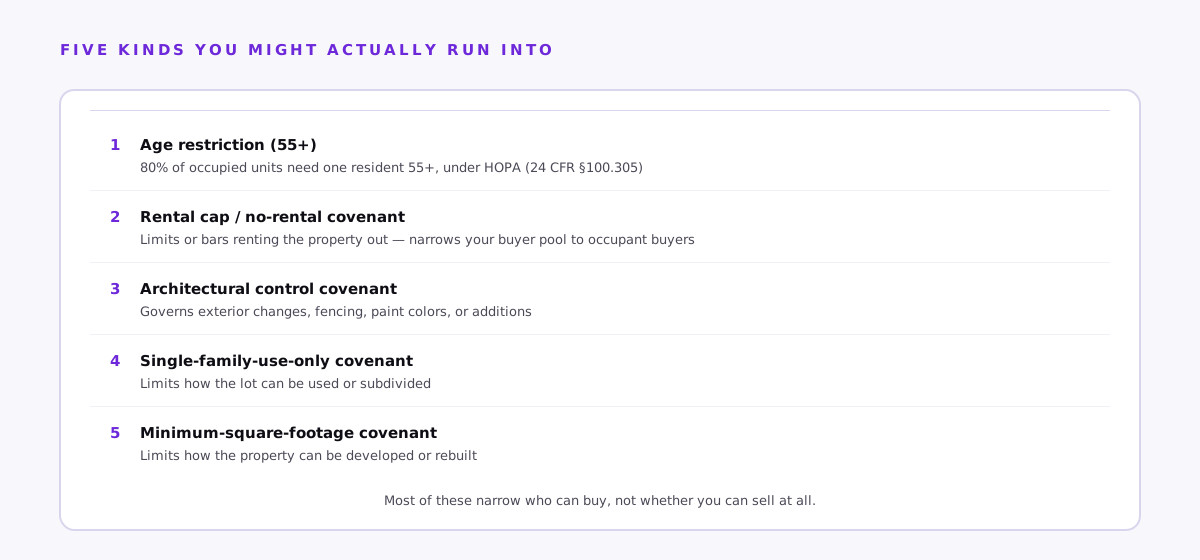
For most single-family houses, a deed restriction doesn't block a retail sale to an ordinary owner-occupant buyer — it mainly narrows the pool of who can buy, not necessarily what the house is worth. The clearest, most concrete financing example is at the project level, not the single-house level: Fannie Mae's own Selling Guide makes a condo, co-op or planned development ineligible for Fannie Mae financing if it has a mandatory rental-pooling arrangement or a deed restriction limiting owner occupancy (Fannie Mae Selling Guide, B4-2.1-03: Ineligible Projects). If your property is part of an attached-housing project with that kind of restriction, it's worth confirming with a lender early, since it can eliminate a chunk of financed buyers before you even get an offer.
If your deed restricts the property to owner-occupants only, that also affects your cash-sale options: ask any cash buyer, including us, whether they plan to hold it as a rental or resell it to an occupant, since that can determine whether they're even eligible to make you an offer that honors the restriction.
Before the Fair Housing Act of 1968 and the Supreme Court's 1948 ruling in Shelley v. Kraemer, many developers recorded covenants barring sale to buyers of certain races. That language is legally void and completely unenforceable today — nobody can use it to stop or condition a sale. But the physical language often still sits in the recorded chain of title, because voiding it legally didn't erase the paper.
A growing number of states now let homeowners formally strike that language from the public record. Two of them are states Restar Acquisitions buys in:
For scale: the University of Washington's Racial Restrictive Covenants Project, reported February 2023, had by then identified roughly 15,000 restrictive documents covering nearly 80,000 parcels in Washington State alone — a figure specific to that state's own research project, not a national count, but a useful sense of how common this old language can be in areas that have actually gone looking for it (University of Washington, February 6, 2023).
None of this blocks your sale — the language is already void whether or not it's struck from the record. But if you're selling in New York and know your deed carries this kind of language, state law now requires you to act on it; in Maryland, you have a clear process available if you choose to.
Take a $210,000 house with a no-rental, owner-occupant-only covenant.
| List retail | Sell to a cash buyer | |
|---|---|---|
| Sale price / typical offer | $210,000 | 75–82% of value |
| Commission (~5.5%) | −$11,550 | $0 |
| Covenant review | −$300 | $0 |
| Net | ~$198,150 | ~$157,500–$172,200 |
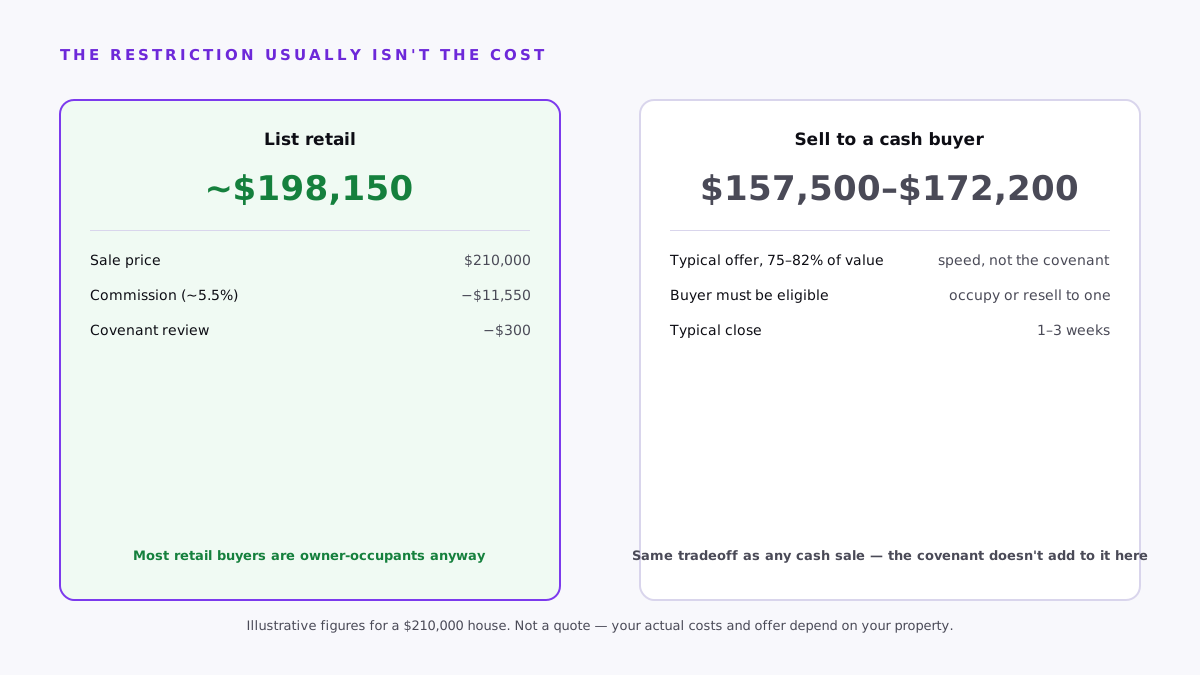
The honest takeaway: for a house like this, the restriction itself usually isn't what's costing you money — the standard cash-vs-listing tradeoff applies the same way it would without the covenant. Where a deed restriction genuinely hurts your net is when it excludes most of your realistic buyer pool, for example a rental-cap covenant on a property mainly attractive to investors, not just some of it.
A deed restriction is rarely the reason a sale falls through — it mostly decides who's eligible to buy, not whether the house can sell. Review what your covenant actually says, confirm any state-specific obligations if there's old racial-covenant language involved, and then the decision comes down to the same cash-versus-listing math as any other sale. Send us the address and we'll tell you plainly where you stand.
Most deed restrictions narrow who can buy, not what the house is worth. If yours limits the sale to owner-occupants, we'll tell you plainly whether we can make an offer that honors it — no runaround.
Send us the property here and we'll walk you through it honestly.
All guides · Cash offer vs listing net proceeds · Seller closing costs · Selling a house with an HOA lien
Step 1 of 5
No obligation, no fees, no repairs. We respond the same day.
You’ll talk to Trevor McAmis, Owner & Acquisitions Lead
(313) 710-6129
Takes about two minutes. Or call (313) 710-6129 — we answer.
