<b>A right of first refusal (ROFR) means someone else — a former tenant, a relative, a neighbor, or a party from an old contract — has the contractual right to match any offer you accept before you can sell to that buyer.</b> You can usually still sell, but you must check if the right is still valid, give proper notice, and let them match or waive before closing.

Step 1 of 5
Tell us about the property and we'll send a written cash offer within 24 hours, with a closing date that gives you time to resolve the ROFR, no repairs, no commissions.
You’ll talk to Trevor McAmis, Owner & Acquisitions Lead
(313) 710-6129
Takes about two minutes. Or call (313) 710-6129 — we answer.
Educational only. This explains how these situations generally work. It is not legal, tax or financial advice, and the rules differ by state — talk to an attorney or CPA about your own situation before you act on any of it.
A right of first refusal is a contract clause that requires a property owner to give a specific person or entity the first opportunity to buy the property on the same terms before selling to anyone else. It only becomes active when the owner decides to sell and gets a bona fide third-party offer worth accepting. The federal public-housing regulations that define this type of right for homeownership programs illustrate the same basic structure private contracts use.
That's different from two things people often confuse it with. A lease-option (rent-to-own) gives a tenant-buyer the right to initiate a purchase on their own timeline, whether or not the owner is otherwise selling — if your situation involves a tenant with an option to buy rather than a right to match someone else's offer, see our guide on selling a house with a rent-to-own tenant. A co-owner's statutory right under heirs-property law is a different legal framework with its own buyout and appraisal process — see selling a house with an unmarried co-owner for how co-ownership disputes get resolved.
A ROFR commonly shows up from an old lease clause, a family agreement (a parent promising a sibling first dibs), a prior sale contract that reserved it for the seller, or an HOA or neighbor covenant. Whoever holds it, the core mechanic is the same: before you can sell to someone else, you generally have to let the holder match the deal.
Before you do anything else, you need to find out whether the ROFR you remember granting is actually still enforceable. Many aren't, for one of these reasons: it was never recorded (usually still enforceable between the original parties, but may not bind a later buyer and can create title problems regardless); it expired on its own terms (many agreements include a stated duration or tie expiration to an event like the end of a lease); it didn't survive a later transfer (whether a ROFR binds a future owner generally depends on whether it was drafted and recorded to “run with the land”); or the underlying agreement it was part of already ended (if the ROFR was a clause inside a lease or owner-financing contract that has since terminated).
Because these outcomes turn on exact wording and your state's treatment of covenants and notice, this is a case where a real estate attorney or title company review — not a guess — is the right first move. Pulling the recorded instrument (or confirming there isn't one) tells you what you're actually dealing with before you price or market anything.
If the ROFR is valid, the general mechanics work like this: you get a real offer you're ready to accept (a ROFR isn't triggered by listing the house — it's triggered by a specific, bona fide offer you intend to take); you give the holder written notice of the exact terms, the same deal the third-party buyer offered, not a worse one and not a different one; the holder has a set window to respond, commonly a matter of days to a few weeks, and if the original document is silent on timing, what counts as “reasonable” can become a point of dispute; and the holder either matches, waives, or does nothing — letting the window pass without responding commonly operates as a waiver, but confirm this against your specific agreement's language.
A seller cannot normally pick and choose which offers trigger the ROFR, and cannot structure a deal with the eventual buyer specifically to dodge the clause. Courts generally look past that kind of structuring.
Selling around a ROFR that's still valid is one of the more expensive mistakes a seller can make, because the exposure doesn't go away at closing. Depending on your state and the facts, a bypassed ROFR holder may be able to pursue monetary damages against you for the value of the right they lost; specific performance, asking a court to unwind the sale and force a transfer to them on the original terms instead; or create a cloud on the new buyer's title, which can surface during a future refinance or resale even if no one sues right away.
None of this is a reason to panic, but it is a reason not to simply hope the holder won't notice. A buyer's title company doing diligence on your sale may flag a recorded ROFR anyway, which can stall or kill a retail closing late in the process.
Here's where the math actually matters, and it cuts both ways depending on your situation. A retail sale, once a ROFR is cleared, can bring a higher gross price — but it comes with real costs and real timeline risk that a ROFR adds on top of the usual ones.
| Retail Listing (after clearing ROFR) | Cash Offer | |
|---|---|---|
| Sale price | $300,000 | $271,000 (prices in speed and certainty) |
| Agent commission (~5.5%) | −$16,500 | $0 |
| Repairs to list competitively | −$9,000 | $0 |
| Holding costs | −$4,500 | −$4,500 |
| ROFR risk during escrow | Buyer's title company may still flag it | Resolved before you accept the offer |
| Net to seller | ~$258,000 | ~$266,500 |
| Closing timeline | 60–120+ days | 1–3 weeks |
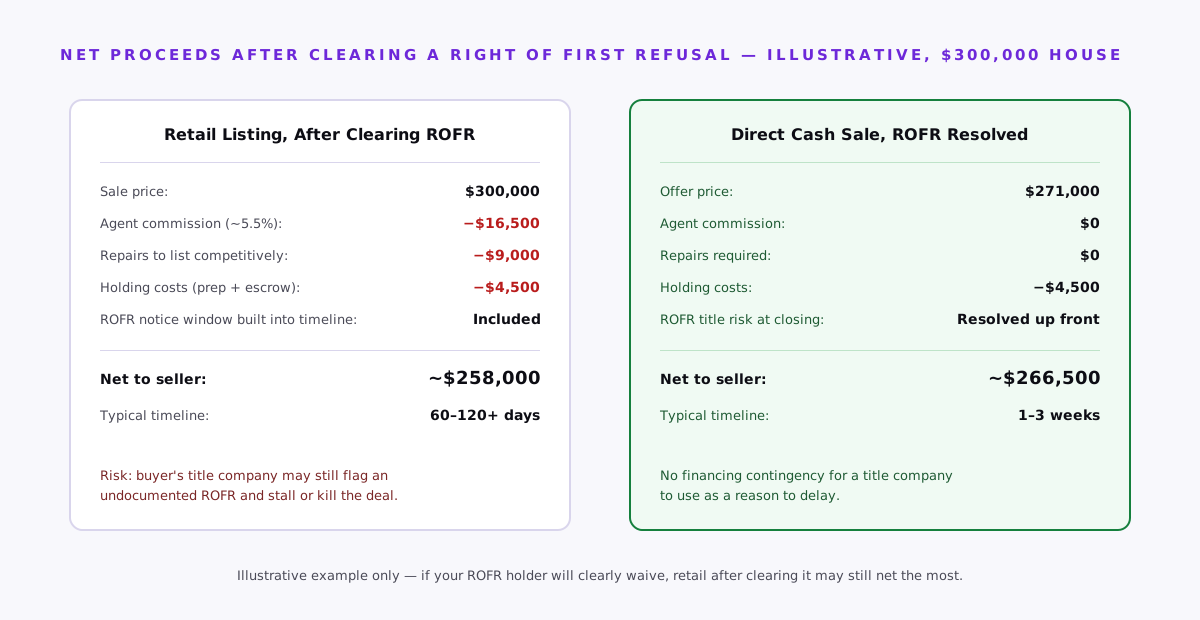
The honest version of this: if your ROFR holder is clearly going to waive (or already has), and your house would show well and sell quickly, listing with an agent after clearing the ROFR may net you more money even after commissions and holding costs — that's a real possibility and we're not going to pretend otherwise. A cash offer makes the most sense when the ROFR situation is murky, the holder is unresponsive or hostile, the property needs work you don't want to fund, or you need certainty over maximizing price. Run your own numbers, or ask an agent for a net-sheet estimate alongside any cash offer, before deciding. Our guide on cash offer vs. listing net proceeds walks through that comparison in more detail.
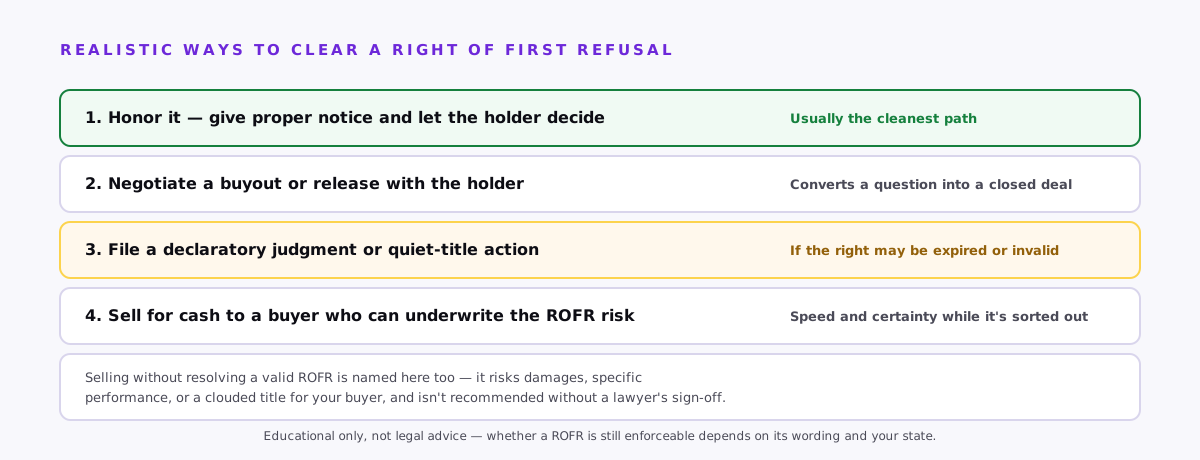
List with an agent after clearing the ROFR. Best when the holder will waive promptly and the house is market-ready. Negotiate a buyout of the ROFR itself. Best when the holder has no real intent to buy but wants something for releasing the right. File a declaratory judgment or quiet-title action. Best when you believe the right has expired or never attached, and the holder disagrees. Sell for cash to a buyer who can underwrite the ROFR risk. Best when you need speed and certainty, or the title situation needs to close without waiting on a slow or unresponsive holder. Do nothing and sell anyway — named here so you know it's an option, not one we'd recommend without a lawyer's sign-off, given the damages and specific-performance exposure above.
We buy houses as-is, with a written cash offer within 24 hours, no repairs and no commissions, and you pick the closing date. If your right-of-first-refusal situation is already resolved or close to it, we're glad to make an offer. If it isn't, talk to an attorney first — we'd rather you sell with a clear title than rush into a deal that unravels later.
A direct cash offer can come with an extended closing date, giving you room to honor the right, negotiate a release, or get a declaratory judgment before you close — without a financed buyer's lender getting nervous while that's in progress.
You'll get a written offer within 24 hours, no repairs or commissions required, and you pick the closing date. We're a direct buyer, not an attorney, agent, or broker, and nothing here is legal advice — talk to a real estate attorney about your specific agreement.
All guides · Selling a house with a rent-to-own tenant · Selling a house with an unmarried co-owner · Cash offer vs. listing net proceeds
Step 1 of 5
No obligation, no fees, no repairs. We respond the same day.
You’ll talk to Trevor McAmis, Owner & Acquisitions Lead
(313) 710-6129
Takes about two minutes. Or call (313) 710-6129 — we answer.