The cost of negotiating a judgment lien settlement isn't a fee, it's the gap between what the judgment says you owe and what the creditor will take. Attorneys who work this regularly describe negotiated payoffs running roughly 10% to 50% of face value, depending on the judgment's age and how hard it would be to collect otherwise.
Step 1 of 5
We can work with your title company on timing if a judgment settlement is still in progress.
You’ll talk to Trevor McAmis, Owner & Acquisitions Lead
(313) 710-6129
Takes about two minutes. Your address is never shared.
Educational only. This explains how these situations generally work. It is not legal, tax or financial advice, and the rules differ by state. Talk to an attorney or CPA about your own situation before you act on any of it.
A judgment creditor isn't guaranteed to ever collect in full, and most know it. Florida asset-protection attorney Gideon Alper, in his analysis of settling a judgment for less than full balance, writes that the final settlement number depends on three things: the judgment's age and accrued interest, the creditor's collection costs so far, and how difficult collection looks going forward. His summary is blunt: "the more difficult collection looks, the less the creditor will accept."
A few factors push that number down further. Age matters because judgment liens don't last forever; most states require renewal after a set number of years, and a creditor sitting on an old, unrenewed, or soon-to-expire judgment has more reason to take a lump sum now. Many judgments have also been sold to a debt buyer for a small fraction of face value, so that buyer can still profit from a settlement well below the recorded balance. And the Consumer Financial Protection Bureau notes that collectors will sometimes settle specifically to avoid the risk of getting nothing if the debtor files bankruptcy instead.
None of that means every creditor negotiates, or negotiates low. A judgment holder who knows a sale is closing and has real equity behind it has less reason to cave than one chasing a debtor with no assets at all.
Say a seller has a judgment lien recorded against the house for $38,000. It's five years old. The creditor is a debt buyer who picked it up for a fraction of that number years ago, and the seller's only non-exempt asset is the home equity about to show up at closing. Working from the attorney-sourced range above, and given that the seller clearly has collectible equity, a mid-range settlement is realistic rather than the rock-bottom end reserved for debtors with no visible assets. A settlement at 40% of face value, $15,200, saves $22,800 off the recorded balance.
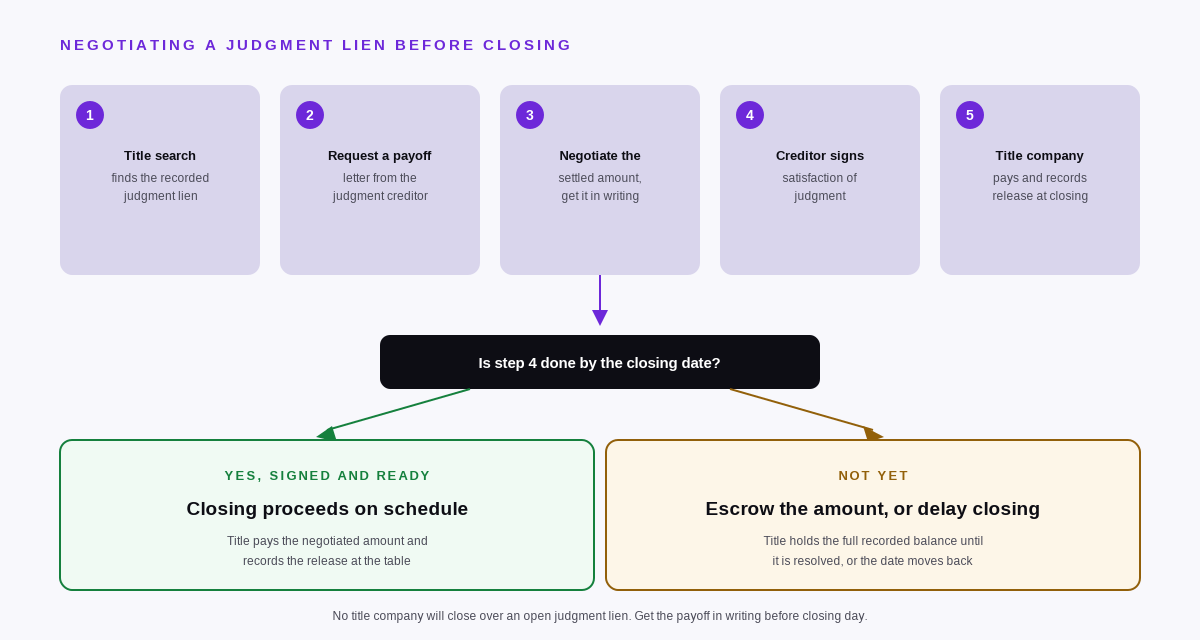
Getting there costs no separate fee. It costs a signed payoff letter from the creditor, on letterhead, stating the exact amount and confirming it clears the lien, plus a signed satisfaction of judgment the title company can record at closing. Most title companies won't release funds against a negotiated number without both documents in hand first.
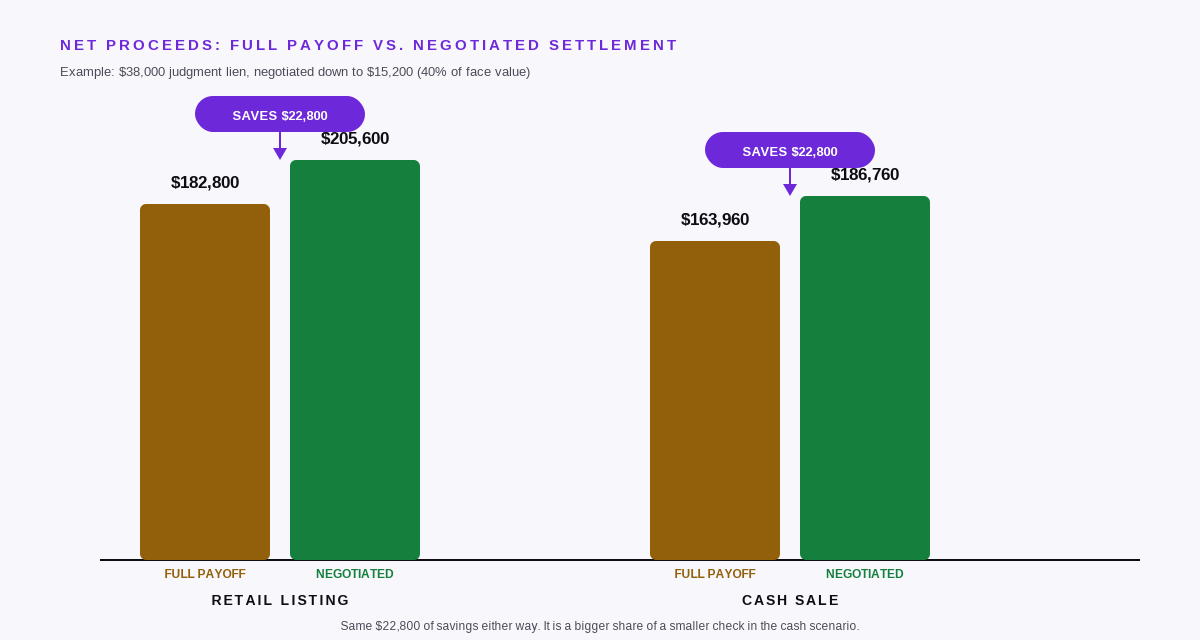
The dollar savings from negotiating is identical either way, $22,800. It just represents a bigger share of a smaller check in the cash scenario, which is exactly why it's worth doing regardless of how you sell. These figures isolate the lien's effect; your own closing statement would also reflect any mortgage payoff and prorated taxes.
A retail sale with a financed buyer typically runs 30 to 45 days to closing. That's real time to get a payoff letter negotiated, signed, and ready to record, with room to spare if the creditor is slow to respond.
A cash sale closes faster, often in one to three weeks, which is the whole point for sellers who need speed. That speed can squeeze your negotiating runway if the judgment creditor takes its time. The real tradeoff: a faster closing gives you less built-in slack to finish a settlement.
What a cash buyer can offer that a financed retail deal often can't is flexibility on the closing date itself. If negotiation is still open, the closing can be pushed back by however long it reasonably takes, without a lender's rate lock or underwriting clock forcing the date. That doesn't guarantee a better settlement number, but it buys the time to try for one instead of rushing to close against the full recorded balance.
Title companies have two standard answers when a lien payoff isn't nailed down in writing yet: escrow the full recorded amount (or the disputed difference) out of sale proceeds until it's resolved, or push the closing date back. Either way, the house doesn't close with an open lien sitting on title.
Negotiating a reduced payoff isn't the only option. You can pay the judgment in full if the math still works. You can dispute the judgment's validity if you have real grounds, wrong amount, already paid, served improperly, or past your state's statute of limitations, though this isn't a DIY move. A consumer-debt attorney can tell you quickly whether a dispute has legs, especially if there are multiple liens stacked on the property.
You can also check homestead protection first. Some states block money judgments from attaching to a primary residence at all, or cap the protected equity. Our judgment lien guide covers this in detail, and it changes the whole negotiation if the lien shouldn't have attached in the first place. And if the lien, combined with everything else owed against the house, leaves nothing worth walking away with, not selling right now is a legitimate choice. Compare the full math using our net proceeds guide and our closing costs breakdown before deciding either way.
Restar Acquisitions buys houses as-is, in 69 markets across 14 states, with a written cash offer within 24 hours. No repairs, no commissions, and you pick the closing date. If a judgment lien settlement is still being worked out when you're ready to move, we can talk to your title company about timing so the negotiation gets finished properly instead of getting rushed.
All guides · Judgment lien mechanics and homestead exemptions · Full seller closing costs breakdown · Get a cash offer
Step 1 of 5
No obligation, no fees, no repairs. We respond the same day.
You’ll talk to Trevor McAmis, Owner & Acquisitions Lead
(313) 710-6129
Takes about two minutes. Your address is never shared.